
Introduction to AI Tools in Small Business Accounting
AI tools are shaking things up in the small business accounting world. By 2026, those who jump on the bandwagon early will benefit most. We’re talking automation of mundane tasks, saving time, and more than that, gaining a competitive edge.
So, why 2026? Because AI tech is advancing at breakneck speed. The advantages are obvious: fewer errors, streamlined processes, and more time to think strategically. Small businesses finally have the chance to focus on growth instead of drowning in paperwork.
AI tools for small business accounting aren’t a passing trend. They’re a game-changer. With AI-driven efficiencies, SMBs can automate invoicing, track expenses in real time, and handle taxes without major headaches. [INLINE IMAGE: data-viz — Graph showing growth in AI tool adoption among SMBs by 2026]
Check out our digital transformation services if you’re ready to jump on the AI train before it leaves the station.
What AI Tools Do Well in Accounting
AI is a master at handling repetitive tasks. Think of it as a digital assistant that never sleeps. When it comes to automating invoicing for small businesses, AI tools have got you covered. They can generate and send invoices, track payments, and even nudge late payers. That’s a ton of stress off your shoulders.
Expense tracking used to be a nightmare. Not anymore. AI expense tracking tools categorize and manage expenses with precision. Snap a photo of your receipt, and let AI take over. It’s like having an accountant in your pocket.
Tax prep? AI’s got that sorted too. AI tax preparation software ensures compliance, suggests deductions, and automates filing. No more last-minute tax season chaos. [INLINE IMAGE: framework — Diagram of AI tool functionalities in accounting]
Want to see AI in action? Take a look at AI implementation in a business context similar to yours.
Challenges and Limitations of AI in Accounting
AI isn’t flawless. There are challenges. Data privacy is at the top of the list. With sensitive financial data involved, security becomes a priority. Opt for tools that prioritize privacy.
The initial setup can be daunting, too. Getting AI to work smoothly with existing systems takes time and resources. Continuous updates are necessary. AI learns and improves, but only if you let it.
AI-driven efficiencies in accounting are promising, but they come with responsibilities. Stay informed and proactive to make the most of these tools. [INLINE IMAGE: callout — Key challenges and considerations for SMBs using AI]
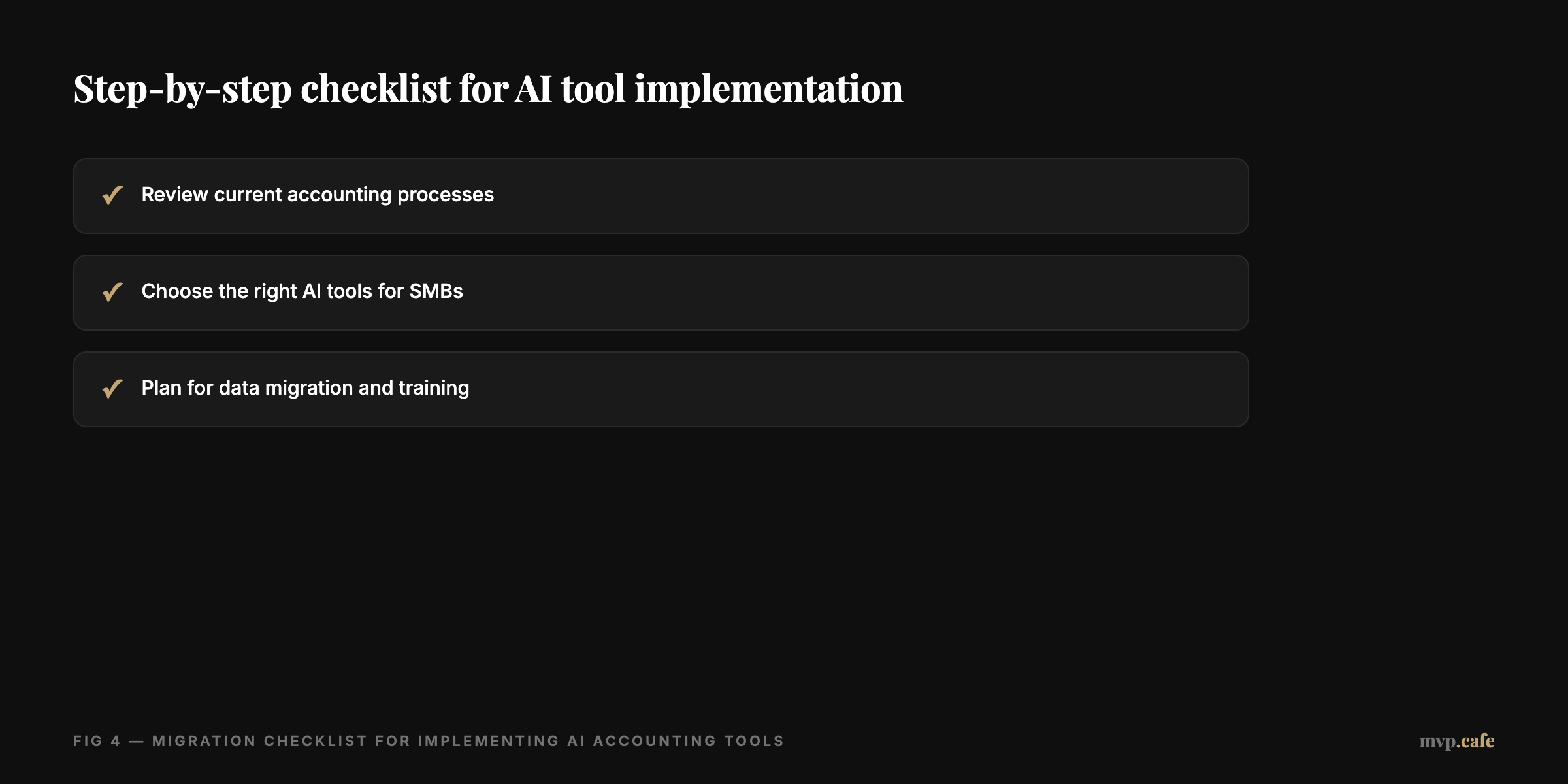
Migration Checklist for Implementing AI Accounting Tools
Implementing AI tools needs a solid plan. Start by reviewing your current accounting processes. What works? What falls short? This will guide your AI tool selection.
Choose the right AI tools for SMBs by focusing on your specific needs. Don’t just go for the popular options. Consider integration capabilities, user-friendliness, and available support.
Plan for data migration and training. Moving from old systems to new ones takes effort. Training your team is crucial for smooth transitions.
Steps to Automate Invoicing, Expenses, and Tax Prep
Ready to automate? Here’s your step-by-step guide:
-
Automated Invoicing: Set up AI systems for invoicing. Choose software that integrates with your existing platforms. Automate reminders and follow-ups.
-
Expense Tracking: Implement AI for real-time expense tracking. Use tools that sync with your banking apps, capturing every transaction accurately.
-
Tax Preparation: Use AI for efficient tax prep. The software should automatically categorize expenses and offer tax-saving suggestions. Compliance is key, so ensure your tools are up-to-date with tax regulations.
These steps will save you time and reduce stress during tax season. [INLINE IMAGE: none]
Common Pitfalls When Using AI Tools in Accounting
Watch out for these pitfalls:
- Over-reliance on AI: AI is a tool, not a replacement for human judgment. Keep oversight in place.
- Ignoring Updates: Regular software updates are vital. They keep your tools secure and efficient.
- Underestimating Training: Your team needs to understand the new tools. Invest in training to maximize benefits.
[INLINE IMAGE: callout — List of common pitfalls in AI tool adoption]
Conclusion: The Future of AI in Small Business Accounting
AI will continue to shape the future of accounting for SMBs. The benefits are clear: time savings, reduced errors, and better strategic focus. But challenges like data security and training remain.
By 2026, AI accounting tools will be smarter and more integrated than ever. Early adoption will give you a competitive edge. Dive deeper into AI applications in family businesses for more insights.
AI-driven efficiencies in accounting are not just the future—they’re the present. Are you ready to embrace the change?