
Understanding API Versioning for MVPs
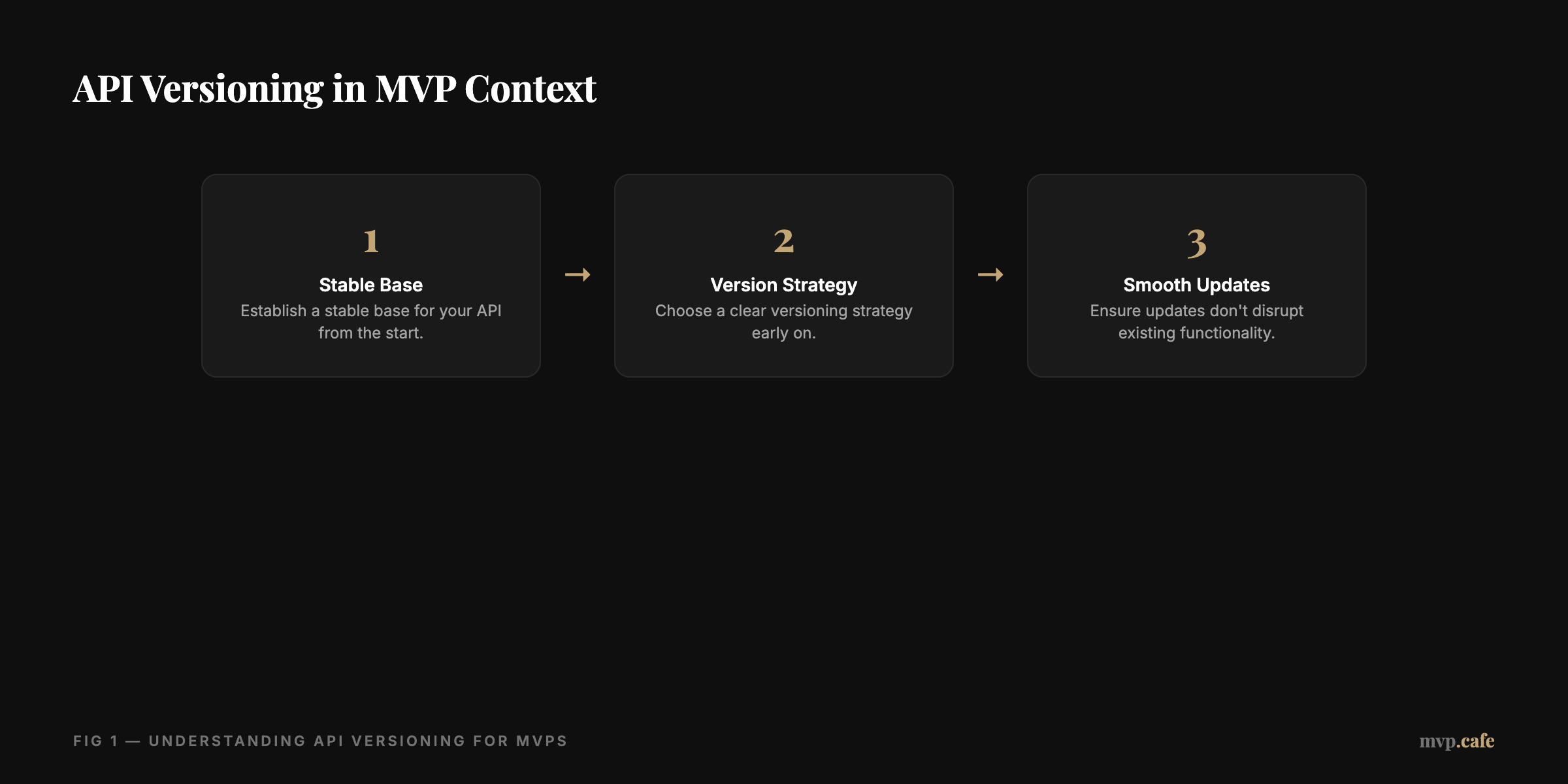
API versioning. It sounds fancy, right? But what’s the big deal for your MVP? At its core, API versioning is all about keeping your app’s communication lines smooth and stable while you tweak things in the background. It’s like a silent guardian, ensuring updates don’t mess up your existing setup.
For MVPs, don’t think of it as just a luxury. It’s a must. Many folks assume you need to be a big player to bother with versioning. Wrong. Start early, save yourself future headaches. It’s about laying down a solid base before it all spirals into a mess.
Why API Versioning is Essential for MVPs
Nobody wants their app to crash because of a minor tweak. That’s where API versioning shines. It keeps your app stable, even when you’re rolling out updates. Happy users, happy life.
And here’s the kicker—smooth updates and seamless integrations. You launch new features, and everything just works. No firefighting needed. Plus, it nips technical debt in the bud, paving the way for future growth. I’ve seen it firsthand at ZYOD. If you’re feeling lost, our Rescue service can lend a hand with implementing API versioning.
Common API Versioning Mistakes and How to Avoid Them
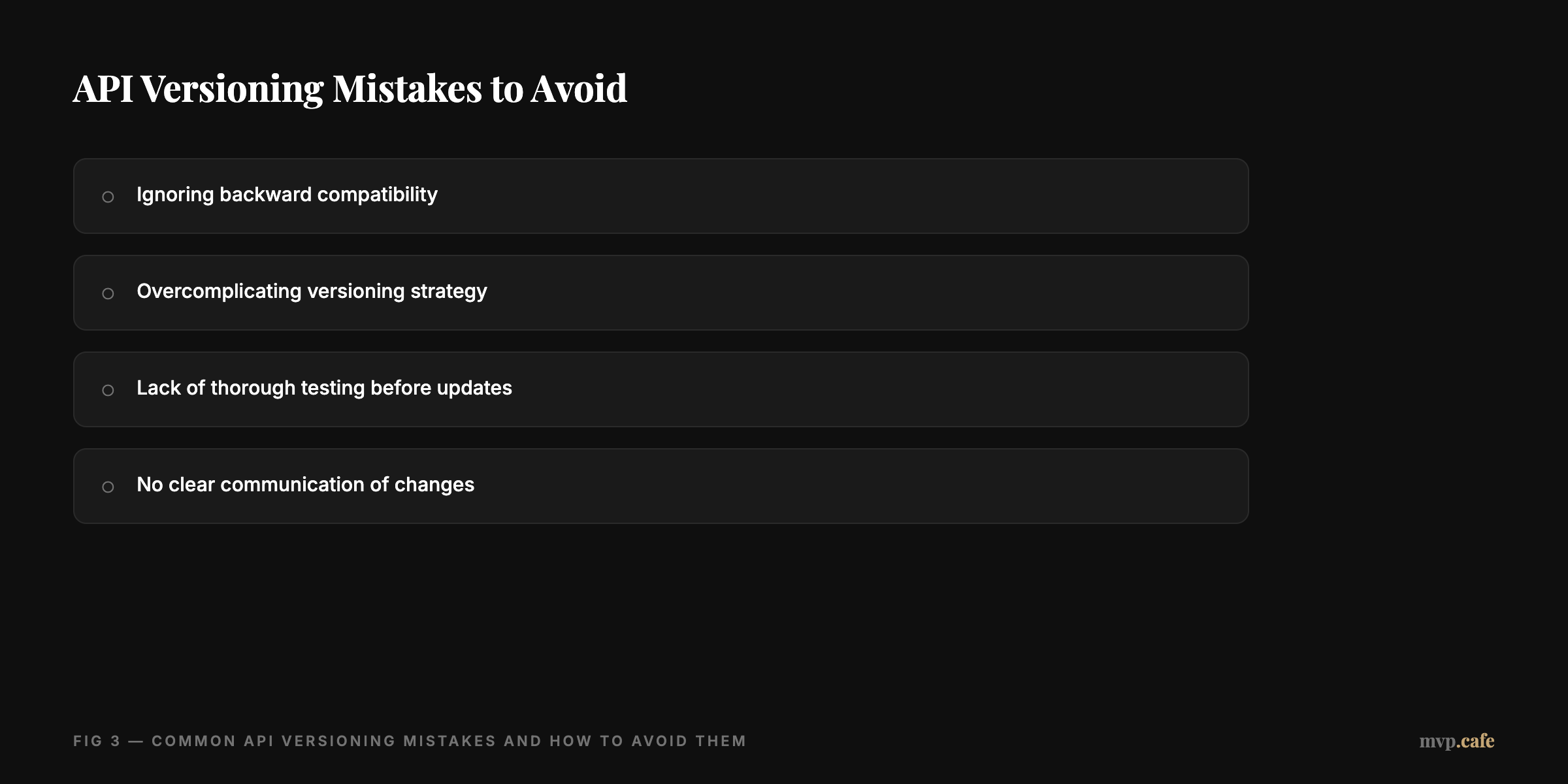
Mistakes? They happen, especially with API versioning. A big one? Ignoring backward compatibility. It’s a nightmare when you roll out updates. Another classic? Overcomplicating your versioning strategy. Stick to the basics.
What’s at stake for MVPs? Potential downtime, unhappy users—the works. The trick? Have a clear versioning strategy from day one. Semantic versioning is a solid pick. And please, test thoroughly before any update. It might feel like extra work now, but it saves you serious headaches later.
Best Practices for Implementing API Versioning in MVPs
Now, let’s dive into best practices. Start simple. Semantic versioning is your friend—major, minor, and patch changes, all neatly categorized. Tools like Swagger and Postman can be lifesavers, providing frameworks to manage your APIs like a pro.
Implementation is everything. Document every change. Your future self will be grateful. And keep your users in the loop. Good communication builds trust and ensures smooth transitions. For more insights, check out our broader scaling strategies.
Real-World Example: ZYOD’s API Versioning Success
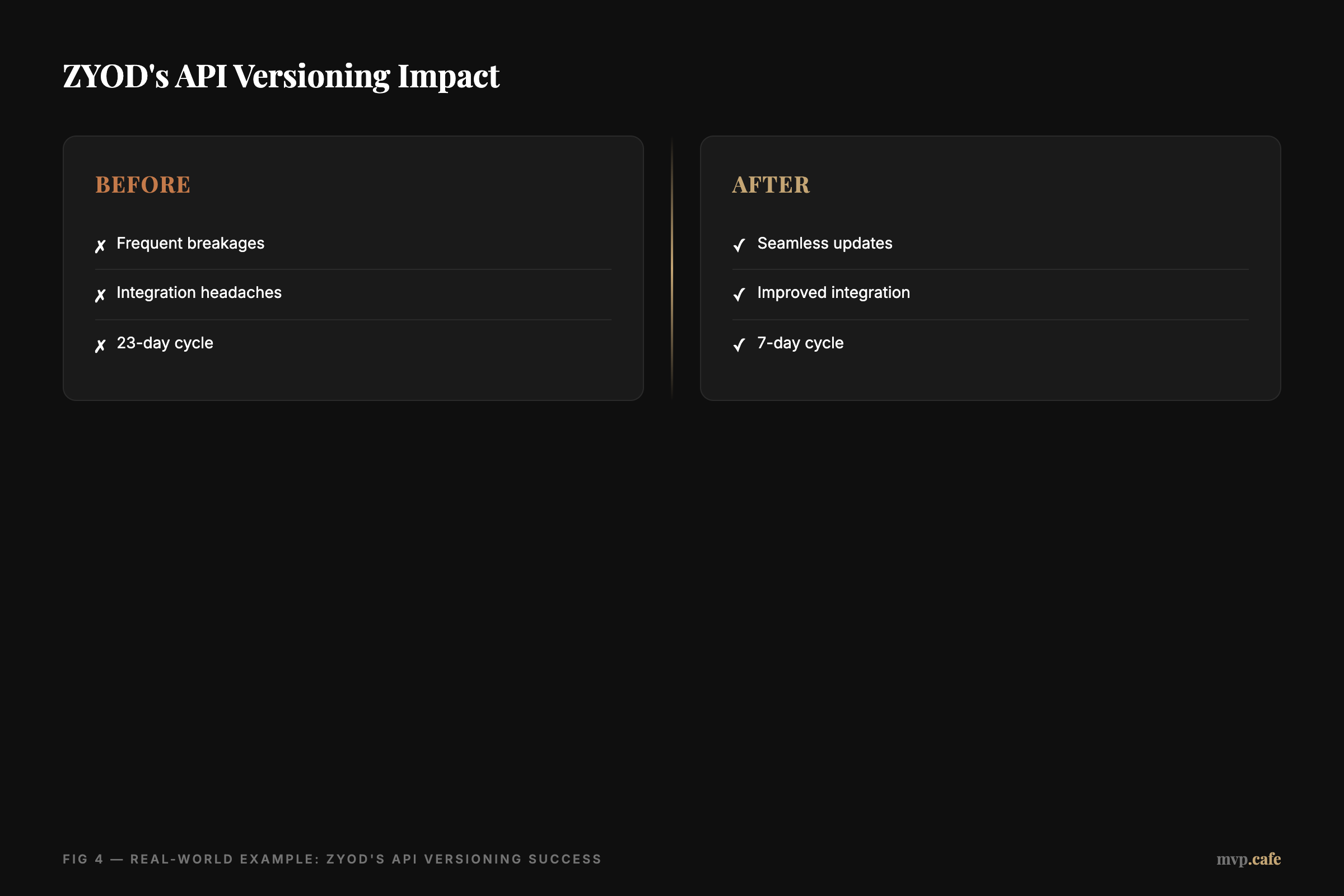
Let’s talk reality. At ZYOD, we faced our share of versioning chaos. Frequent breakages, integration headaches—you name it. The fix? A solid API versioning strategy. Semantic versioning, better documentation, and automated testing turned it all around.
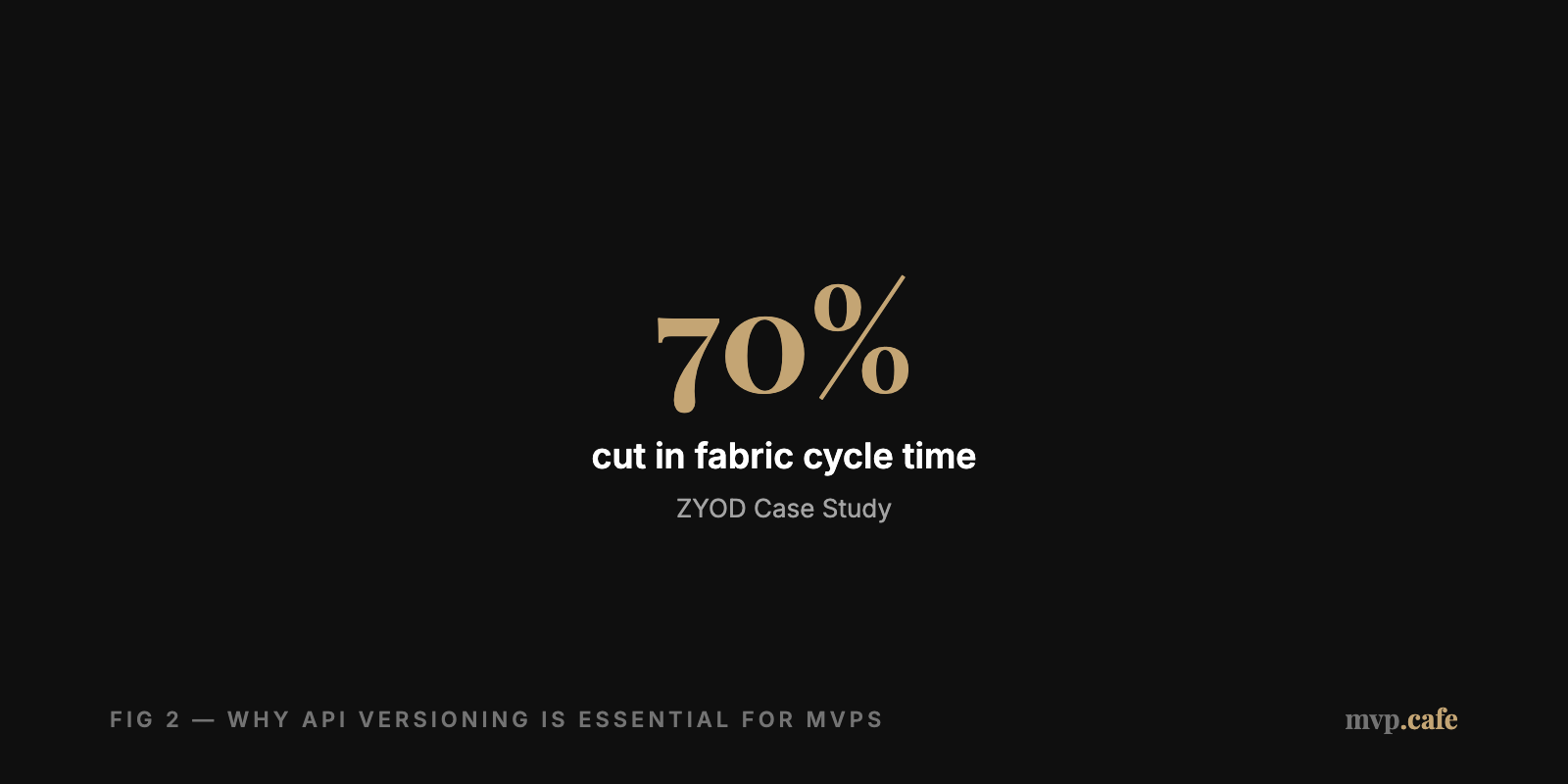
The payoff was massive. A 70% cut in fabric cycle time—from 23 days to less than 7. And our team? Much less stressed, way more productive. For the whole scoop, check out the real-world example of API versioning success.
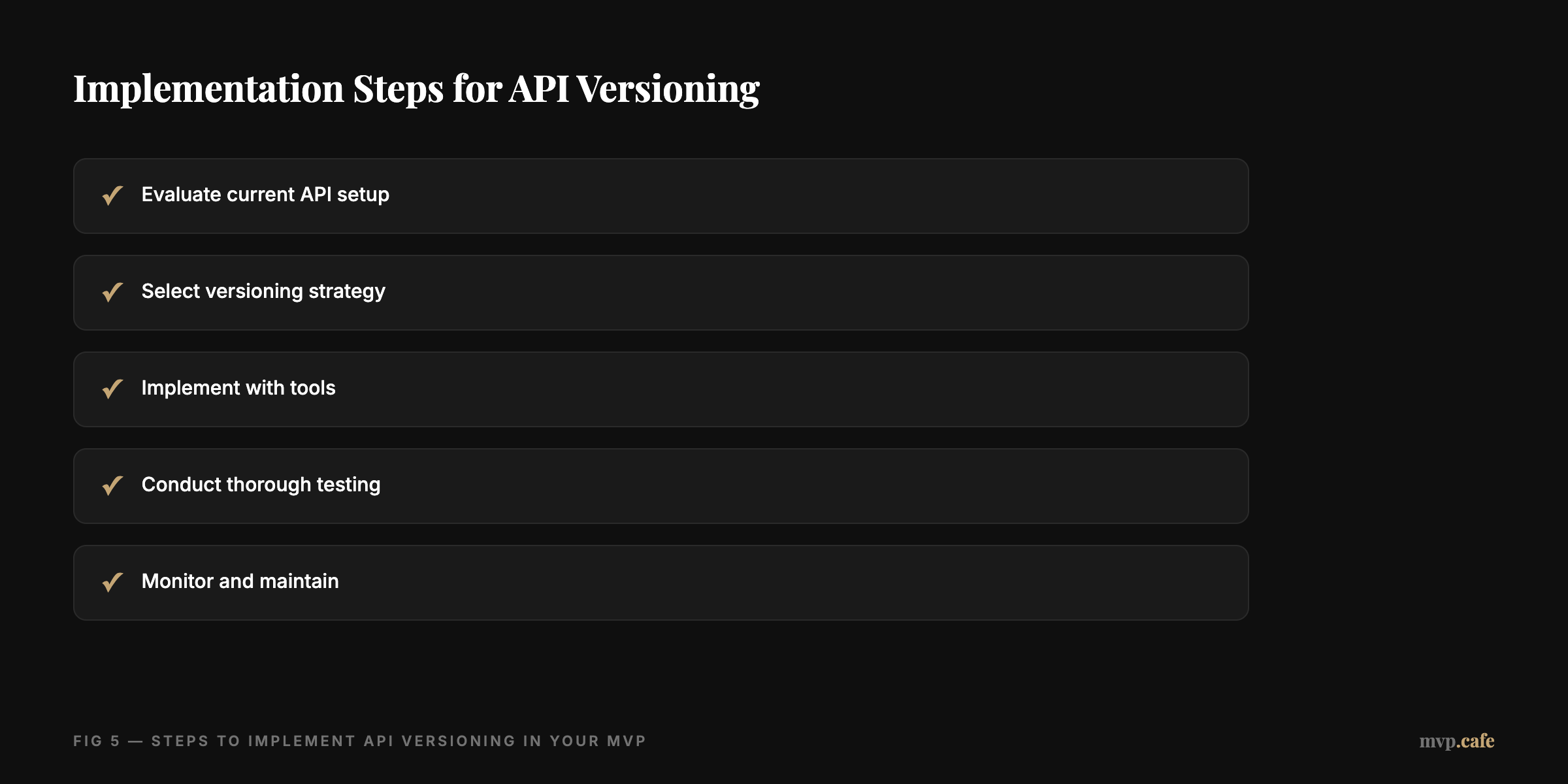
Steps to Implement API Versioning in Your MVP
Ready to go all in? Here’s your step-by-step roadmap.
- Step 1: Evaluate your current API setup.
- Step 2: Pick a versioning strategy (semantic versioning is a safe bet).
- Step 3: Bring in tools like API Gateway for implementation.
- Step 4: Test, test, and test again.
- Step 5: Monitor and maintain—this isn’t a “do it once and forget it” deal.
Stick to these steps, and your MVP will thank you. Stability? Check. Tech debt? Bye-bye.
[INLINE IMAGE: checklist — Step-by-step checklist for implementing API versioning]
Pitfalls to Watch Out For in API Versioning
Even with the best game plan, pitfalls are lurking. Poor versioning can wreck user experience and the trust you’ve built. If users can’t count on your app, they’ll leave—quickly.
To dodge these traps, focus on backward compatibility and crystal-clear communication. Keep tabs on deprecated versions and plan their phase-out with care. Your ultimate goal? Smooth sailing, minimal disruptions.
[INLINE IMAGE: callout — Callout on pitfalls to avoid in API versioning]
API versioning might sound complex, but it’s essential for ensuring smooth updates and scalability. Having a solid versioning strategy in place saves you from breakages and technical debt. And if you hit a roadblock, our Rescue service is just a call away.