
MVP Feature Prioritization: What to Build, Skip, and Kill
So, you’ve got an idea and you’re ready to ship your MVP. But here’s the million-dollar question: what features do you build first? What do you skip? And what do you kill without mercy? Prioritizing features for your MVP can make or break your product. I’ve been in the trenches, launching over 45 products, and let me tell you, feature bloat is a killer. Let’s cut through the noise with a practical framework I’ve honed over years of trial, error, and a few sleepless nights.
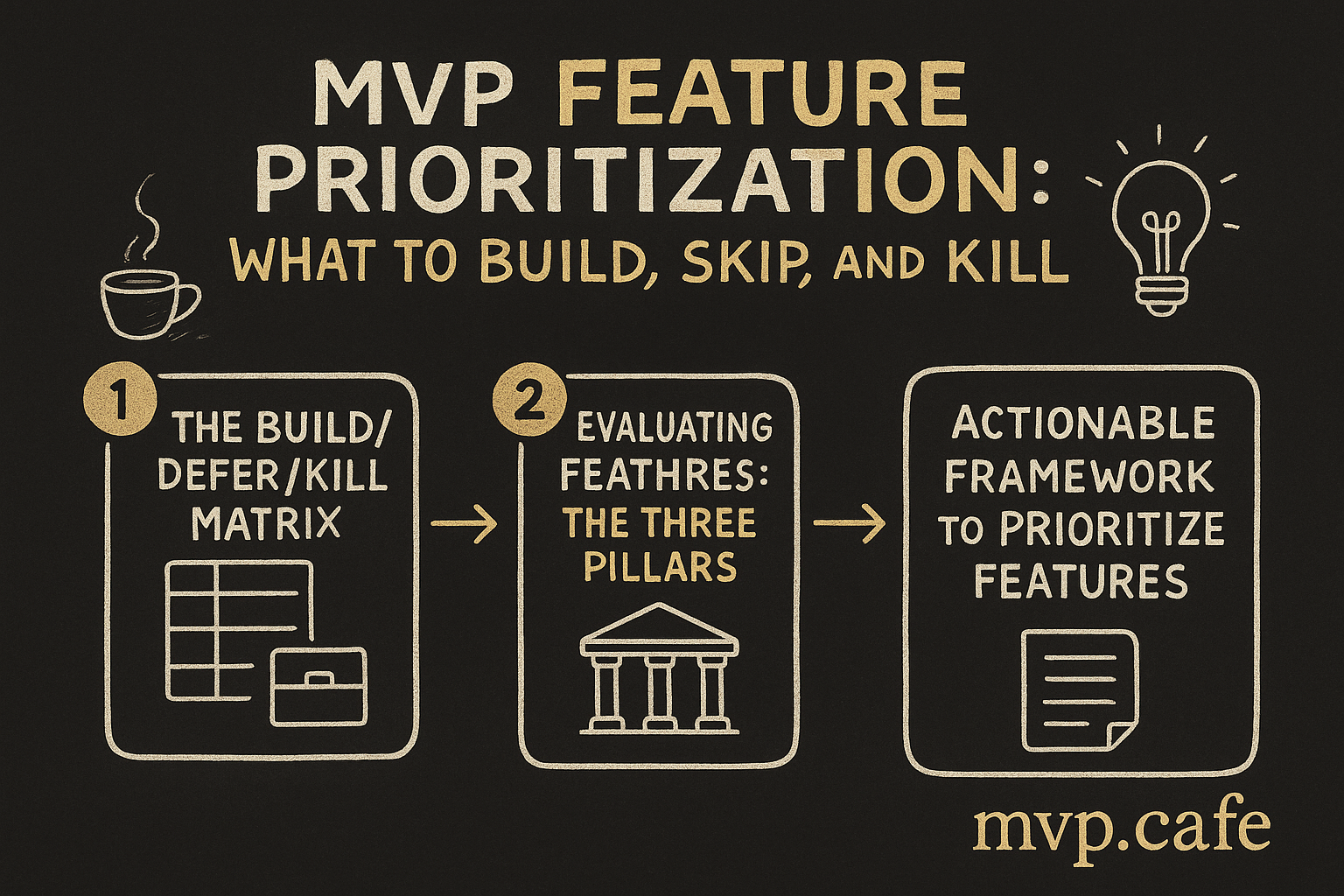
The Build/Defer/Kill Matrix
Why You Need It
This matrix isn’t just a fancy chart; it’s your roadmap to a lean, focused MVP. The idea is simple: every feature falls into one of three categories—Build, Defer, or Kill. Each decision should be backed by data, not gut feelings. Consider user value, technical complexity, and business impact when sorting features.
How It Works
-
Build: Essential features that provide core value to your users. They’re your MVP’s backbone. Without them, your product is just a pretty shell.
-
Defer: Nice-to-haves that don’t offer immediate value. These are features you can implement later or not at all, depending on user feedback.
-
Kill: Features that sound good in theory but add no real value. They’re distractions that eat up development time and resources.
Evaluating Features: The Three Pillars
1. User Value
The first pillar is user value. Every feature should solve a real problem for your users. If it doesn’t, why are you building it? Let’s say you’re building a task management app. A feature that auto-sorts tasks by priority could be invaluable. But a chat function? Probably not essential for an MVP.
Ask yourself:
- Does this feature solve a critical user problem?
- How many users will benefit from it?
- Can this wait until after the MVP launch?
2. Technical Complexity
Next up is technical complexity. A feature might be valuable, but if it’s going to take three months to build, it might not be worth it—at least not for your MVP. We once had a client who insisted on a complex AI-based recommendation engine for their MVP. It sounded great on paper, but the development time and cost would have been astronomical. We convinced them to start with a simple rule-based system, which took a week to implement. The AI can come later, if at all.
Consider:
- How long will this feature take to build?
- Do we have the expertise to build it quickly?
- Is there a simpler alternative that could achieve 80% of the value with 20% of the effort?
3. Business Impact
Finally, consider the business impact. Will this feature help you acquire users, retain them, or generate revenue? If a feature doesn’t align with your business goals, it’s not worth your time. For example, a detailed analytics dashboard might seem appealing, but if your product is a simple note-taking app, focus on making note-taking seamless first.
Evaluate:
- Does this feature directly support a business goal?
- Will it help us gain a competitive edge?
- Is there a quantifiable ROI?
Common Features That Should ALWAYS Be Deferred
-
Advanced User Profiles: Basic profiles are fine for an MVP. You don’t need customizable avatars and detailed user bios from day one.
-
Comprehensive Analytics: Start with essential metrics. You can add more sophisticated analytics once you have a user base to analyze.
-
Social Features: Unless your product is inherently social, defer these. Focus on your core functionality first.
-
Localization: Launch in one language initially. It’s easier to add languages later than to delay your launch by months.
-
Offline Mode: Unless it’s a key part of your product’s value proposition, defer it. Adding offline capabilities can be technically challenging.
Actionable Framework to Prioritize Features
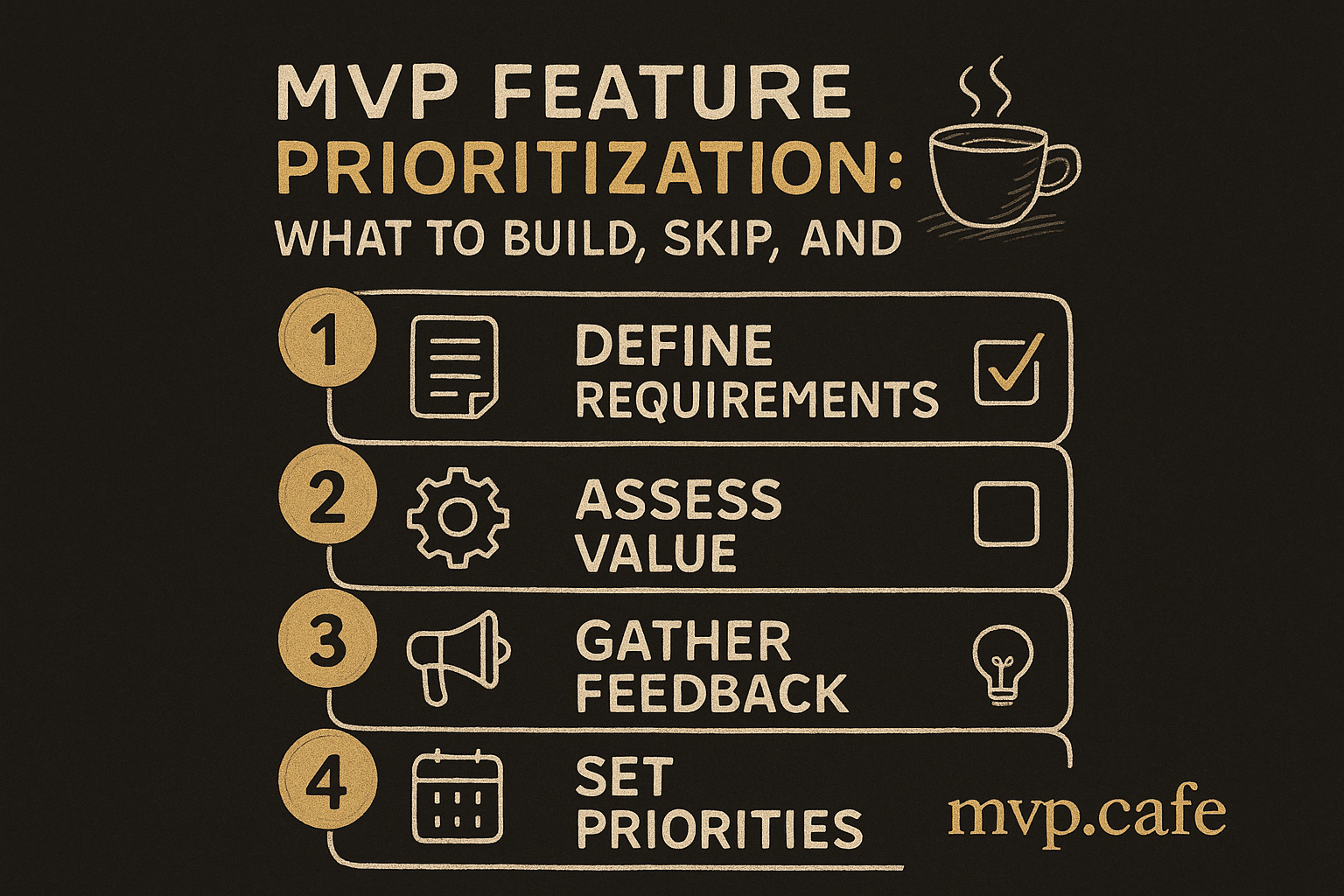
Let’s put this all together into a framework you can use right now.
-
List All Features: Brainstorm and list every feature you can think of. Don’t hold back at this stage.
-
Categorize by User Value: Go through each feature and ask if it provides critical user value. If it doesn’t, consider deferring or killing it.
-
Assess Technical Complexity: For the remaining features, evaluate the technical complexity. If it’s too complex for an MVP, defer or find a simpler solution.
-
Determine Business Impact: Finally, filter features by business impact. If it doesn’t support your key business goals, it might not be worth your time.
-
Assign to Build/Defer/Kill: Using the insights from the above steps, categorize each feature into Build, Defer, or Kill.
Wrapping It Up
Your MVP should be a laser-focused version of your product that delivers core user value without unnecessary bells and whistles. By using the Build/Defer/Kill matrix and evaluating each feature against user value, technical complexity, and business impact, you can ensure your MVP is lean, efficient, and poised for success.
Ready to get started? At mvp.cafe, we specialize in helping founders like you prioritize features and build MVPs that deliver real value. Let’s cut the fluff and get your product in the hands of users, fast.