
Introduction to AI in Accounts Receivable
AI isn’t just some fancy term making the rounds—it’s changing how we do financial management, especially for small businesses. Managing cash flow often feels like juggling while riding a unicycle. Delayed payments, human errors, and clunky processes? A perfect recipe for chaos. Enter AI. It takes over the routine stuff and gives you real-time insights, making SMB cash flow management a breeze.
From what I’ve seen, many small businesses struggle with accounts receivable. Manual invoicing gobbles up time and is a hotbed for errors. Late payments are a common issue for small businesses, often causing significant revenue disruptions. AI changes this narrative with automated invoicing and smart analytics, helping businesses predict cash flow with a new level of precision. It’s not just about slashing costs—it’s about keeping your head above water in a competitive world.
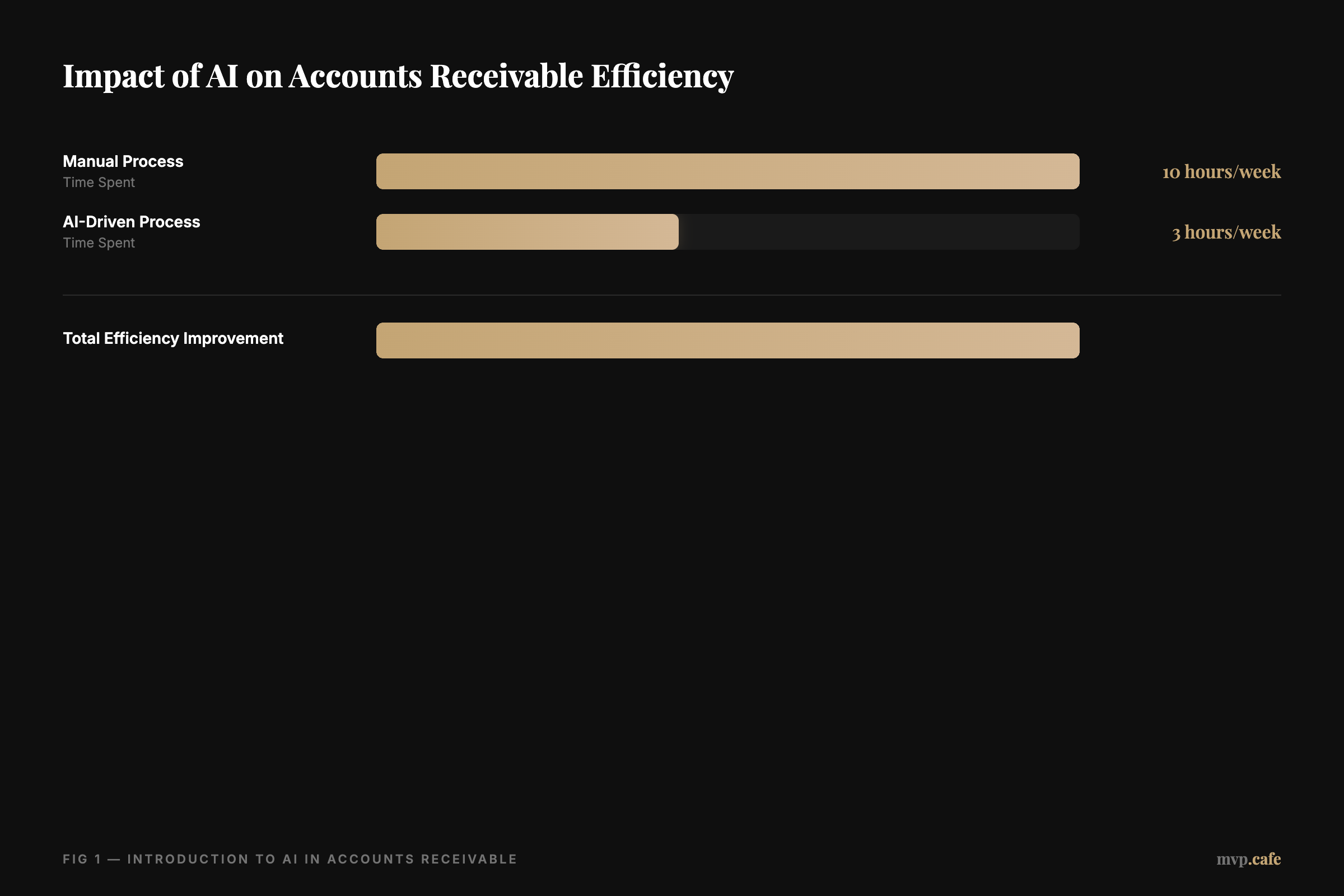
Want to see how mvp.cafe’s expertise can help in digital transformation? Time to let AI turn accounts receivable from a nightmare to a daydream.
What AI Does Well in Accounts Receivable
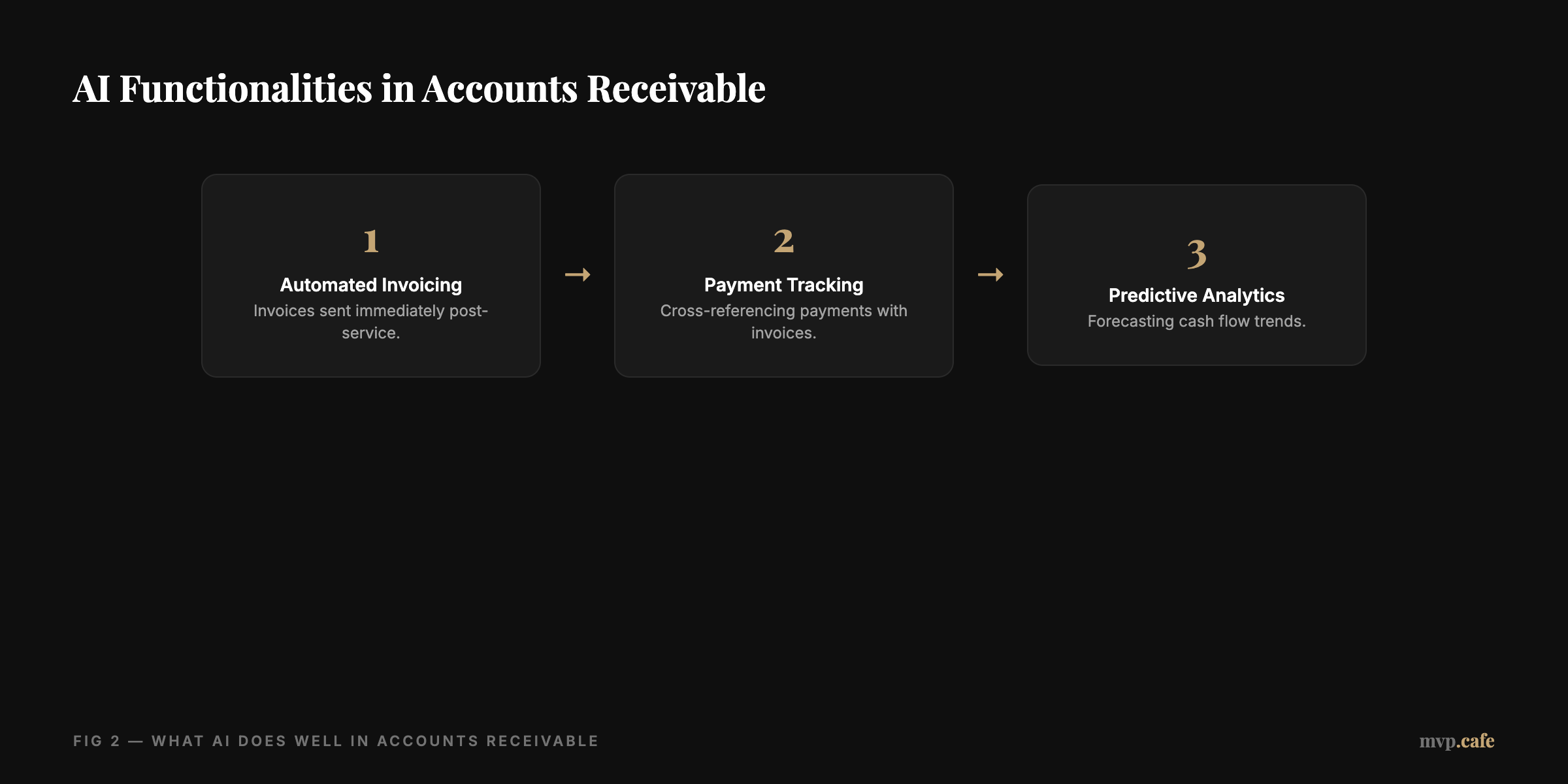
Think of AI as your tireless accountant who never tires. One of its superpowers? Automating invoice generation and distribution. Imagine invoices firing off automatically right after a service is delivered. That’s the efficiency AI brings to the table.
When it comes to payment tracking, AI shines too. It cross-references payments with outstanding invoices, cutting down on missed payments and reducing the runaround. And with predictive analytics, AI forecasts your cash flow by crunching historical data and current trends. It helps businesses plan better.
Tools like Xero can do all this heavy lifting, saving businesses countless hours each year. Many small businesses report a noticeable reduction in overdue invoices after adopting AI tools.
Where AI Solutions May Fall Short
AI isn’t a magic wand. Knowing its limits is crucial for setting the right expectations. First off, AI depends on the data you feed it. Bad data leads to bad predictions and worse decisions. So, keeping your data squeaky clean is a must.
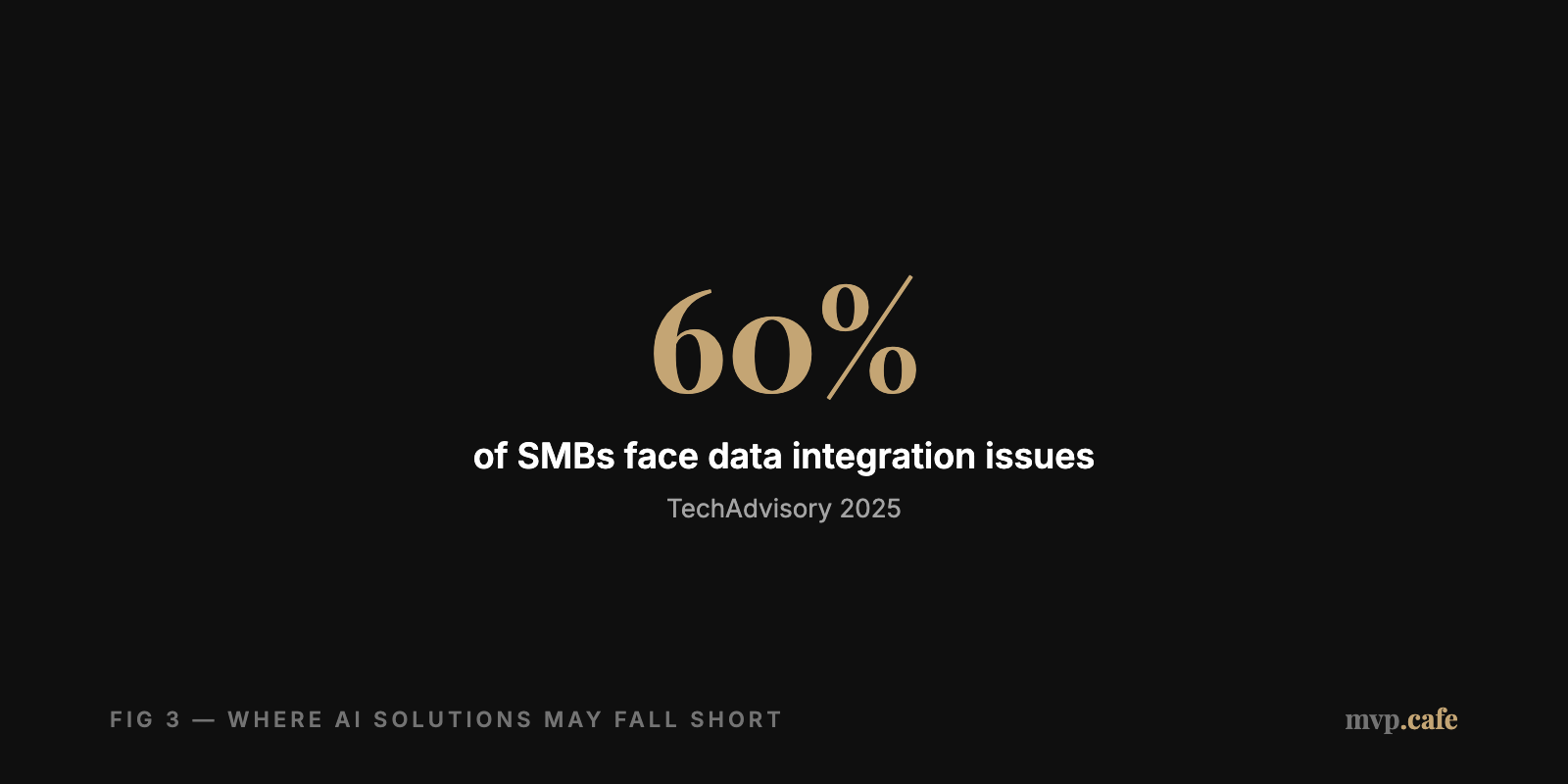
Integration is another bump in the road. The initial setup can be overwhelming, especially if you don’t have an IT team on standby. I’ve watched businesses wrestle with integrating AI tools into their existing systems. Plus, there’s often pushback from staff. Change management and training are your allies here.
But even with these challenges, the benefits AI brings to financial management far outweigh the drawbacks. The trick is to approach AI implementation smartly.
Checklist for Migrating to AI-Powered Accounts Receivable
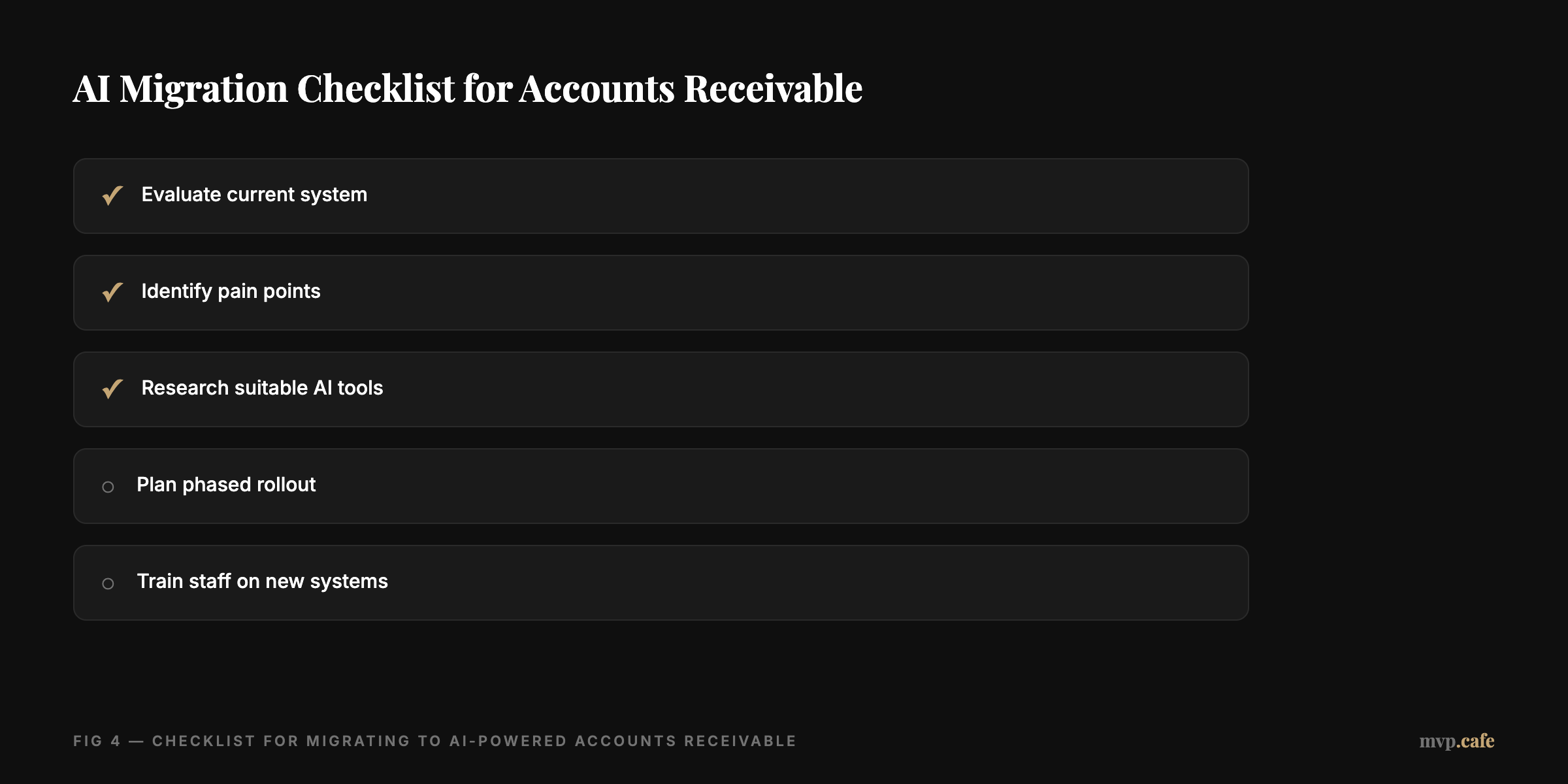
Moving to AI-powered accounts receivable isn’t a leap in the dark—it’s a step towards streamlining. Start by evaluating your current setup. Pinpoint the real pain points. Is it late payments bugging you? Or the never-ending data entry errors? Identifying these will help you choose the right AI tools.
Once you know what you need, dive into AI tools that fit your business. Look at cost, scalability, and how easily they integrate. QuickBooks, for example, offers solid options for small businesses.
Plan for a phased rollout. Taking it step-by-step means less disruption and space for tweaks. Our Clarity Strategy Sprint can map out this journey for you.
Step-by-Step Guide to Implementing AI in Accounts Receivable
Think of implementing AI as a marathon, not a sprint. First, pick the right tools and vendors. Do your homework, comparing options that fit your business size and needs. Consider a pilot test with a small group of accounts to gather feedback and make tweaks.
Training is non-negotiable. Your team needs to understand the new processes and how AI benefits them. Keep the communication lines open—everyone should know what’s changing and why.
Once your pilot is a success, go for a full-scale launch. Keep an eye on the system and be ready to fix any issues. Regularly check if the AI is hitting your targets.
Check out how ZeoAuto transformed its operations with digital tools for some inspiration.
Common Pitfalls and How to Avoid Them
AI can turn your business around, but it’s not without its hurdles. One common slip-up? Underestimating the need for change management. Change isn’t just technical—it’s also about culture. Ignoring the human side of AI implementation can lead to pushback and failure.
Data security and privacy can’t be overlooked. Make sure your AI tools are up to snuff with regulations and have strong security measures. Most importantly, set clear success metrics. Without them, measuring AI’s impact is like sailing without a map.
Navigate these pitfalls, and your journey to AI-powered accounts receivable should be smooth sailing.
[INLINE IMAGE: iceberg — Hidden challenges in AI implementation]
Ready to transform your accounts receivable process? Let’s talk about how our Clarity Strategy Sprint can help you make the most of AI. No fancy talk, just solid results.