
Introduction to AI in GST Compliance
Running a small business in India isn’t just chai and samosas—especially when GST compliance is lurking around the corner. The Goods and Services Tax, for all its benefits as a unified system, brings its own set of headaches: stacks of paperwork, relentless deadlines, and the perpetual worry of a slip-up. That’s where AI steps in as your not-so-secret weapon against GST troubles. AI for GST compliance isn’t just another buzzword; it’s a game-changing tool that delivers efficiency and accuracy where manual processes stumble.
With the Indian government’s push for digital tax compliance, staying competitive isn’t just advisable—it’s essential.
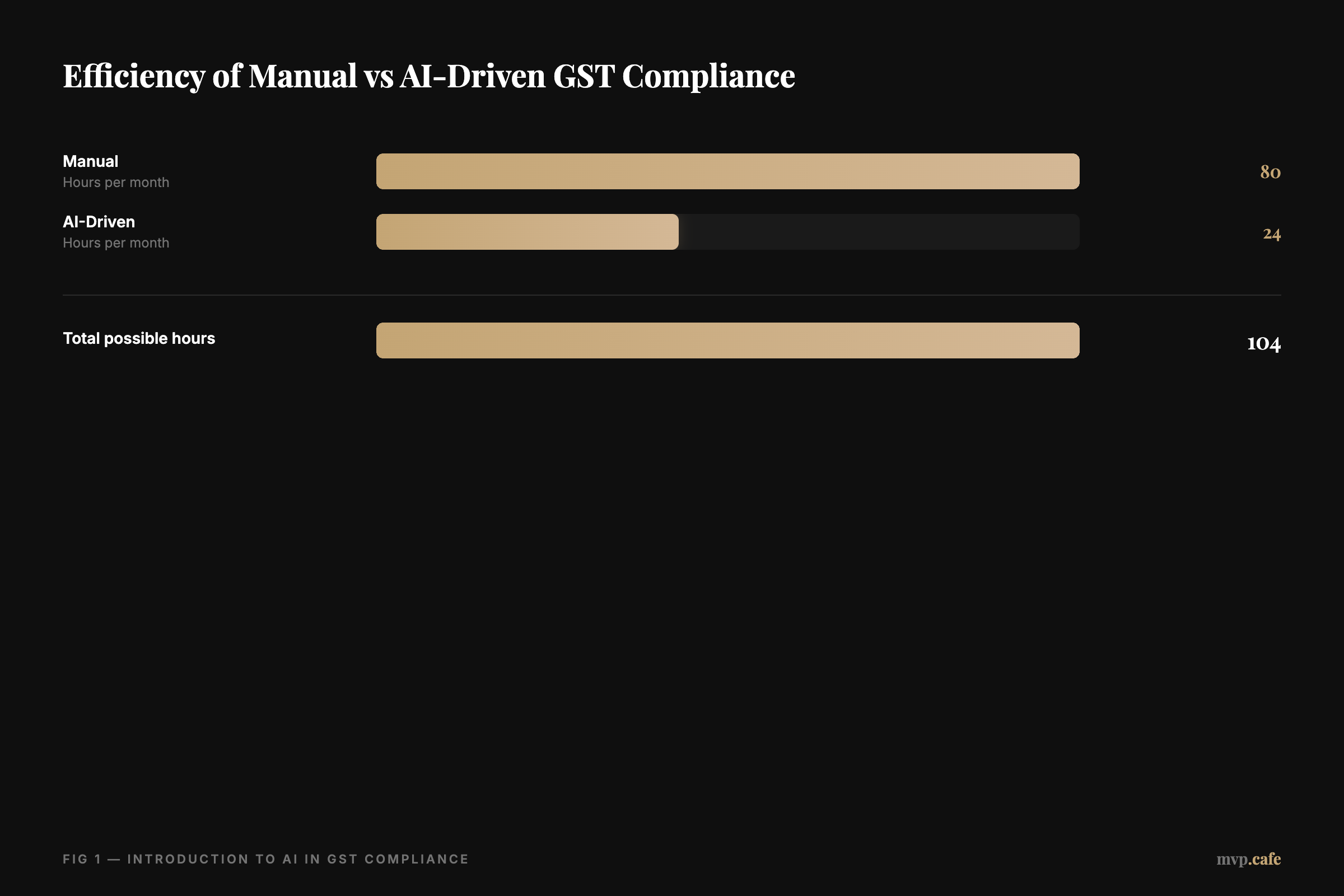
By automating tedious tasks and slashing errors, AI lets you focus on what you do best—running the show. If you’re wondering how to make this happen, our Strategy Sprint service can help tailor AI solutions to your needs. Plus, for more insights, check out our piece on AI’s role in modernizing small businesses.
What AI Does Well for GST Compliance
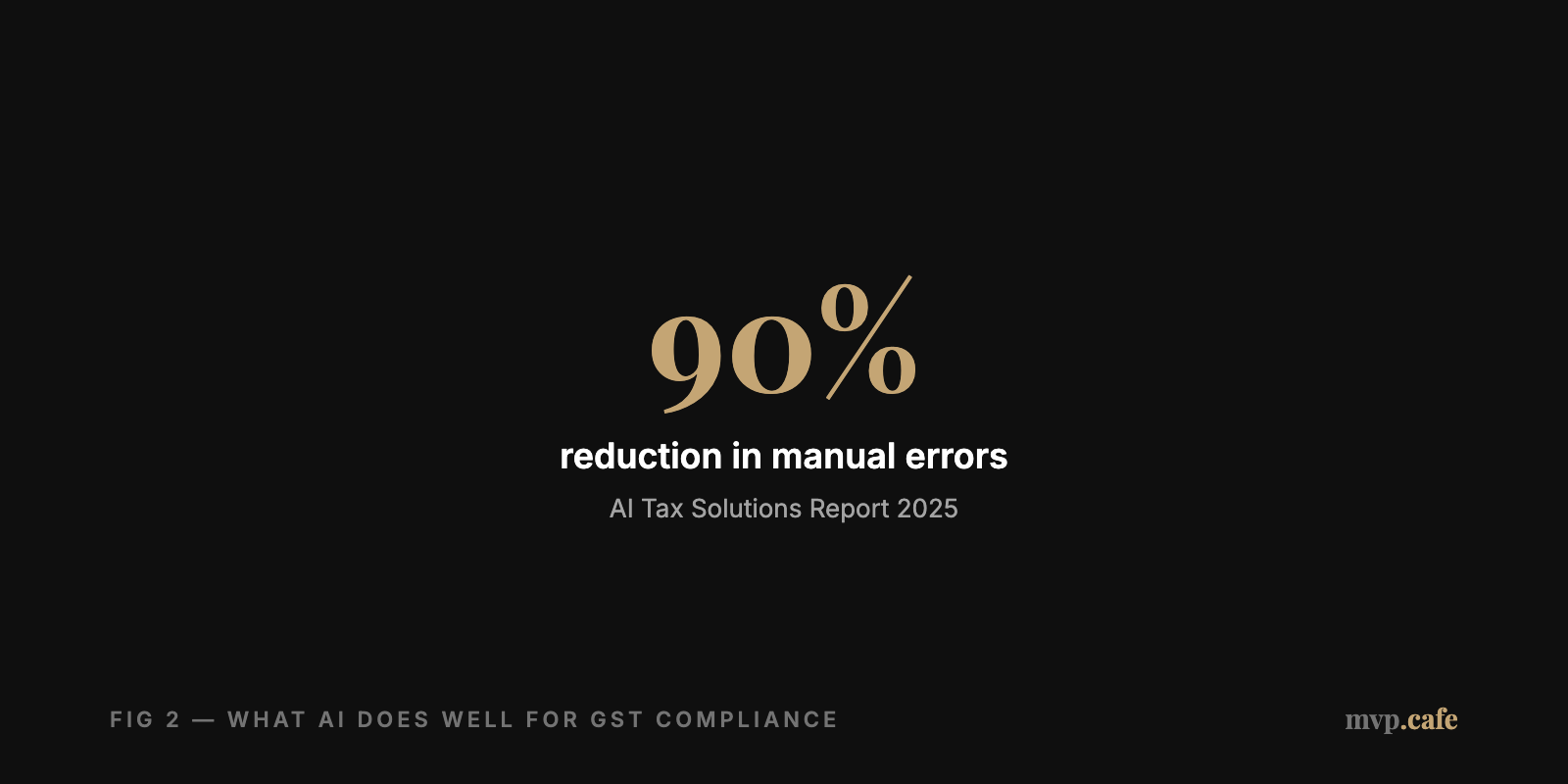
AI doesn’t just handle GST compliance; it elevates it. Here’s how it can transform your tax workload:
-
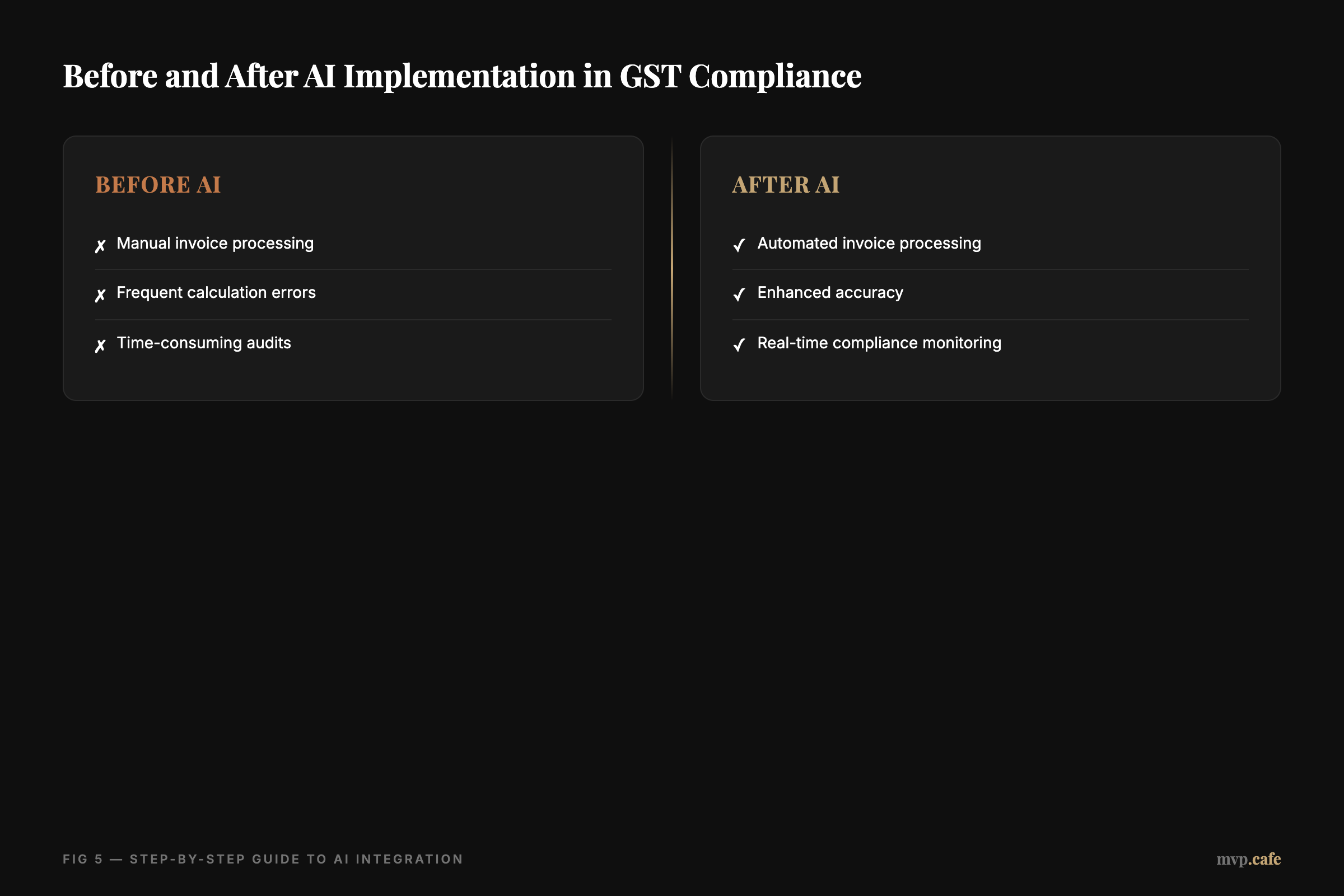
Automates Invoice Processing and Reconciliation: AI tools can breeze through invoices faster than you can say “input tax credit,” instantly matching entries and flagging discrepancies.
-
Enhances Accuracy in Tax Calculations: With AI, human errors in calculations become a thing of the past. It calculates tax liabilities with precision, so you’re neither overpaying nor underreporting.
-
Real-Time Compliance Monitoring: Say goodbye to surprise audits. AI keeps a constant watch on your compliance status, alerting you to potential issues before they escalate.
Take ZYOD, for example. Implementing AI didn’t just streamline their operations; it transformed them. Read the full case study here. AI’s impact on GST compliance isn’t just a theory—it’s a reality.
Where AI Might Fall Short
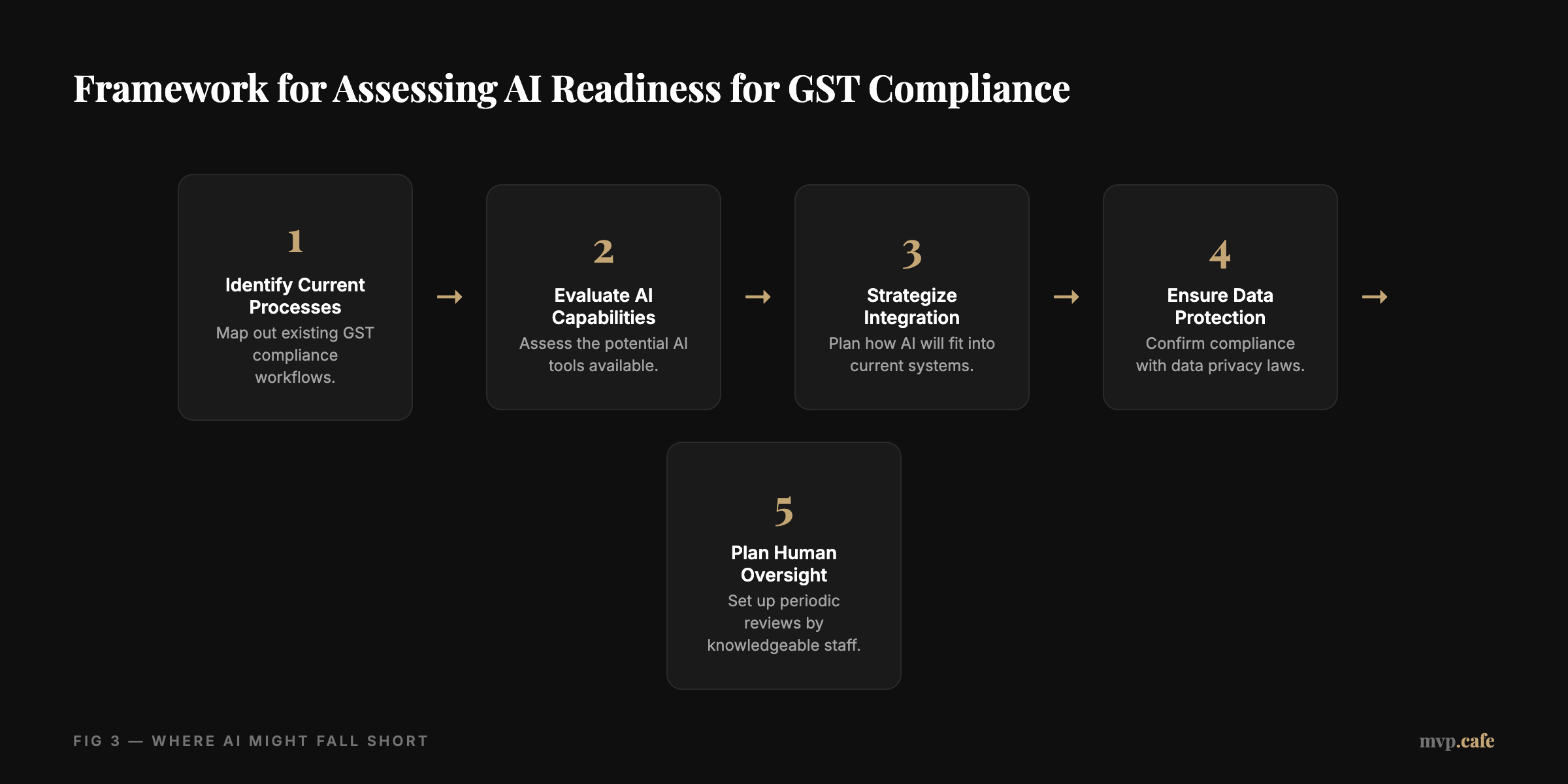
AI isn’t a magic wand. There are a few bumps on the road to seamless GST compliance:
-
Initial Setup and Integration Challenges: Implementing AI tools isn’t as easy as plug-and-play. It demands strategic planning and sometimes a complete overhaul of existing processes.
-
Data Privacy and Security Concerns: Handling sensitive financial data means ensuring your AI tools comply with data protection regulations.
-
Need for Periodic Human Oversight: AI can run on autopilot, but periodic checks by knowledgeable humans are crucial to ensure everything’s ticking along smoothly.
Understanding these limitations helps in crafting a solid AI strategy.
Migration Checklist for Implementing AI in GST Compliance
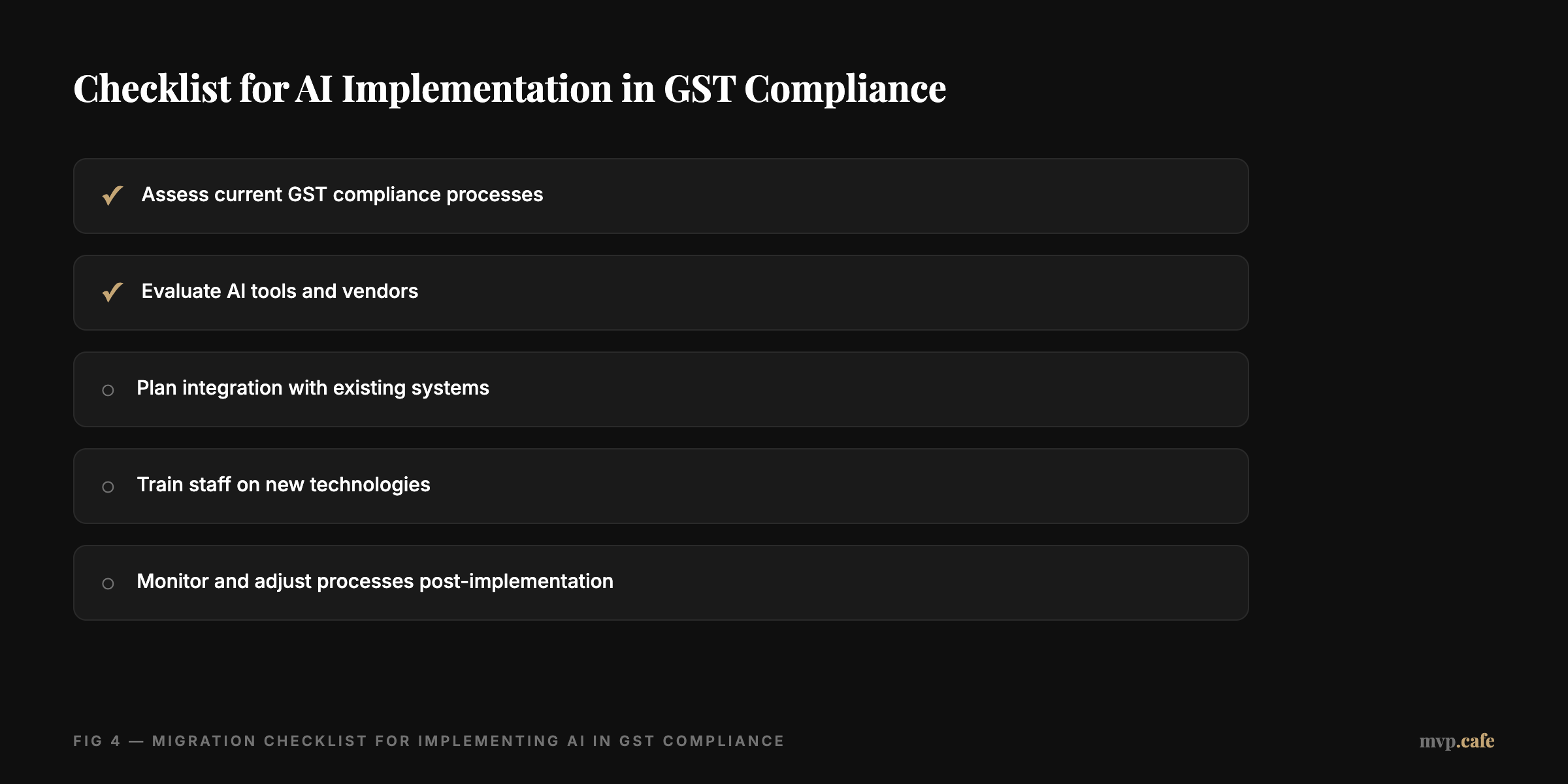
Ready to dive in? Here’s your roadmap:
-
Assess Current GST Compliance Processes: Identify pain points and inefficiencies in your current setup.
-
Evaluate AI Tools and Vendors: Not all tools are created equal. Choose ones that match your specific needs and budget.
-
Plan Integration with Existing Systems: Make sure your new AI tools can seamlessly integrate with your current systems.
-
Train Staff on New Technologies: Ensure your team knows how to use these tools effectively.
-
Monitor and Adjust Processes Post-Implementation: Continuous monitoring and tweaking ensure you get the most out of your AI investment.
This checklist ensures a smooth transition to AI-driven GST compliance.
Step-by-Step Guide to AI Integration
Integrating AI into your GST processes isn’t rocket science, but it does require a methodical approach:
-
Selecting the Right AI Tool: Look for tools that offer flexibility and scalability to grow with your business.
-
Setting Up the AI System: The initial setup is crucial. Ensure your data is clean and systems are ready for AI integration.
-
Customizing AI for Specific Business Needs: Tailor the AI tools to address your unique challenges and goals.
-
Ongoing Training and Support: Keep your team updated with regular training sessions to maximize AI’s potential.
-
Measuring Success and ROI: Set clear metrics to evaluate the success of AI integration, including time saved and error reduction.
Follow these steps, and AI will transform your GST compliance processes.
Common Pitfalls and How to Avoid Them
Even with the best tools, it’s easy to stumble. Here’s what to watch out for:
-
Over-Reliance on Technology: AI is a tool, not a replacement for human oversight. Maintain a balance.
-
Ignoring Data Quality: Clean data is the backbone of effective AI implementation. Garbage in, garbage out.
-
Neglecting Staff Training: Untrained staff can undermine even the best AI tools. Invest in their skills.
-
Not Setting Clear Metrics for Success: Without clear goals, you’ll never know if your AI integration is truly successful.
Avoid these pitfalls to make the most of AI in GST compliance. [INLINE IMAGE: callout — Tips to avoid pitfalls in AI adoption]
Ultimately, AI can revolutionize how Indian SMBs handle GST compliance. But like any tool, it’s only as good as its implementation. Ready to start? Our Strategy Sprint service can provide the clarity you need to successfully integrate AI into your GST processes.