
Understanding RBAC in SaaS
Role-Based Access Control, or RBAC, might sound technical, but it’s the backbone of managing user access in software. Essentially, RBAC hands out permissions based on user roles, much like a bouncer deciding who gets into the exclusive VIP area.
So, why does this matter for SaaS? Because in SaaS environments, where efficiency and security are top priorities, RBAC is crucial. Without it, you’re basically giving out unrestricted access. Not a smart move.
And don’t forget the compliance side of things. Whether it’s GDPR in Europe or our own data protection laws here in India, a solid RBAC system keeps you compliant.
Consider ZYOD. Implementing RBAC there helped us manage user access over 700+ sewing machines, boosting both security and efficiency. At GoMechanic, refining our user roles cut customer acquisition costs by 70%. These aren’t just numbers; they showcase RBAC’s power in scalability and efficiency.
[INLINE IMAGE: framework — Diagram of RBAC components in a SaaS environment]
Common Pitfalls in RBAC Implementation
Let’s address the big issue: overengineering. Many dive headfirst into RBAC, creating systems so complex, they’d give even the most seasoned developers a headache.
Mistake number one: making your RBAC system as tangled as a plate of spaghetti. Complexity isn’t the same as competence. Keep it straightforward.
Scalability often gets ignored. If your RBAC system doesn’t scale with your user base, you’re in trouble. And then there are those vague role definitions. If you’re sticking with “admin” and “user,” it’s like handing out blank checks.
I’ve watched competitors fall into these traps repeatedly. Here’s the kicker: align your RBAC with your business goals from the outset. Know what you want to achieve and who needs access to make it happen.
[INLINE IMAGE: callout — List of common pitfalls in RBAC implementation]
A Streamlined Approach to RBAC for Solo Founders
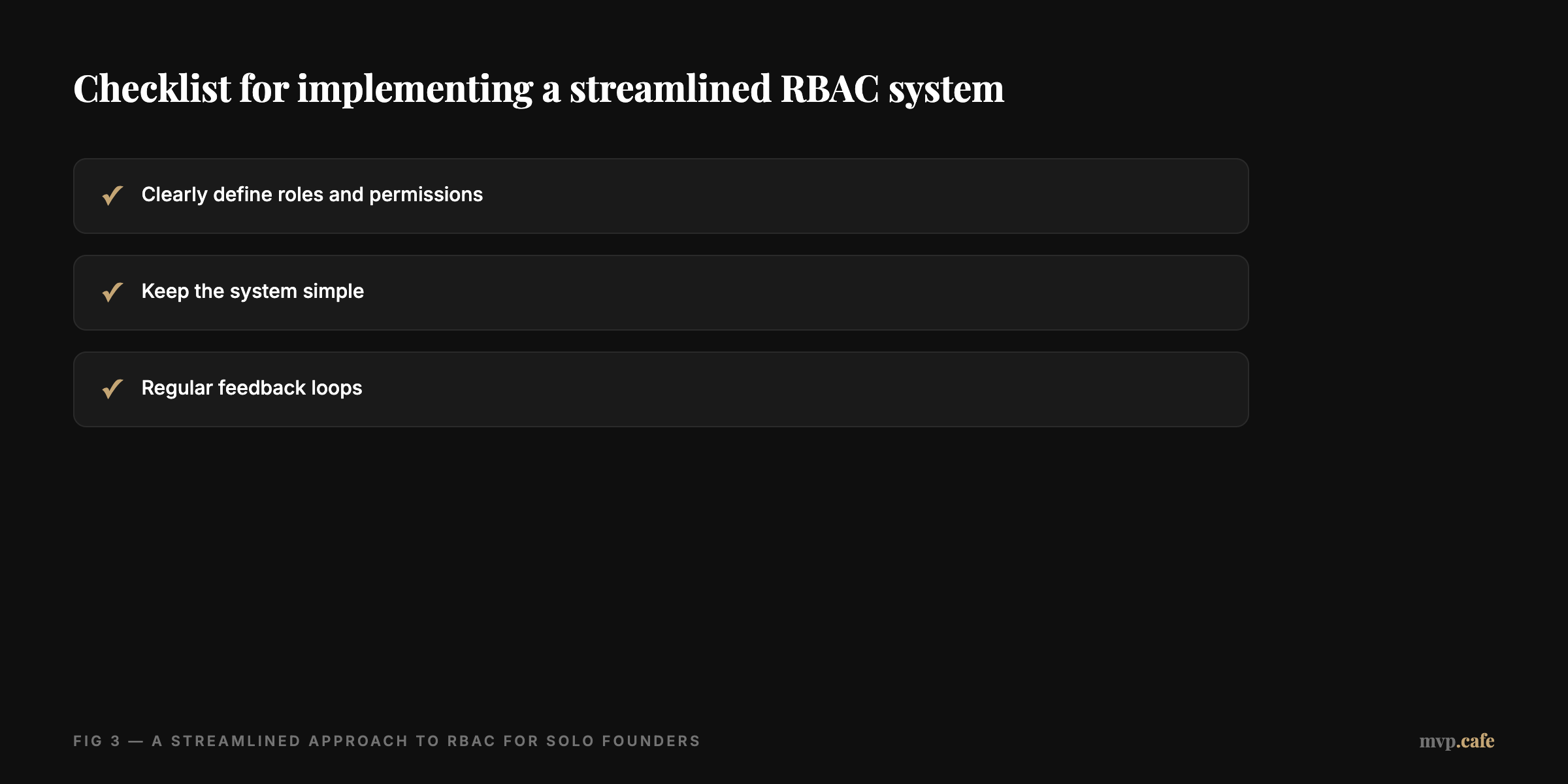
Solo founders, this part’s for you. Implementing RBAC doesn’t have to feel like scaling Everest. Let’s break it down to something manageable.
Step 1: Clearly define your roles and permissions. You don’t need a PhD in role management. Just sketch out who needs access to what and why.
Step 2: Simplicity is key. Your MVP doesn’t need NASA-level security. Focus on what’s essential. You can tweak as you grow.
Step 3: Feedback loops are your best friend. Regularly review and adjust roles as your SaaS evolves. This keeps your system agile and in tune with business growth.
Finding the right balance between security and usability is crucial. Too rigid, and you’ll frustrate users. Too loose, and security takes a hit. Find that sweet spot.
For a more detailed approach, consider our MVP build service to nail your RBAC strategy from day one.
Case Study: ZYOD’s RBAC Success
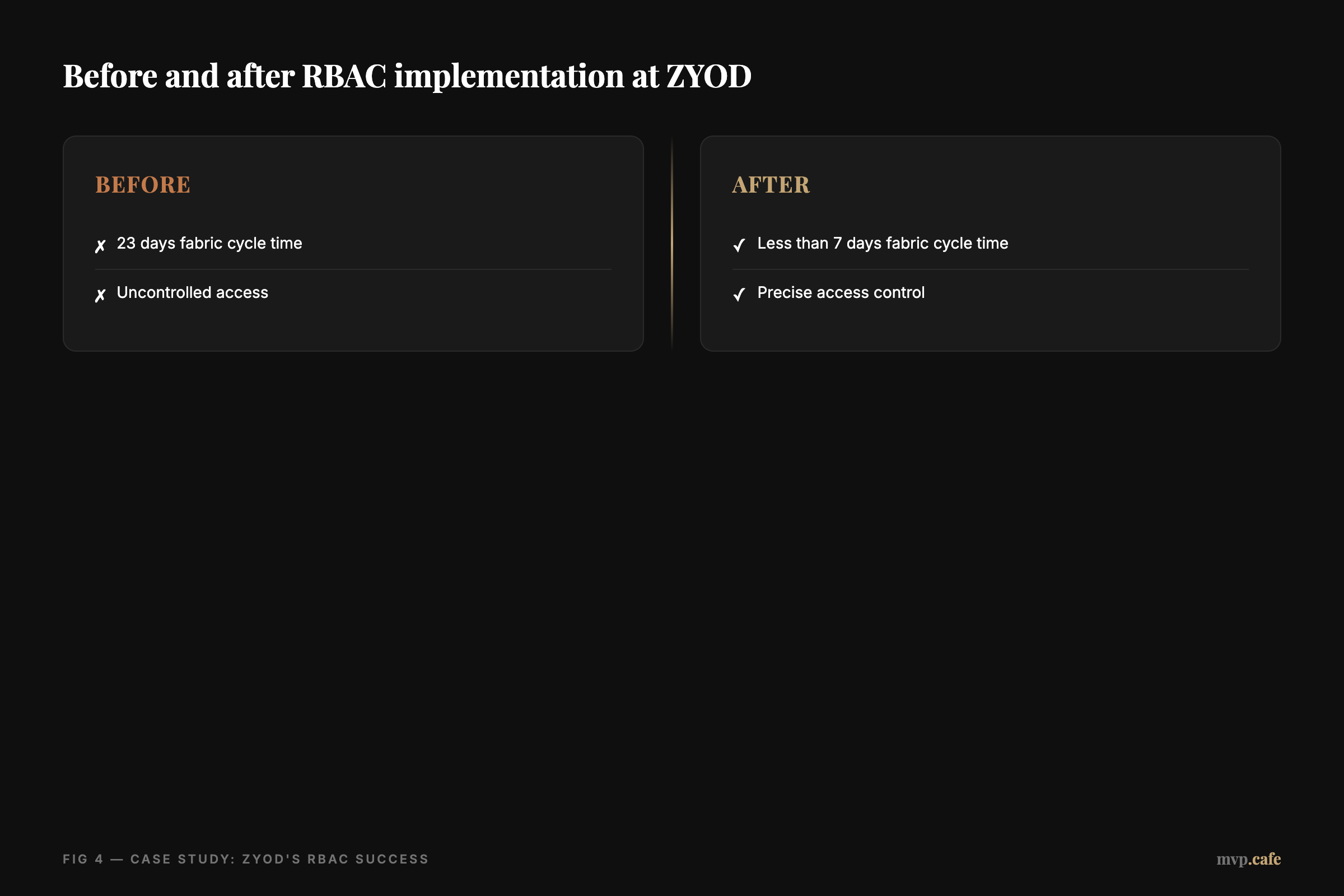
When we tackled RBAC at ZYOD, the challenges were clear. We had a vast network of IoT-connected sewing machines needing precise access control.
Step by step, we defined roles specific to our operations. It wasn’t just about security; it was about efficiency—cutting fabric cycle times from 23 days to less than 7.
The result? A robust, scalable system perfectly aligned with our operational goals. But it wasn’t magic. It was strategy and precise execution.
Solo founders can take a page from our book. Start small, iterate fast, and keep your end goals in sight. For more insights, check out our successful MVP development.
Steps to Implement RBAC in Your SaaS MVP
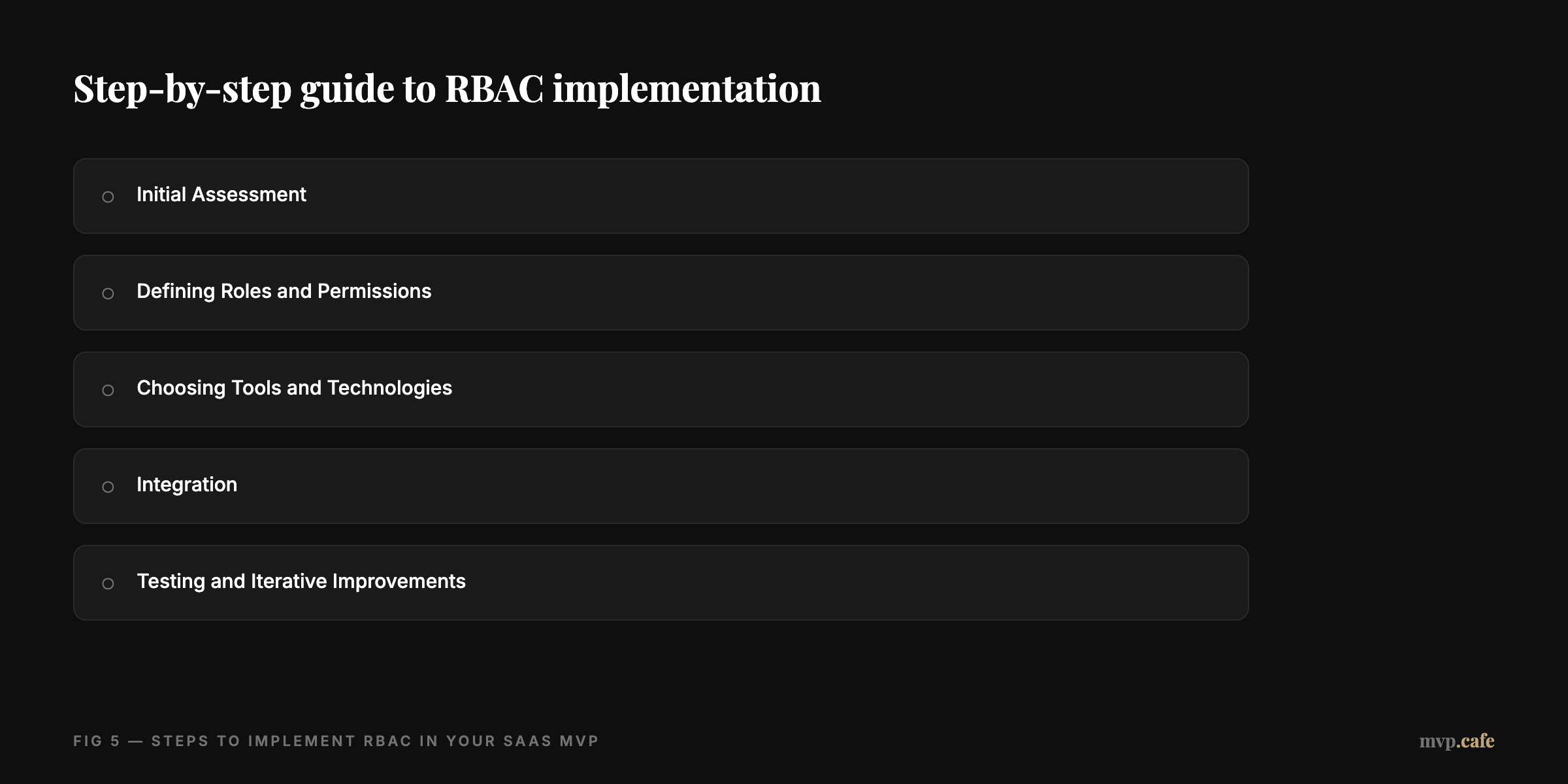
Ready to dive into RBAC for your SaaS MVP? Here’s a quick guide:
-
Initial Assessment: Understand who needs what access and why.
-
Defining Roles and Permissions: Clearly outline roles. It’s not just about security; it’s about aligning with business objectives.
-
Choosing Tools and Technologies: Pick tools that fit your tech stack. Your MVP needs flexibility over complexity.
-
Integration: Seamlessly integrate RBAC with existing systems. Compatibility is key to avoid future headaches.
-
Testing and Iterative Improvements: Test extensively and iterate. This is where you fine-tune the balance between security and usability.
Implementing RBAC isn’t just about tech; it’s a strategy. For detailed guidance, consider our Strategy Sprint for tailored support.
Overcoming Objections and Challenges
Sure, RBAC implementation isn’t a walk in the park. Cost can be a big hurdle. But think of it as an investment in security and efficiency.
Technical complexity might seem daunting, especially for solo founders. But that’s where strategic guidance comes in. With the right plan, these hurdles are manageable.
Scalability is another concern. Your RBAC system should grow with your user base. And keep an eye on regulatory changes—factor these in from the start.
Our Strategy Sprint can help you tackle these challenges, ensuring your RBAC implementation is smooth and future-ready.
Getting RBAC right is crucial for any SaaS MVP aiming for 2026 success. With the right strategy, solo founders can build scalable, efficient systems perfectly aligned with business goals.