
How to Prioritize MVP Features (The ICE/RICE Framework for Founders)
Your feature list has 47 items. You have 6 weeks and $5K. Something’s gotta give.
Most first-time founders try to build everything. They end up shipping nothing — or worse, shipping a bloated product nobody understands in 30 seconds.
The founders who actually launch? They ruthlessly cut. They pick 3-5 features, ship them well, and learn from real users before adding anything else.
Here’s how to do that systematically instead of guessing.
Why Most Feature Lists Are Garbage
Every feature list starts the same way: brainstorming. You, your co-founder, maybe a few friends throwing ideas on a whiteboard. Feels productive. Isn’t.
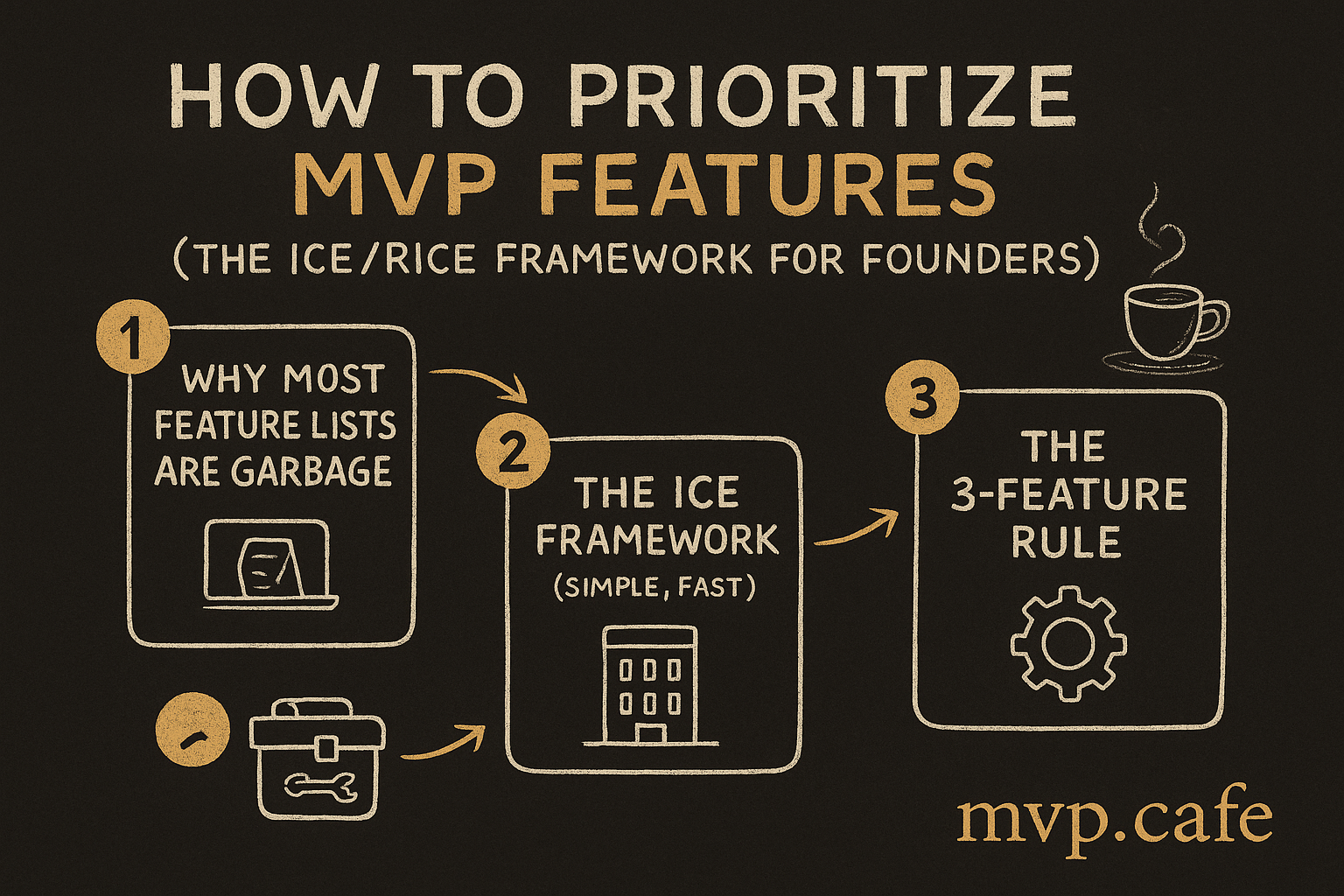
The problem: brainstorming optimizes for creativity, not impact. You end up with a list sorted by “what’s cool” instead of “what moves the needle.”
Signs your feature list needs surgery:
- More than 10 items for v1
- No feature has been validated with actual users
- Everything feels “must-have”
- You can’t explain the product in one sentence
- Features serve different user segments
The ICE Framework (Simple, Fast)
ICE = Impact × Confidence × Ease
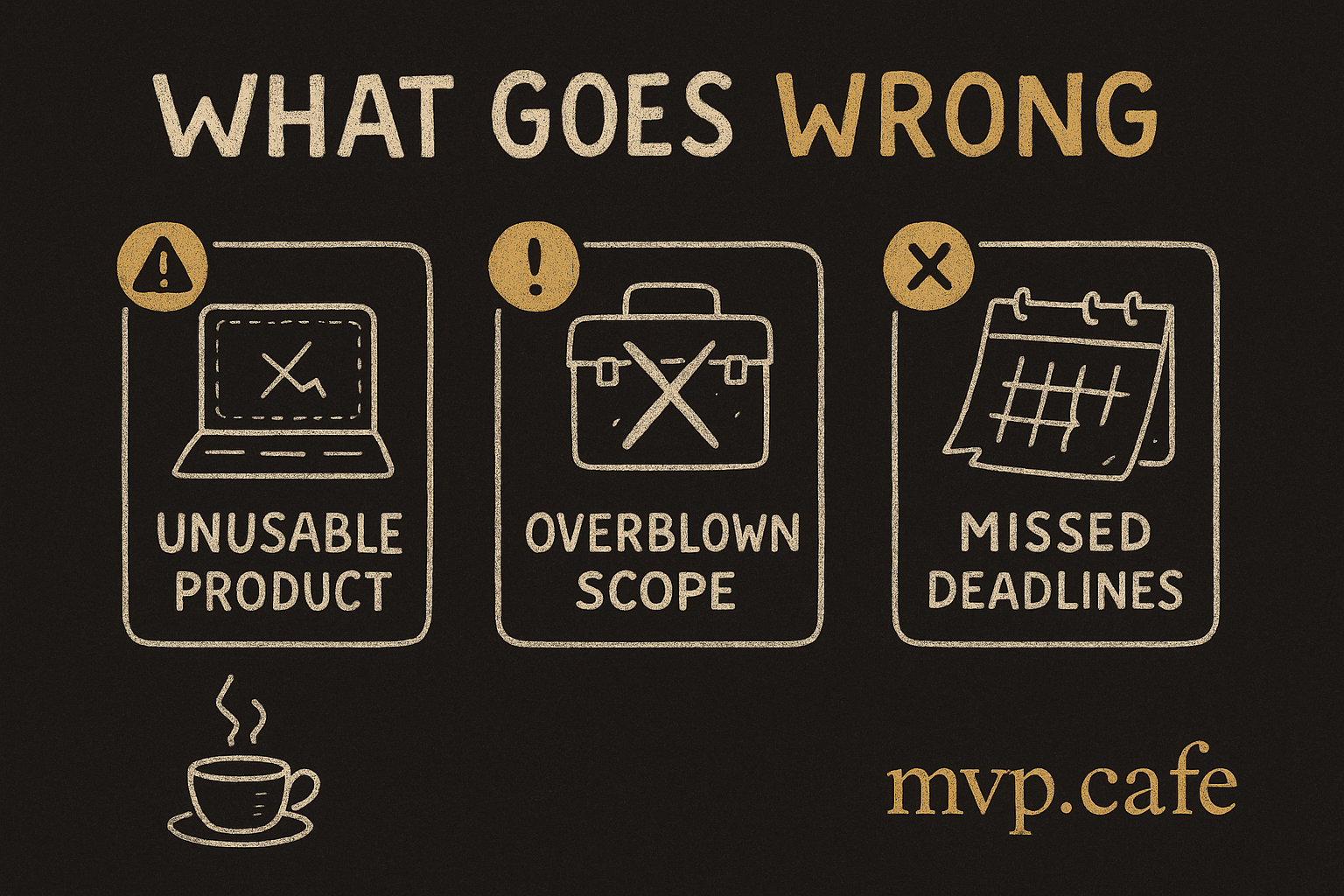
Score each feature 1-10 on three dimensions:
| Dimension | What It Means | Score 1 | Score 10 |
|---|---|---|---|
| Impact | How much does this move the core metric? | Nice-to-have | Makes or breaks the product |
| Confidence | How sure are you this will work? | Total guess | Validated with users |
| Ease | How fast can you build it? | Months of work | A weekend |
ICE Score = (I + C + E) / 3
When to Use ICE
- Solo founder or tiny team
- Early stage (pre-launch)
- Quick decisions needed
- Less than 20 features to evaluate
ICE in Practice
Let’s say you’re building a task management app for freelancers:
| Feature | Impact | Confidence | Ease | ICE Score |
|---|---|---|---|---|
| Time tracking per task | 9 | 8 | 7 | 8.0 |
| Client invoicing | 8 | 7 | 4 | 6.3 |
| Kanban board | 6 | 9 | 8 | 7.7 |
| AI task suggestions | 7 | 3 | 3 | 4.3 |
| Calendar sync | 5 | 6 | 5 | 5.3 |
| Team collaboration | 4 | 4 | 2 | 3.3 |
Result: Time tracking and Kanban board are your MVP. Invoicing is v1.1. AI suggestions and team collab? Maybe never.
The RICE Framework (More Rigorous)
RICE = (Reach × Impact × Confidence) / Effort
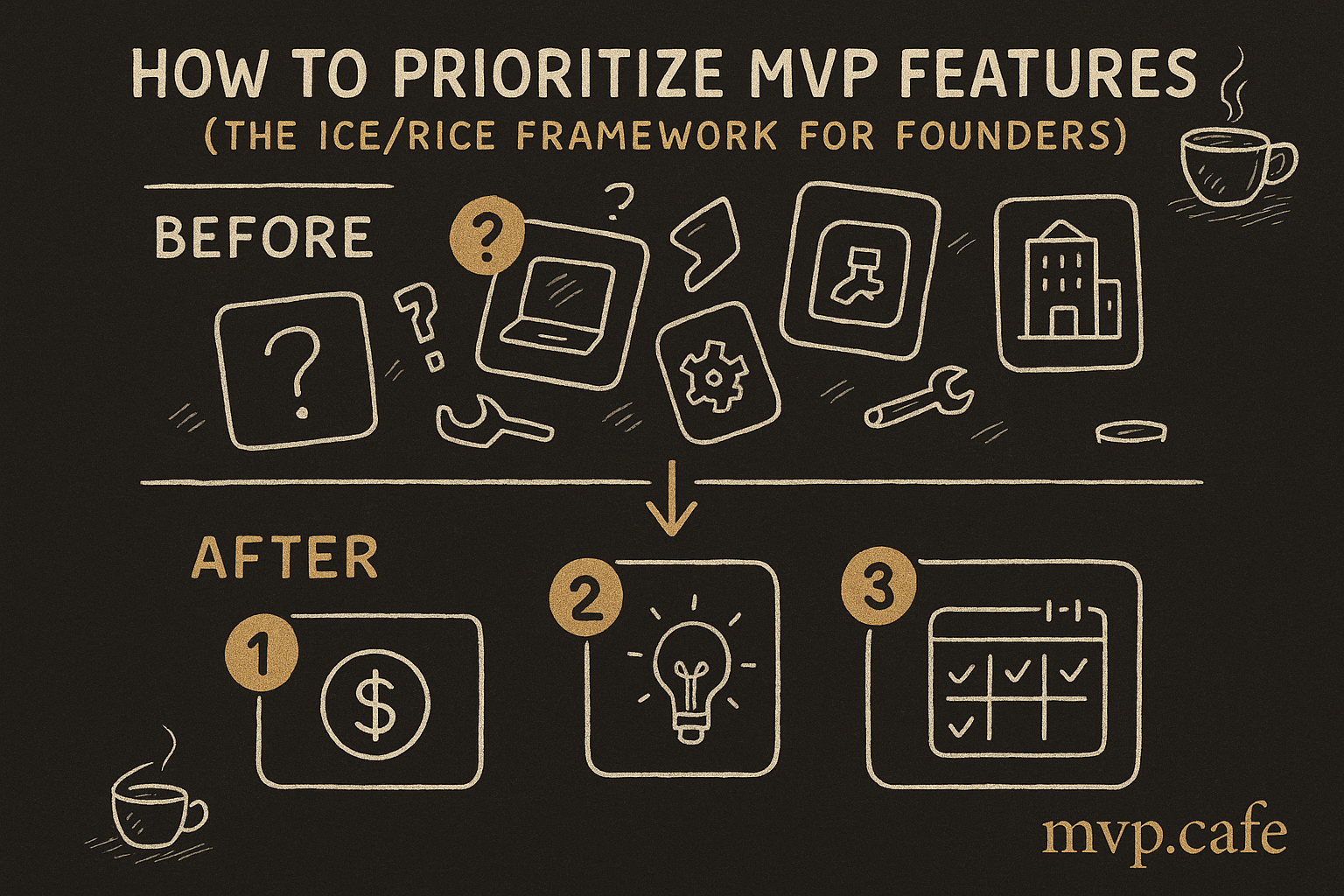
| Dimension | What It Means | How to Measure |
|---|---|---|
| Reach | How many users per quarter? | Estimated users/quarter |
| Impact | How much per user? | 0.25 (minimal) to 3 (massive) |
| Confidence | How sure? | 50%-100% (percentage) |
| Effort | Person-months | Engineering estimate |
When to Use RICE
- Team of 3+ people
- Post-launch feature decisions
- Need to justify priorities to stakeholders
- Comparing features across different products
RICE in Practice
Same task management app, post-launch with 500 users:
| Feature | Reach | Impact | Confidence | Effort | RICE Score |
|---|---|---|---|---|---|
| Recurring tasks | 400 | 2 | 90% | 1 | 720 |
| Slack integration | 200 | 1 | 70% | 2 | 70 |
| Mobile app | 350 | 2 | 80% | 4 | 140 |
| Custom reports | 100 | 1 | 60% | 3 | 20 |
Result: Recurring tasks wins by a mile. High reach, moderate impact, easy to build.
The 3-Feature Rule
Here’s the uncomfortable truth: your MVP should have 3-5 features. Total.
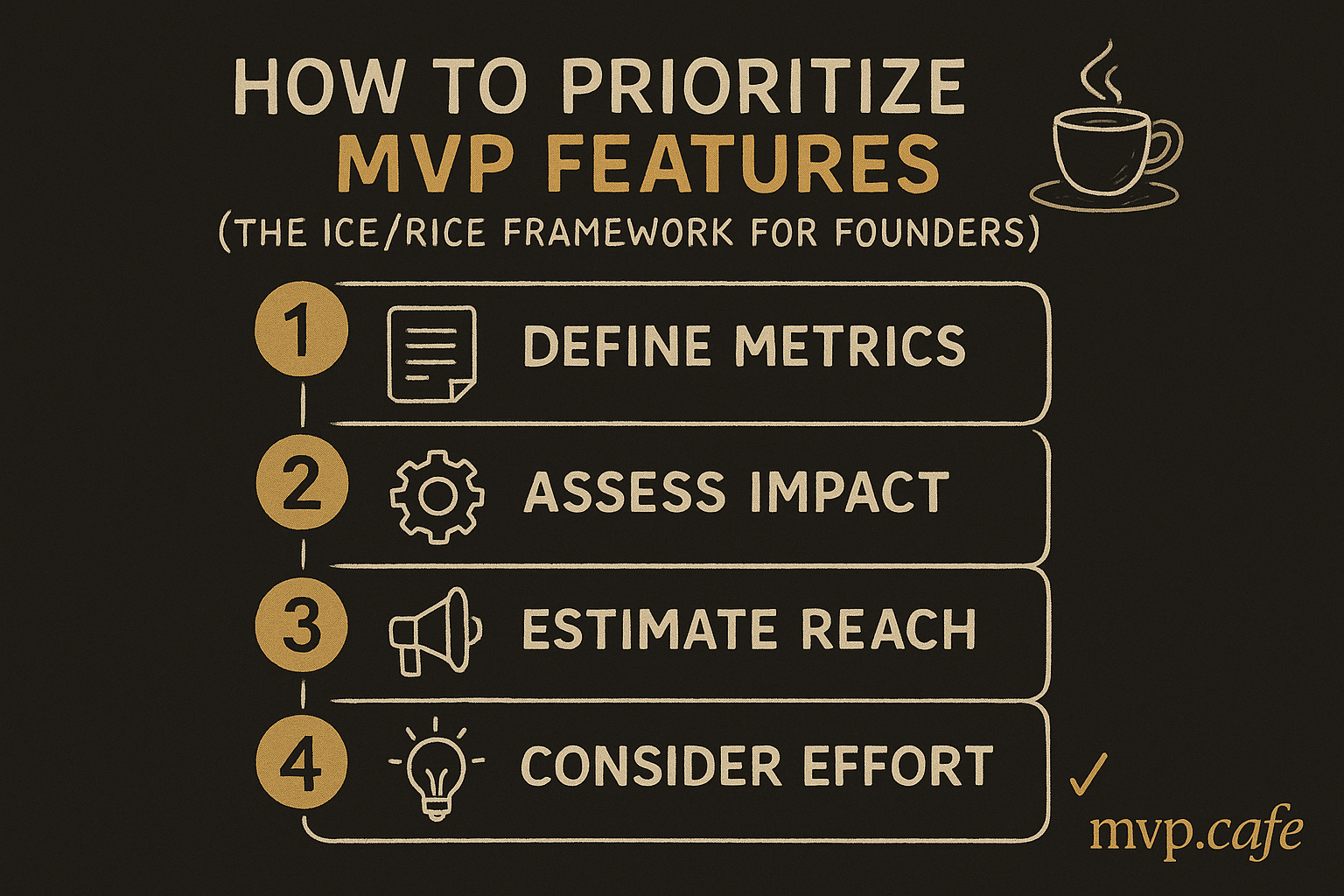
Not 3-5 categories with sub-features. Three to five things the user can do.
How to Apply It
- Score everything with ICE or RICE
- Draw a line after feature #5
- Kill everything below the line (not “later” — kill it)
- Validate the top 5 with 5 potential users
- Cut to 3 based on user feedback
The “Would They Pay?” Test
For each feature in your top 5, ask:
“If this feature didn’t exist, would you still pay for the product?”
If the answer is yes for most users → it’s not core. Cut it.
If the answer is no → it’s core. Keep it.
Common Prioritization Mistakes
1. “But Competitors Have It”
Competitors built those features over years with millions in funding. You’re not them. Ship what’s different, not what’s expected.
2. “Users Asked For It”
Which users? How many? Users ask for everything. The question isn’t “did someone request this?” — it’s “will this drive retention/activation?“
3. “It’s Easy to Build”
Easy features pile up. Each one adds UI complexity, testing burden, and cognitive load for new users. Easy ≠ free.
4. “We Need It For Launch”
No, you need something for launch. You need the right something. A focused 3-feature MVP that solves one problem well beats a 15-feature product that does everything poorly.
5. The “Platform” Trap
“We’re building a platform.” No. You’re building a product that solves one problem for one person. Platforms emerge from traction, not architecture.
Your Prioritization Workflow
Step 1: Brain Dump (30 min) Write every feature idea. No filtering. Get it all out.
Step 2: Score (1 hour) Apply ICE (solo) or RICE (team). Be honest with confidence scores — most founders score 8+ on everything, which defeats the purpose.
Step 3: Stack Rank (15 min) Sort by score. Look at the top 5. Does this feel right? If your gut says no, adjust — but document why.
Step 4: User Validate (1 week) Show the top 5 to 5 potential users. Ask: “Which of these would make you use this product daily?” Remove anything nobody picks.
Step 5: Commit (5 min) Pick 3. Write them on a sticky note. That’s your MVP. Everything else goes to a “maybe later” list that you never look at until after launch.
The Output: Your MVP Feature Spec
After prioritization, you should have:
MVP: [Product Name] v0.1

Core Problem: [One sentence]
Target User: [One person]

Features:
1. [Feature] — solves [specific problem]
2. [Feature] — enables [specific outcome]
3. [Feature] — differentiates from [alternative]

NOT building (and why):
- [Feature] — low confidence, validate post-launch
- [Feature] — easy but not core
- [Feature] — competitor parity, not differentiation
This one-pager is more valuable than a 40-page PRD. It forces clarity.
What’s Your Build Score?
Not sure if your feature priorities are right? The mvp.cafe Build Score evaluates your MVP across 5 dimensions — including feature focus and scope discipline. Takes 3 minutes, completely free.
If your score shows feature bloat, our Strategy Sprint helps you cut to the 3 features that matter in a focused 90-minute session. You’ll walk away with a prioritized roadmap your developer can start building tomorrow.
Stop building everything. Start building what matters.