
Understanding MVP Analytics in 2026
In 2026, if you’re serious about your MVP, analytics needs to be top of your list. Picture this: you’re a solo founder, just launched your MVP, but skipped analytics. It’s like driving with your eyes closed. In today’s world, that’s the perfect recipe for disaster.
Here’s the thing—analytics are crucial. They provide the insights you need to make smart decisions. Without them, you’re just guessing. And trust me, guessing won’t get you far when you’re building something people genuinely want.
The tech world is moving fast. Tools that seemed fresh last year might already be outdated. This rapid change affects our approach to analytics. The trick is to pick tools that meet today’s needs and can adapt for tomorrow. [INLINE IMAGE: data-viz — Graph showing the growth of data-driven decision-making importance over time]
Data-driven decision making is the backbone of MVP success. It shows you which features users love, which they don’t, and where your limited resources should go. Want more on why analytics matter for MVPs? Dive into our detailed blog post.
Choosing the Right Product Analytics Tools for 2026
Finding the right analytics tools for your MVP is key. There are plenty out there, but not all will suit your needs. Your mission? Pick tools that offer what you need without drowning you in complexity.
Start with a checklist: ease of integration, scalability, and support for real-time data analysis. Mixpanel, Amplitude, and Google Analytics are solid picks for 2026. They balance powerful features with user-friendliness.
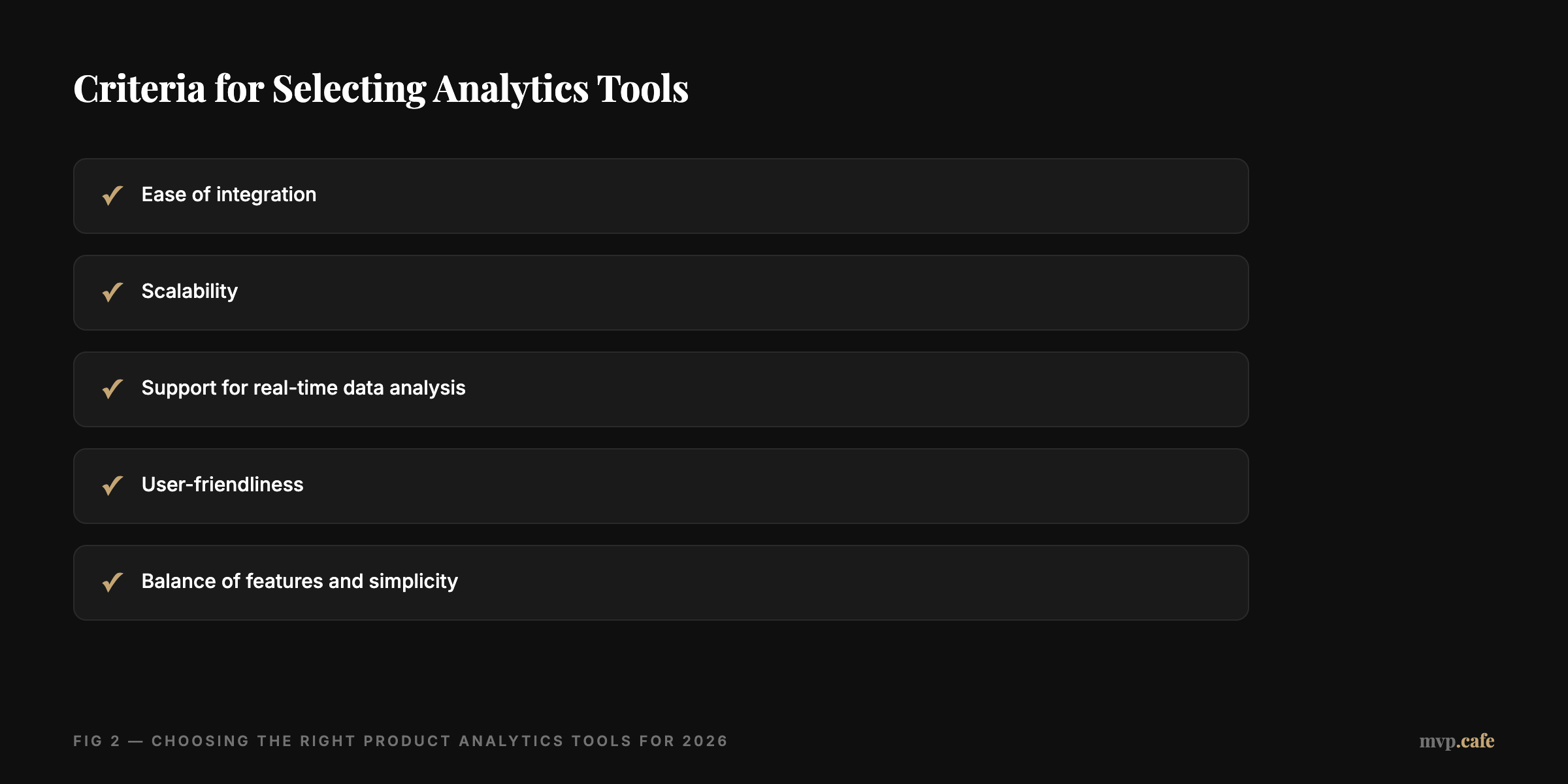
Remember, balance is crucial. While it’s tempting to grab tools with all the bells and whistles, simplicity often wins. You need tools that help your product, not ones that require a PhD to set up.
With companies like ZYOD, I’ve seen how the right tools can slash setup time and boost data accuracy. Across the 45+ products I’ve built, simplicity has always come out on top. You don’t want to spend more time setting up analytics than actually developing your product.
Avoiding Overengineering in Your Analytics Setup
Overengineering is a trap many solo founders fall into. It’s tempting to keep adding features to your analytics setup. But more isn’t always better.
A common mistake is adding too many tools and tracking every metric imaginable. If setting up your analytics takes more time than using them, you’re likely overengineering.

The red flags? Data you never look at, dashboards more complicated than your product, and a setup that’s always breaking down. Recognize any of these? Time to simplify.
To avoid this, set clear goals for your analytics. Regularly review your setup to ensure it still aligns with these goals. Thinking about a Strategy Sprint for streamlined analytics could keep you on track.
Step-by-Step Guide to Setting Up MVP Analytics
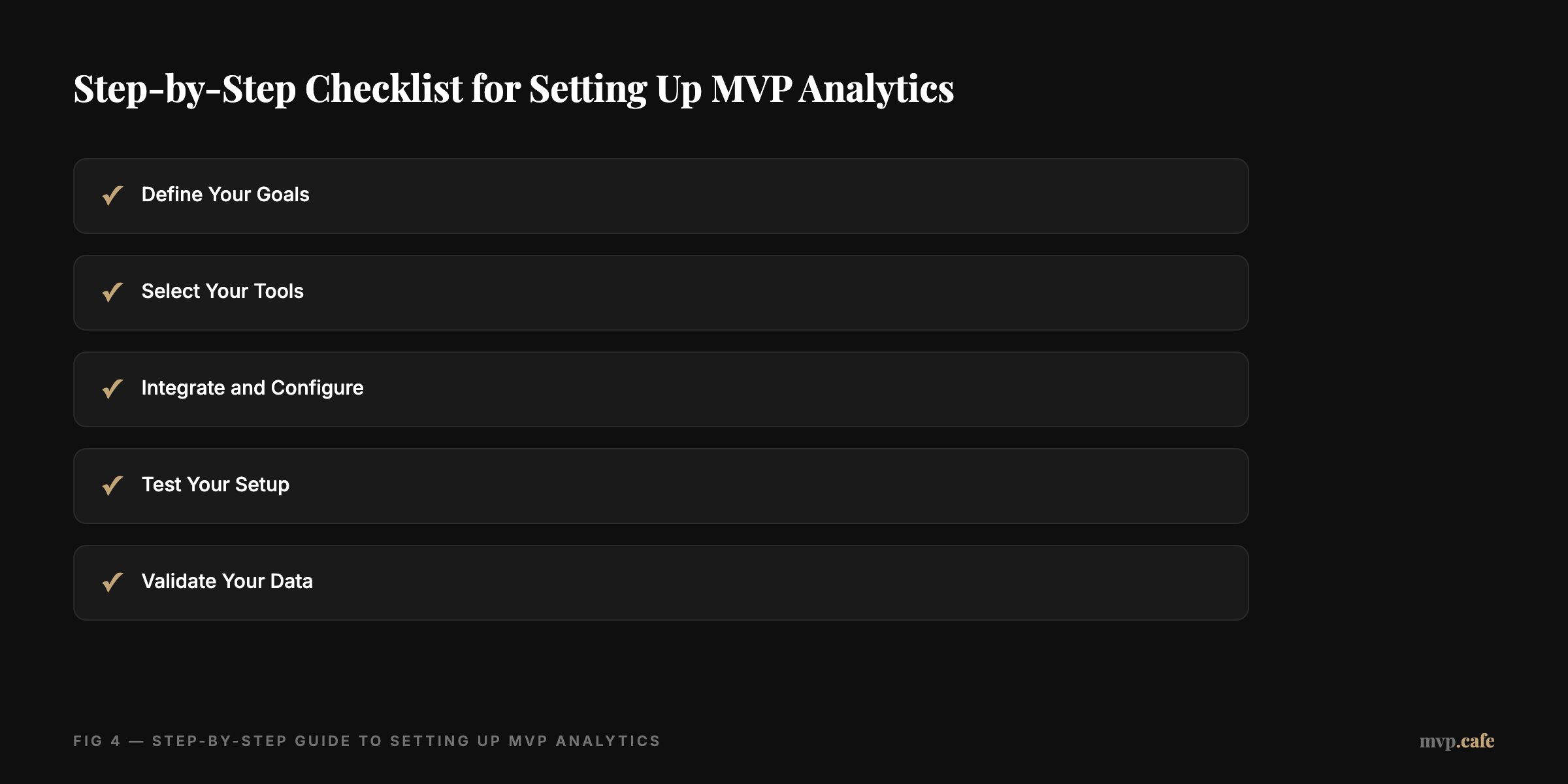
Here’s your step-by-step guide to setting up MVP analytics efficiently:
- Define Your Goals: What do you want to know from your data?
- Select Your Tools: Choose tools that match your goals and are easy to integrate.
- Integrate and Configure: Set up your tools to track key metrics.
- Test Your Setup: Make sure everything is capturing data correctly.
- Validate Your Data: Regularly check that your data is sensible and actionable.
This method ensures a solid yet simple analytics setup. For a real-world example, check out our case study on ZYOD and their winning MVP analytics setup.
Remember, the goal is to make data-driven decisions, not get buried in unnecessary data. Testing and validating are crucial steps. They make sure your setup stays effective and evolves with your product.
Pitfalls to Avoid in MVP Analytics
Even with the best intentions, mistakes happen. Here are some common pitfalls to dodge:
- Over-reliance on Complex Tools: Don’t let fancy features distract you from your primary goals.
- Ignoring Data Validation: Make sure your data is accurate and meaningful.
- Neglecting Ongoing Analysis and Iteration: Regularly review your analytics to ensure they continue to serve your needs.

Avoid these missteps, and you’ll be well on your way to maintaining an efficient and effective analytics setup.
By following these guidelines, you’ll not only set up your MVP analytics effectively but also ensure they’re a valuable asset in your decision-making toolkit.
Ready to take your MVP to the next level? Consider a Strategy Sprint to streamline your analytics and ensure your product is on the right path.