
Startup Idea Validation: A Framework That Actually Works
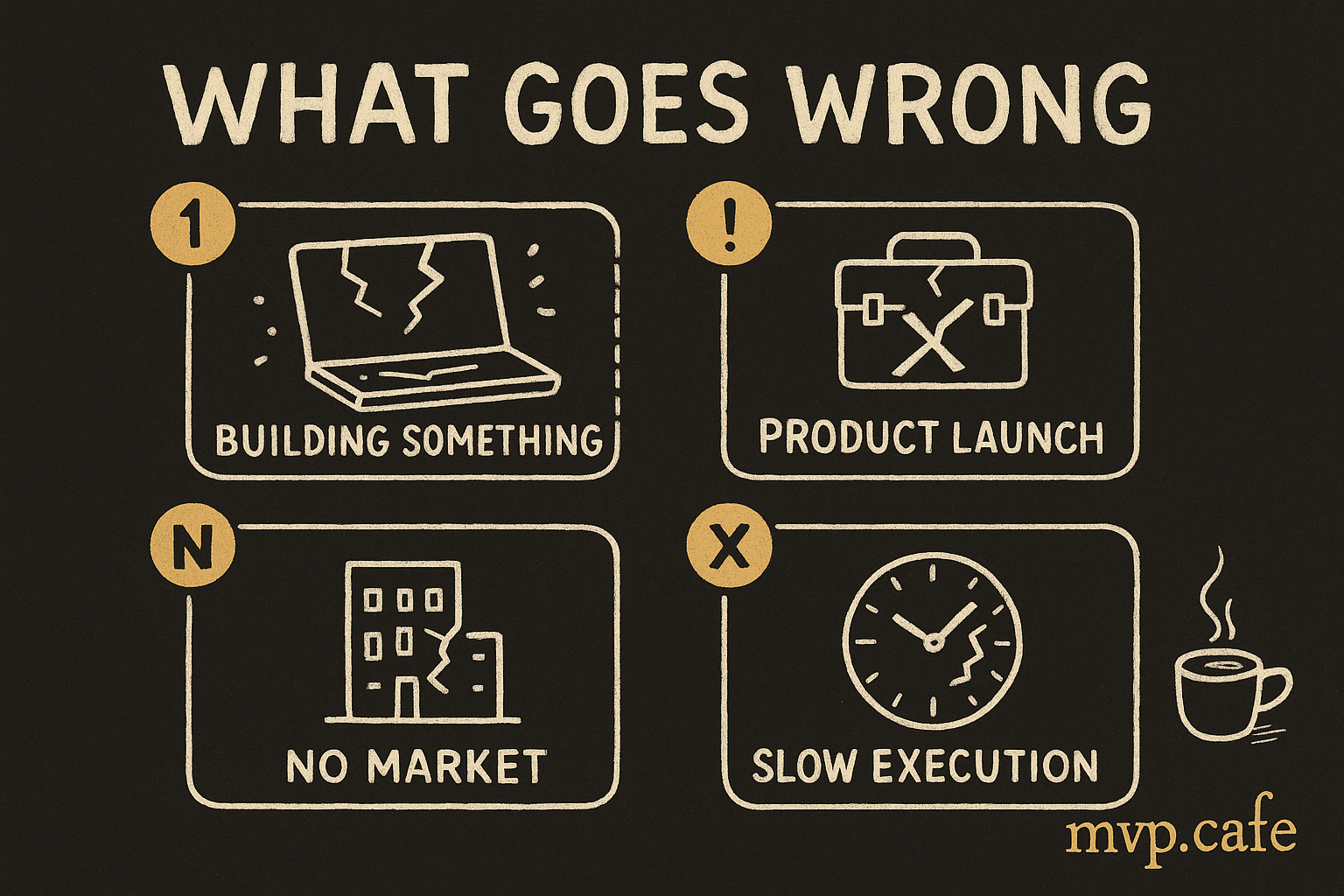
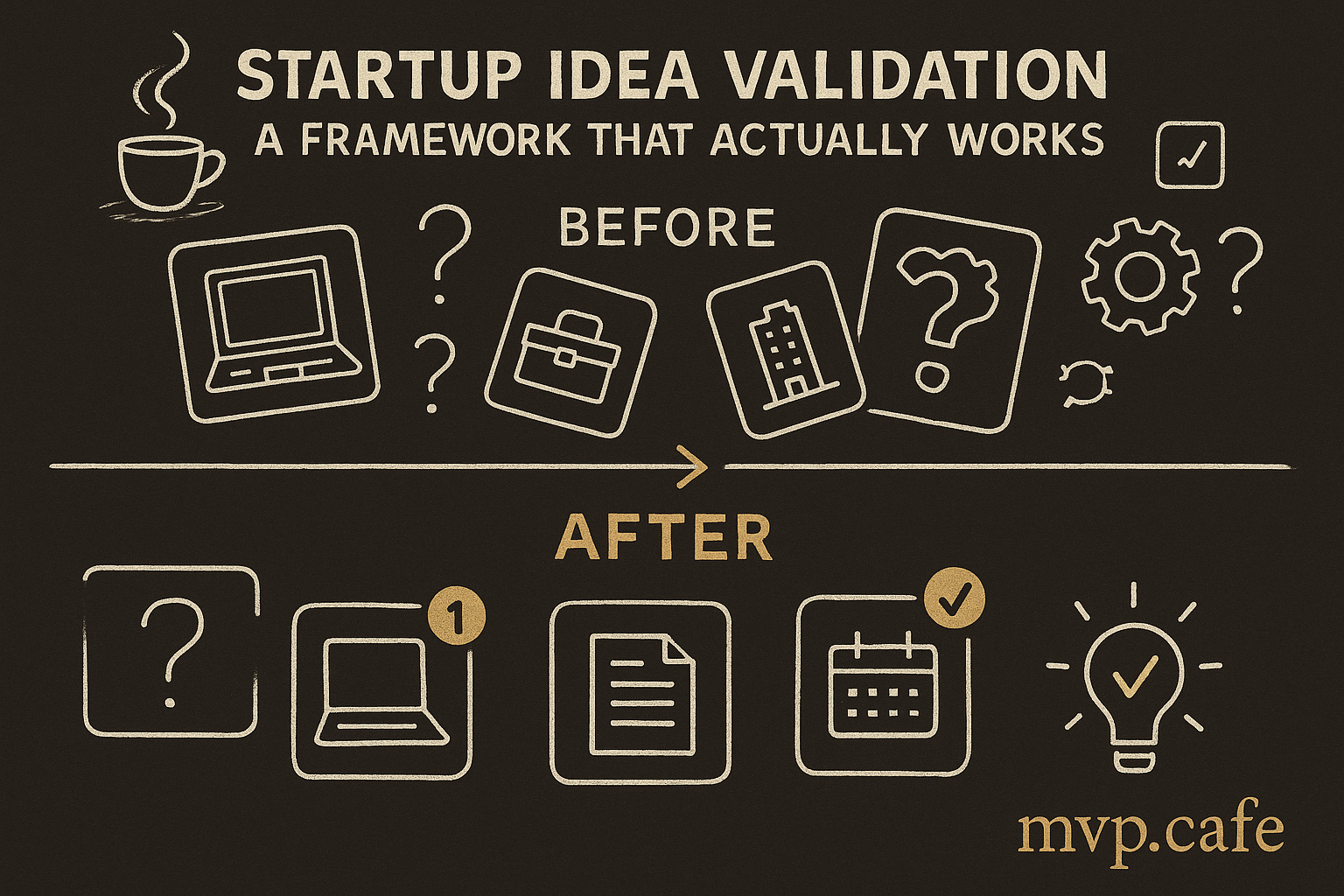
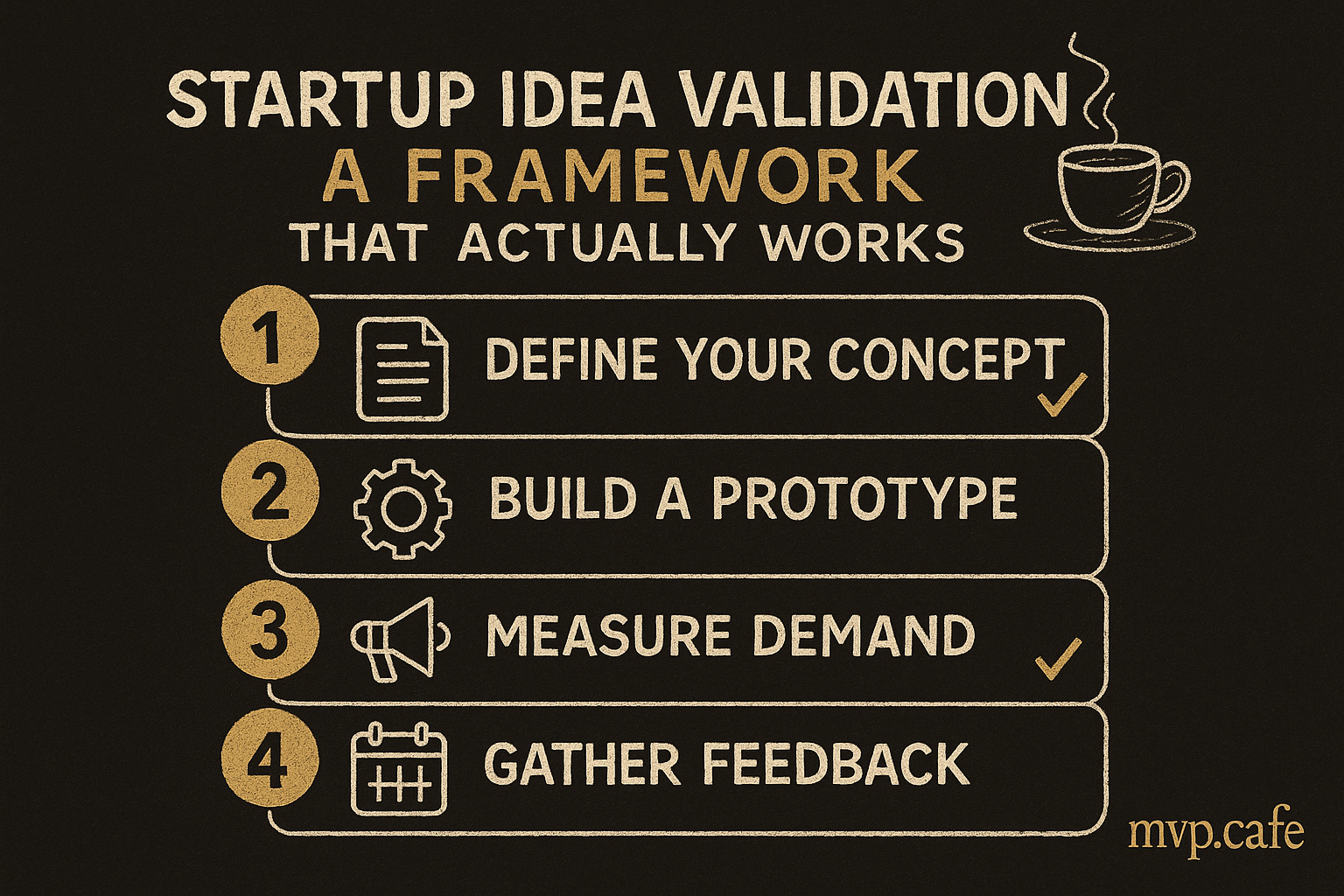
Most founders make the mistake of either rushing headlong into building or getting stuck in endless planning. Both are the fast lanes to startup graveyards. What you need is a methodical approach to validate your idea, which means actually proving there’s a market for it before you write a single line of code. I’ve shipped over 45 products, and let me tell you, idea validation is what separates the winners from the wannabes.
Here’s a framework that actually works. It’s not about”talking to users” in some generic sense — it’s about who you talk to, what you ask, and knowing when to pivot or persist.
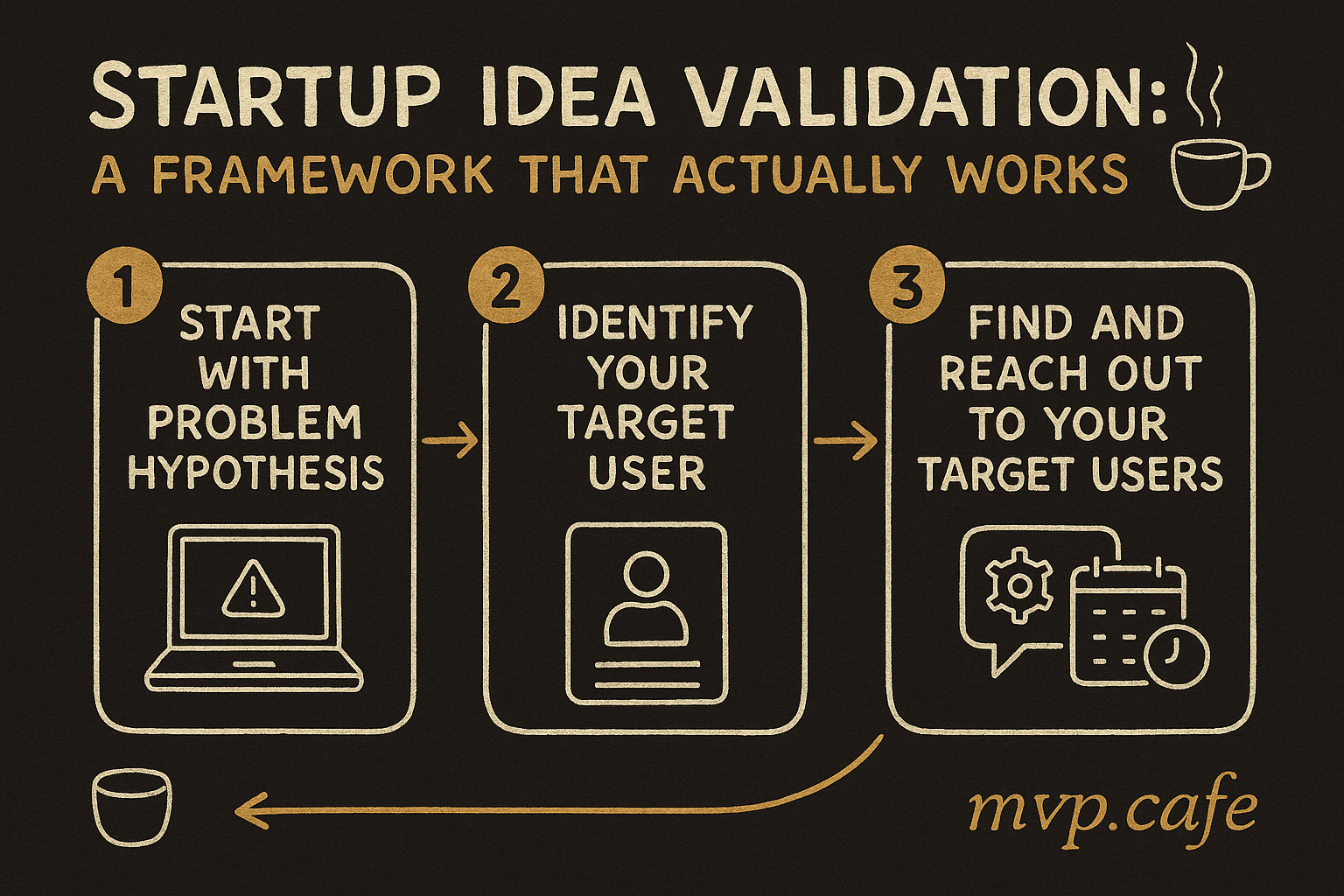
Step 1: Start with Problem Hypothesis
Every great product solves a specific problem. What’s yours? Be laser-focused. If your problem statement is more than a sentence long, it’s too complex.
Example:“Freelancers struggle to get paid on time.”
Action Point:
- Write down your problem hypothesis.
Step 2: Identify Your Target User
Before you start booking Zoom calls, pinpoint who exactly faces your problem. Be specific.”Freelancers” is a start, but”freelancers in tech making over $50k annually” is better.
Action Point:
- Define your target user with at least three specific characteristics.
Step 3: Find and Reach Out to Your Target Users
You need to talk to people who actually face the problem. Here’s how you find them:
- Online Communities: Join forums, subreddits, LinkedIn groups specific to your target users.
- Paid Ads: Use Facebook or LinkedIn ads to target your defined audience.
- Email outreach: Cold email prospects using tools like Hunter.io or Apollo.io.
Action Point:
- Reach out to 100 potential users. Yes, 100. Expect a 10% response rate.
Step 4: Conduct Interviews
Here’s the meat of your validation. The aim is to understand the problem’s depth, not sell your solution.
Questions to Ask:
- How do you currently deal with the problem?
- How much does this problem cost you (time, money, stress)?
- What solutions have you tried before?
- On a scale of 1-10, how urgent is it for you to solve this problem?
Pro tip: Shut up and listen. The more they talk, the more you learn.
Action Point:
- Conduct at least 15 interviews.
Step 5: Analyze Your Findings
After your interviews, patterns will emerge. Look for these signals:
- Consistency: Are multiple people describing the same problem in similar terms?
- Pain Level: If you hear”I hate dealing with this” or see visible frustration, you’re onto something.
- Current Solutions: If existing solutions are cumbersome or unsatisfactory, you’re in a good spot.
Action Point:
- Summarize your findings in three bullet points.
Step 6: Decision Time — Pivot or Persist
Based on your findings, you have two options:
- Persist: If you found a consistent problem that’s urgent and inadequately solved, proceed to building an MVP.
- Pivot: If the problem isn’t as big as you thought, or if current solutions are satisfying, rethink your approach or target user.
Example Pivot: Let’s say you learned that tech freelancers generally have a good handle on getting paid, but creative freelancers don’t. Shift your focus accordingly.
Action Point:
- Decide to pivot or persist. Document your reasoning.
Step 7: Validate Willingness to Pay
Before you build, you need to know if users will open their wallets. Create a landing page with a simple offer and ask for an email sign-up or a pre-order.
Action Point:
- Run a $100 ad campaign to your landing page. Aim for at least a 5% conversion rate.
Step 8: Build and Iterate
If you’ve made it here, congratulations. You’ve got a validated problem and a willing market. Now and only now, start building your MVP.
Action Point:
- Set a 4-week limit to build your MVP. Keep it scrappy.
Conclusion
Startup idea validation isn’t about getting a pat on the back. It’s about getting brutal, honest feedback and using it to make informed decisions. When you know your problem, your audience, and their willingness to pay, you’re on the path to building something worthwhile.
Still unsure about how to move forward? Consider letting us at mvp.cafe guide you through the trenches of idea validation and MVP development. After all, we’ve been there, done that, and shipped 45+ products in the process.