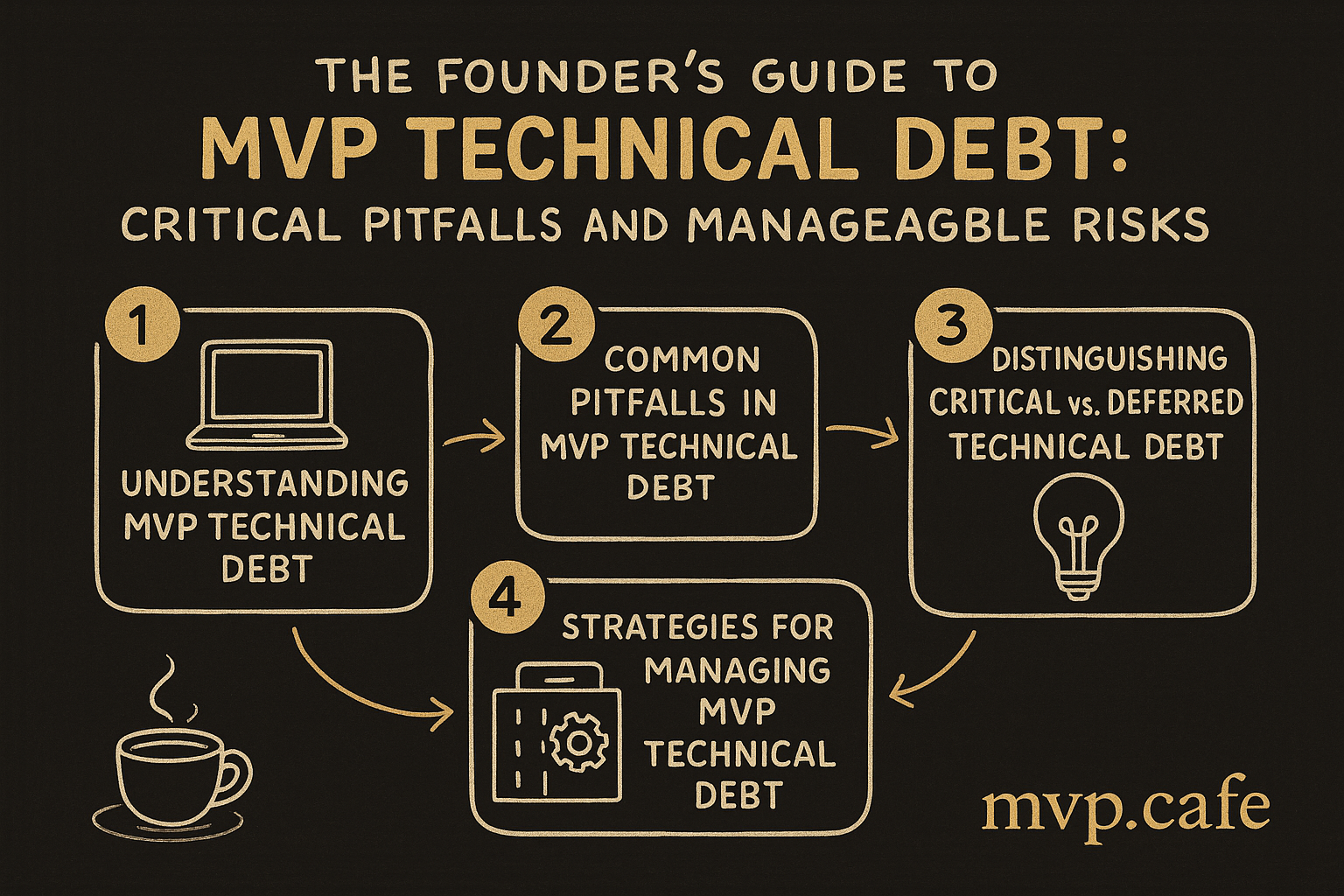
Understanding MVP Technical Debt
Let’s dig into something every founder dreads but just can’t escape: technical debt. When it comes to an MVP, technical debt is that extra workload you rack up by picking the easy route today instead of the smart one that takes longer. It’s like going for the cheap shoes that wear out fast. Sure, they save some bucks upfront, but you’ll end up paying more in the long haul.
For solo founders, getting this is key. There’s no big team to bail you out later. In the usual software development game, technical debt is always lurking. But with an MVP, it’s on steroids. The MVP stage is all about speed and iteration, and it’s super tempting to take shortcuts. Beware. Those shortcuts can turn into massive headaches down the road. [INLINE IMAGE: framework — Visual representation of technical debt in MVPs]
Common Pitfalls in MVP Technical Debt
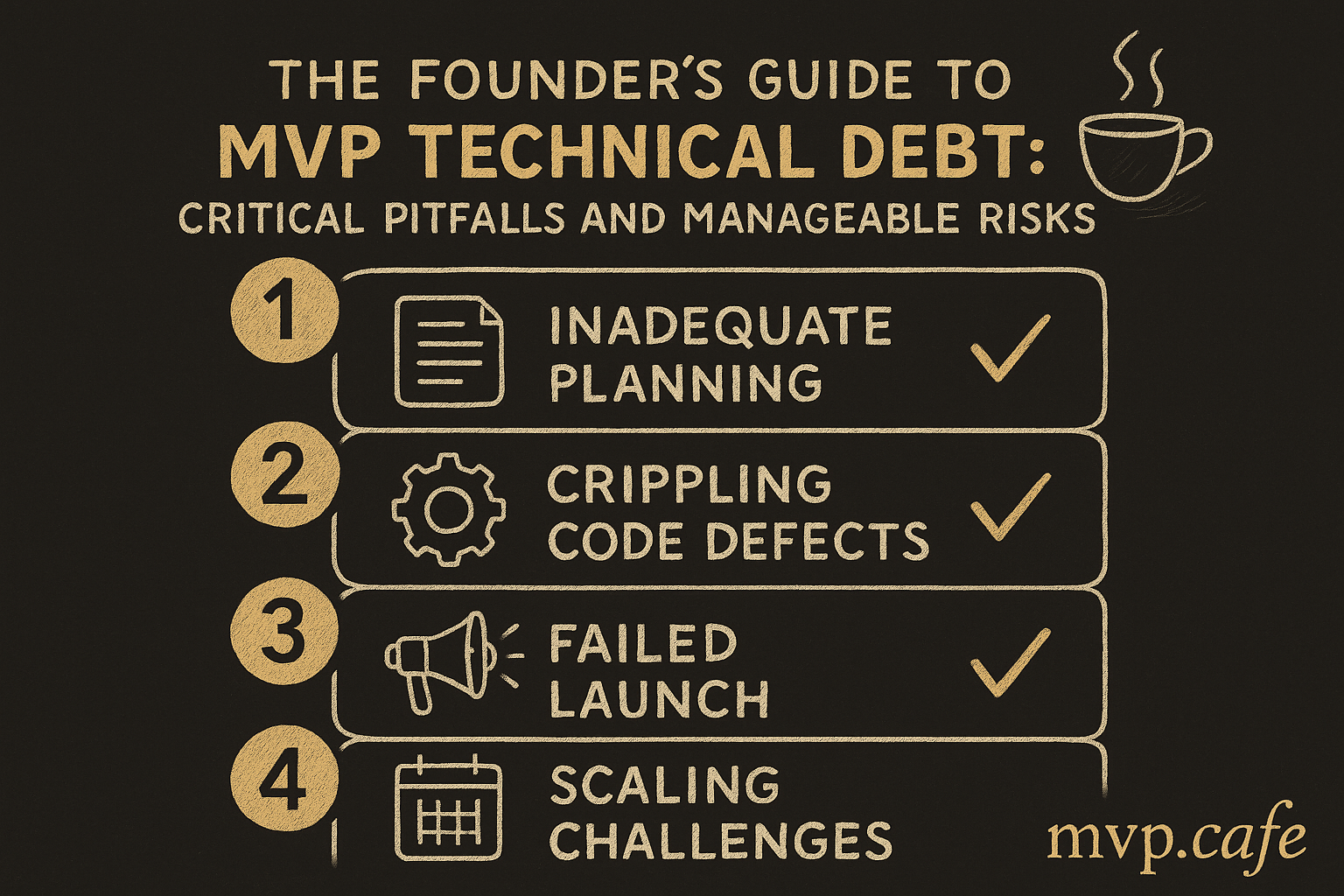
Let’s talk about some common traps that lead to this technical debt fiasco. First up, overlooking documentation. You’re rushing to launch, so you skip the detailed write-ups. Fast forward a bit, and no one remembers why things were done a certain way. In my experience, this mistake can cause significant project delays.

Then there’s the big one: ignoring scalability. Your MVP might handle 100 users but falls apart at 10,000. I’ve seen companies launch without considering future growth, leading to chaos and system overhauls.
Lastly, using outdated tech. It’s easy to stick with what you know, but tech isn’t static. Cling to old tools, and you’ll find yourself overhauling the entire codebase. These pitfalls can cripple progress, so dodge them like the plague.
Distinguishing Critical vs. Deferred Technical Debt
Not all technical debt is created equal. Some can wait, others won’t let you off easy. Critical technical debt? That’s the stuff affecting user experience, security, or scaling. Ignore it, and your MVP might crash and burn.
On the flip side, deferred technical debt includes issues that don’t need immediate attention. These can be tackled later when resources permit. At GoMechanic, we learned to prioritize core features first, saving aesthetic fixes for later.
Skimping on critical debt is a disaster recipe. It leads to unhappy users and costly repairs. Startups have folded because they couldn’t clear their technical debt on time. Prioritize smartly to keep your MVP nimble and responsive.
Strategies for Managing MVP Technical Debt
Managing technical debt needs a plan. First, set your priorities. Frameworks like the Eisenhower Matrix help distinguish the urgent from the important. This isn’t just theory; it’s a practical guide to decide what needs fixing now.
Regular audits are your ally. They catch issues before they snowball. Regular audits can catch bugs that might derail a launch, as I’ve experienced in past projects.
Leverage strategies like automated testing and code reviews. They might seem like a time sink, but they stop minor issues from becoming major headaches.
The Role of a Clarity Strategy Sprint
Wondering how to implement all this? Check out the Clarity Strategy Sprint. It’s designed to help solo founders like you navigate the murky waters of technical debt. Think of it as a focused session to pinpoint critical debts and cook up a plan.
During a sprint, you’ll get insights tailored to you. The goal? Walk away with a clear path, skipping the pitfalls that have tripped up many startups. Many companies find these sprints transformative in managing technical debt. Check out their case study. [INLINE IMAGE: none]
Avoiding Long-Term Risks of Technical Debt
Long-term, unmanaged technical debt is a silent killer. It balloons costs, frustrates users, and stifles growth. I’ve seen startups that brushed off debt during the MVP phase only to face unsustainable operational costs later.
To dodge these risks, plan for scalability and weave debt management into your routine. Sounds tedious? It might be, but it’s worth it. Regularly revisiting your debt keeps it from spiraling out of control. [INLINE IMAGE: bar-chart — Comparison of startups with and without technical debt management]