title: "Why Your MVP Doesn't Need a Mobile App Yet: A Cost-Effective Guide for Solo Founders"
description: "Solo founders should prioritize web-based MVPs to save resources and validate their models before investing in mobile apps."
pubDate: "2026-05-26"
author: "Aman Jha"
image: "/images/blog-web-based-mvp-vs-mobile.webp"
ogImage: "/images/blog-web-based-mvp-vs-mobile-og.webp"
template: "expert-take"
tags: ["MVP", "Product Development", "Startup"]
keywords: ["web-based MVP", "cost-effective MVP development", "validate MVP without mobile app", "strategic MVP launch", "resource allocation for MVP"]
targetICP: "solo"
draft: false
faq:
  - question: "What is the difference between a web-based MVP and a mobile app MVP?"
    answer: "A web-based MVP is accessible via browsers on any device. A mobile app MVP requires platform-specific code and app store releases. That costs more and takes longer."
  - question: "How can I validate my MVP without a mobile app?"
    answer: "Start with a browser-friendly prototype. Gather user feedback immediately. Then iterate for 13 days or more. You don't need an app store to prove demand."
  - question: "Why should solo founders start with a web MVP?"
    answer: "Because they can launch faster, cheaper, and pivot easily. That’s exactly what a solo founder needs when resources are tight."
  - question: "What are the cost benefits of a web MVP?"
    answer: "Web MVP development typically costs 30-50% less than mobile builds due to unified codebases and no separate app store overhead."
  - question: "Can a web-based MVP reach enough users?"
    answer: "Yes. A single link can be shared anywhere. Modern web frameworks ensure responsive designs for a broad audience."
---

## The Uncomfortable Truth About MVP Development Costs

I've seen it happen. Solo founders pouring their savings into flashy mobile apps thinking it's the way to go. They think "MVP" means affordable. But a mobile MVP often eats up ₹8 to ₹12 Lakh before you even know if your idea holds water. That's a tough blow for someone flying solo with limited resources.


<figure>
  <img src="/blog/inline/why-your-mvp-doesnt-need-a-mobile-app-yet/fig-01-framework.png" alt="The core framework" />
  <figcaption>The core framework</figcaption>
</figure>

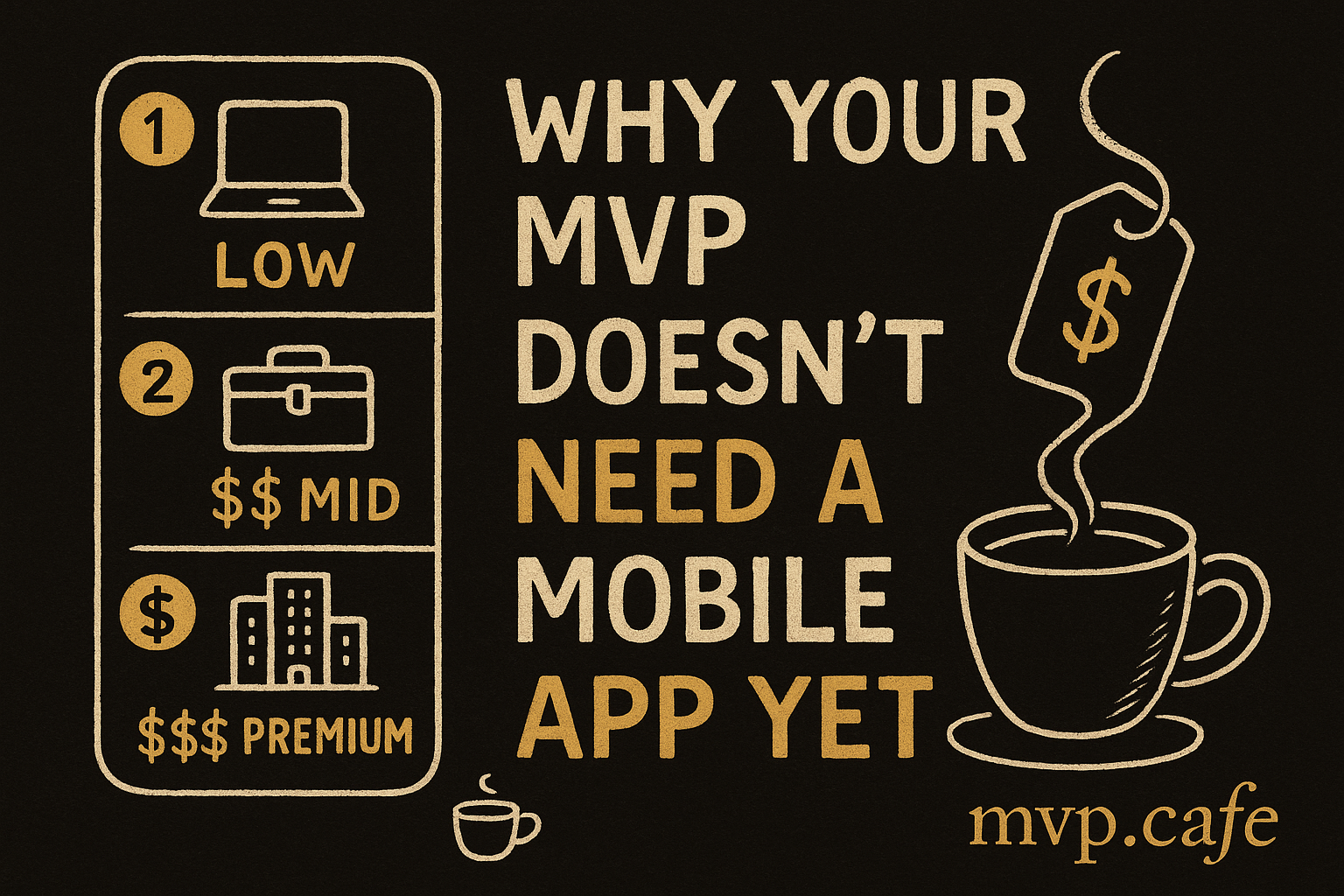
Been there, done that. Across 45+ product builds, I’ve learned a mobile app MVP costs about 1.5 times more than a basic web build. Why? Mobile requires separate code for iOS and Android, developer fees, and dealing with app store rules. On the other hand, a web-based MVP needs just one codebase. Throw in a hosting plan costing a few thousand rupees and maybe 13 days if you’re laser-focused on essentials.

Here's the thing: web lets you move fast. Validate user flows, get feedback, fix bugs on the fly. Compare that to the mobile app cycle where app store approvals can take up to 5 days after each update. And they might even reject your update because of a tiny guideline misstep. Not great for a solo founder strapped for time.

The bottom line? If you’re flying solo, don't blow your runway on a half-cooked mobile MVP. I’ve seen it too often. I shake my head and steer founders towards a simpler web-based path. Usually, they end up saving 40% or more from day one.


## Why Everyone’s Jumping to Mobile Apps (And Why It’s a Mistake)

It's tempting, I get it. You see startups rolling out snazzy iOS and Android updates weekly. You get bombarded with "mobile-first experiences" ads. Your phone's cluttered with apps. So you think, "I need an app to be legit." But that's not the full story.


<figure>
  <img src="/blog/inline/why-your-mvp-doesnt-need-a-mobile-app-yet/fig-02-failure-modes.png" alt="Common failure modes" />
  <figcaption>Common failure modes</figcaption>
</figure>

Many MVP plans often include mobile concepts due to the popularity of mobile platforms. Founders get lured by push notifications, in-app purchases, and the allure of app store distribution. Sounds cool. But it masks the real cost. Maintaining a mobile app is a never-ending pit. You've got to support older devices, test on multiple screen sizes, and handle OS updates at least once a year. That’s another 30% more overhead just in developer time.

First-time founders often rush to mobile out of fear of losing user loyalty. They believe people only stick around if there's an app icon on their phone. Sure, being a tap away is nice. But if your idea isn’t solid, that app icon is meaningless.

I fell into this at Fourzip early on. We toyed with a mobile interface for real-time vehicle tracking. Tried it for a quick pilot. Within days, it was clear a web-based dashboard did the job. We saved 8 weeks of development and got feedback from over 10K vehicle owners at a fraction of the cost. Zero regrets.

## Reframing MVP Success: Start with Web-Based MVPs

Let's rethink this. A "minimum viable product" isn’t about having a shiny mobile presence. It's about validating user demand as quickly as you can. That’s where web-based MVPs shine.


<figure>
  <img src="/blog/inline/why-your-mvp-doesnt-need-a-mobile-app-yet/fig-03-before-after.png" alt="Before vs after" />
  <figcaption>Before vs after</figcaption>
</figure>

At ZYOD, we had a 30-person team working on multiple prototypes. We used a web platform to streamline manufacturing for 700+ IoT-enabled sewing machines. One web MVP shipped in 23 days. It drastically cut down the usual back-and-forth on fabric inventory. We never even considered a separate mobile app for that pilot. The entire setup worked through a responsive site managers could load on any device. Result? A 70% drop in fabric cycle time.

For solo founders, the math is even clearer. A web-based MVP slashes overhead and skips the app store update chaos. You can plug in third-party tools for analytics, registration, or payments easily. No native code headaches. Feedback comes in almost real time. If the market doesn’t like your idea, pivot fast. No approval required. No extra code branches.

Still craving that native app feel? Try a progressive web app (PWA) framework. It’s like a web MVP on steroids. Acts like a mobile app but doesn’t trap you in iOS or Android limbo. Perfect for a first attempt. Ideal for a founder with tight resources.

Once you've proven demand, that’s when you go for a dedicated mobile experience. With data and users to back you up, the extra cost is justified. That’s what I call a strategic MVP launch.

Looking for a detailed process? I offer a [Strategy Sprint](/strategy-sprint) for those needing clarity on efficiently building a web-based MVP. It's a fast way to test your assumptions without blowing the budget.


## Data-Driven Insights: Cost and Time Efficiency of Web-Based MVPs

Let’s crunch some numbers. A typical mobile MVP build for iOS and Android can swallow 6 to 10 weeks. That’s design, coding, testing, and app store approval. Meanwhile, a web-based MVP could be live in 3 to 5 weeks. For a small dev team or a solo effort, that difference is massive.


<figure>
  <img src="/blog/inline/why-your-mvp-doesnt-need-a-mobile-app-yet/fig-04-checklist.png" alt="Action checklist" />
  <figcaption>Action checklist</figcaption>
</figure>

Budget-wise, creating separate code for iOS and Android doubles the developer hours. With a web-based route, one codebase with some UI tweaks usually suffices. Expect at least 30-50% cost savings. Different tech stacks vary, but this savings pattern is consistent across almost all products I've launched.

Time-to-market is crucial. During my time at GoMechanic, we prioritized web for membership growth features, then added mobile later. We cut our user feedback loop from 10 days to 2 just by skipping store approvals. That 8-day edge was a game-changer for quick iteration.

Quick iteration is everything. Most MVPs will pivot at least once. Reworking code for two mobile platforms doubles the pivot cost. With a web-based MVP, changes roll out in hours. That agility is critical when testing your model. If you’re not adapting swiftly, you’re missing the boat.

For a deeper dive on costs and development cycles, check my blueprint on [building an MVP](/mvp-build). I cover typical budget ranges for various tech stacks and how to eliminate non-essentials.


## Addressing Objections: What About User Experience and Reach?

I hear it often: "But I'll lose users if I don't have an app." My take? You’ll lose more if your product isn’t up to scratch. Perfect the core experience on a browser first rather than stretching yourself thin with a mobile app lacking key features. A web-based MVP doesn’t inherently mean a poor UI. You can still create a responsive, touch-friendly design that looks and feels good across devices. Users won’t shun your product just because they have to open Chrome or Safari.

Reach is another worry. But a shareable link for a web-based MVP can spread like wildfire via messaging apps and social media. Often, it’s less of a hassle than asking users to download an app. That friction is enormous, especially if you're unproven in the market.

Concerned about retention? Use email nudges or SMS reminders. Test in-app messaging if you want. Plenty of web plugins mimic mobile app experiences. No need to dive into native code for that. Focus on delivering true value. If the value is there, users will come. Then, if you decide you need a dedicated mobile interface, you can always build one. No big deal.

The first step is user validation. A web-based MVP excels at that: quick launches, easy sharing, low overhead. If you’re unsure about crafting a solid user experience without an app, grab an [espresso](/espresso) session with me. We’ll figure out your next move together.

---

## FAQ

**Q1: What is the difference between a web-based MVP and a mobile app MVP?**
A web-based MVP is accessible via browsers on any device. A mobile app MVP requires platform-specific code and app store releases. That costs more and takes longer.

**Q2: How can I validate my MVP without a mobile app?**
Start with a browser-friendly prototype. Gather user feedback immediately. Then iterate for 13 days or more. You don’t need an app store to prove demand.

**Q3: Why should solo founders start with a web MVP?**
Because they can launch faster, cheaper, and pivot easily. That’s exactly what a solo founder needs when resources are tight.

**Q4: What are the cost benefits of a web MVP?**
Web MVP development typically costs 30-50% less than mobile builds due to unified codebases and no separate app store overhead.

**Q5: Can a web-based MVP reach enough users?**
Yes. A single link can be shared anywhere. Modern web frameworks ensure responsive designs for a broad audience.

---

I’m all for building polished experiences. But if you’re on your own, a choice that saves you weeks and lakhs of rupees is a no-brainer. Be smart. Validate your MVP with a simple web product. Then scale up once you’ve confirmed there’s enough demand to warrant an app. If you need clarity or a validated roadmap, I can help you dial in the details with a quick [Strategy Sprint](/strategy-sprint). Don’t burn your budget when a fast, web-based MVP will do. Focus on proving your vision first. The rest can come later.
Frequently Asked Questions
What is the difference between a web-based MVP and a mobile app MVP?
Clarify the technical and strategic distinctions.
How can I validate my MVP without a mobile app?
Provide methods to validate using web-based MVPs.
Why should solo founders start with a web MVP?
Explain the strategic and financial benefits.
What are the cost benefits of a web MVP?
Discuss the cost savings compared to mobile apps.
Can a web-based MVP reach enough users?
Affirm that it can, with strategies for maximizing reach.