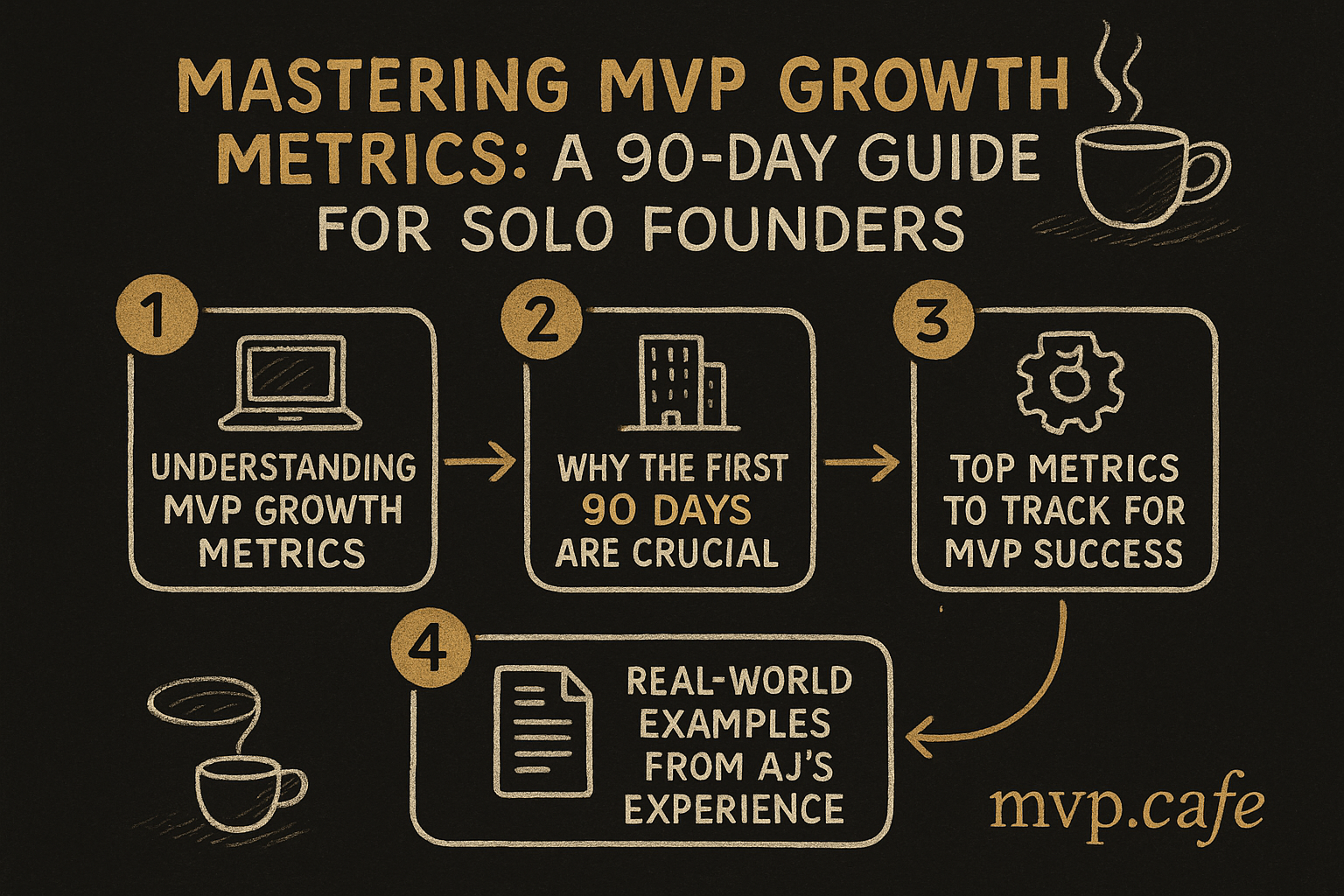
Understanding MVP Growth Metrics
Launching an MVP can feel like navigating a storm. You’ve got to keep your eye on the compass—growth metrics. These metrics are the heartbeat of your early-stage startup, especially in the first 90 days. So, what are we really talking about when we say MVP growth metrics? They’re your indicators of how well the MVP is grooving with the market. Tracking these helps you avoid chasing mirages and making decisions based on solid data, not a hunch.
Now, a common trap—getting caught up in those vanity metrics. They might look flashy but mean zilch when it comes to real growth. I’ve been there during my ZYOD days. The right metrics? They steer your ship, ensuring you’re not just building something cool but solving an actual problem.
Check out how our services work to give your MVP the best shot at success.
Why the First 90 Days Are Crucial
Those first 90 days after launch? They’re your MVP’s baptism by fire. Either you make a splash or you sink. For solo founders, it’s even tougher. You’re the jack-of-all-trades—code, marketing, support—and the clock’s ticking.
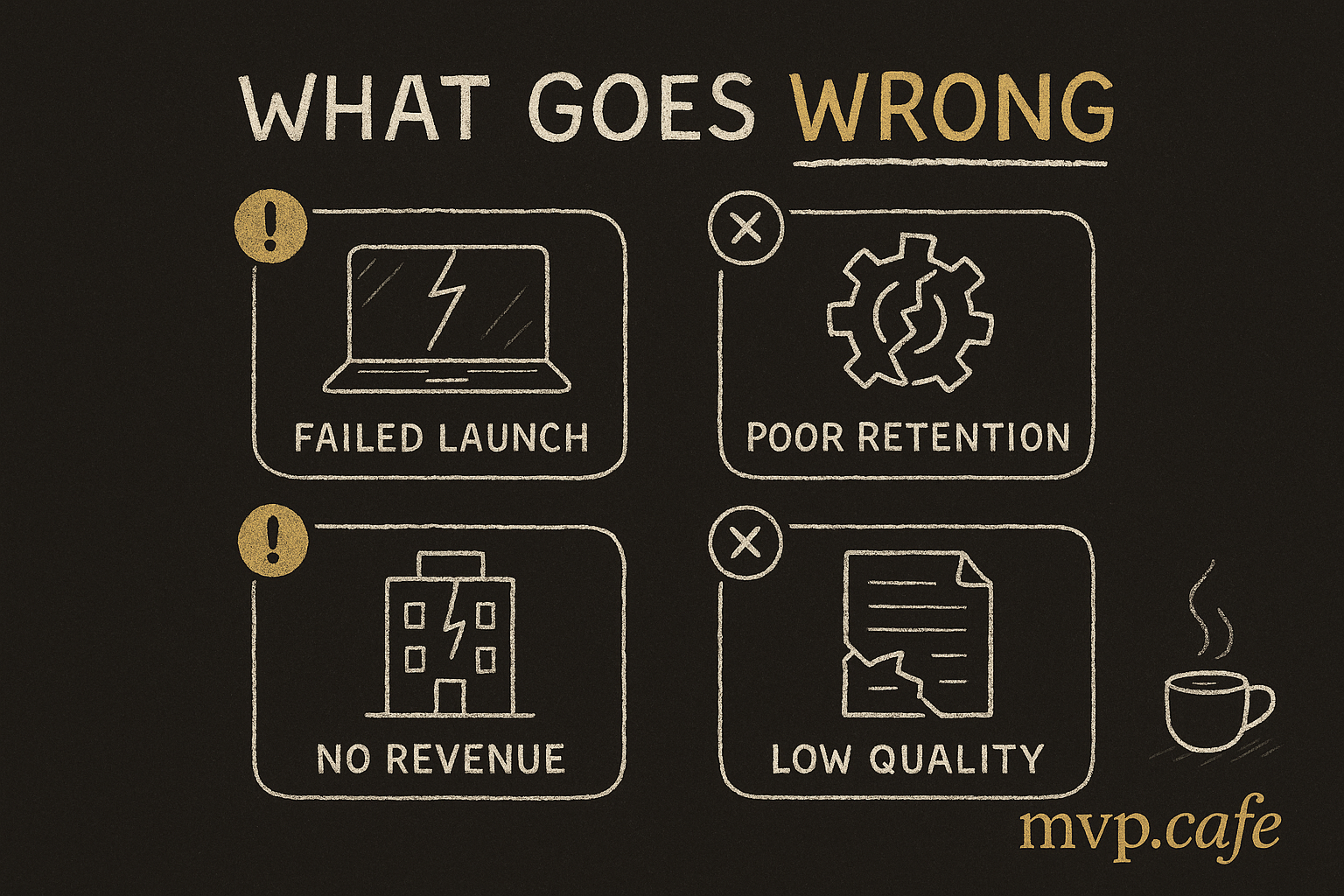
Early traction is a litmus test for long-term success. If your MVP isn’t making waves, it might be time for a pivot or a fresh approach. Feedback loops are essential here. They’re not just about collecting stats—they’re about learning and adapting to what the market whispers.
Top Metrics to Track for MVP Success
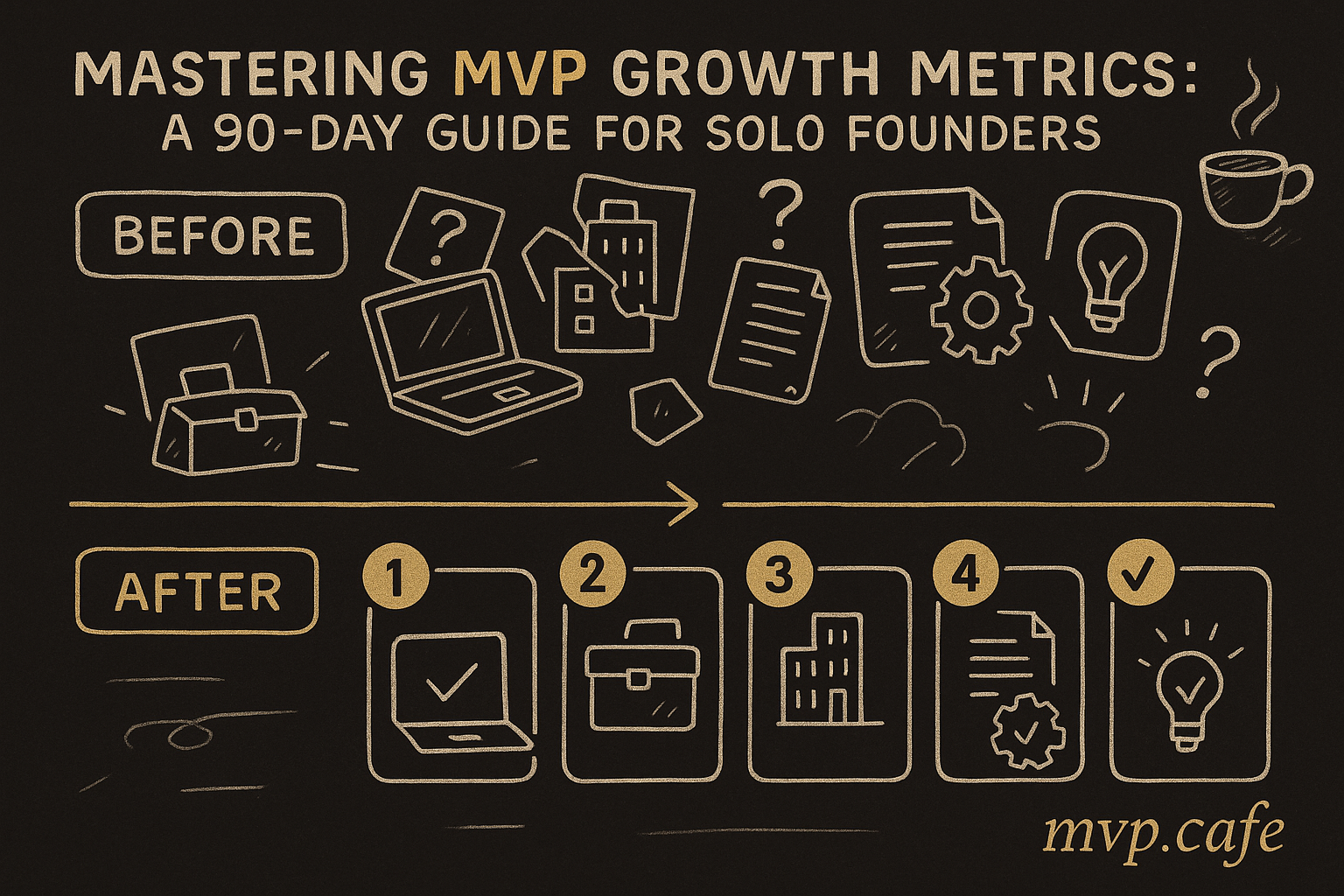
Let’s get into the nuts and bolts of the metrics that matter for an MVP:
-
Customer Acquisition Cost (CAC): This one’s big. It tells you how much it costs to bring a customer on board. If it’s sky-high, something’s got to change.
-
Churn Rate and Retention: This shows how many users stick around. If they keep leaving, that’s a red flag.
-
Engagement Metrics: Track user interaction. Are they coming back? Using it often? This data is invaluable.
-
Revenue and Profit Margins: Early revenue signals market interest. But don’t lose sight of your profit margins—they’re your sustainability gauge.
-
Product-Market Fit Indicators: Look for signs that users are hooked, like repeat usage or glowing reviews.
Real-World Examples from AJ’s Experience
Metrics aren’t just numbers—they’re stories. At ZYOD, focusing on CAC led to a marketing strategy overhaul and a 70% drop in acquisition costs. With UTMStamp, honing in on engagement metrics showed us where to tweak features, boosting signups by 80%.
These experiences taught me the value of strategic pivots. They aren’t failures—they’re opportunities to align better with the market. For more on the UTMStamp pivot, swing by our case study.
Building a Strategic Framework for MVP Growth
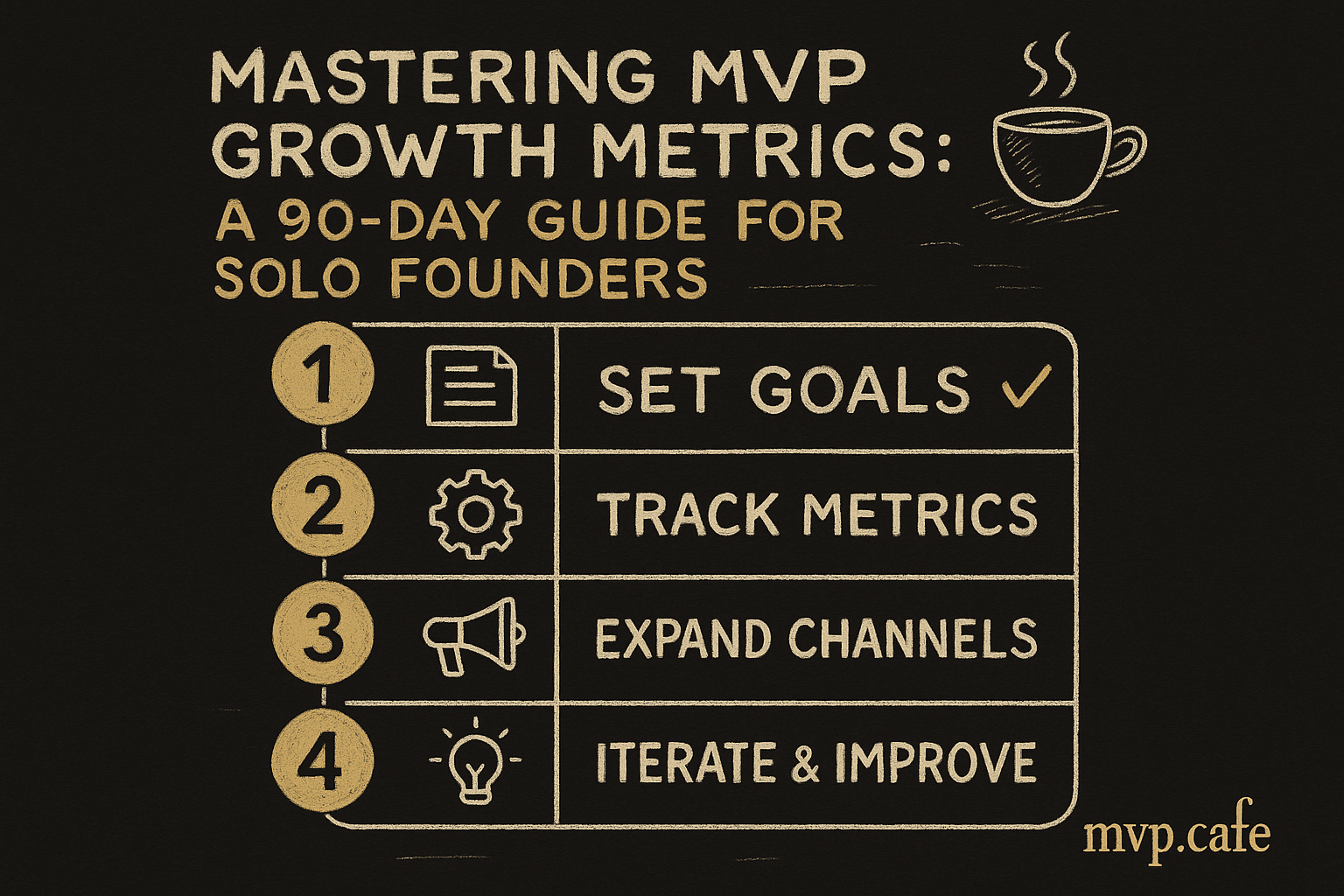
To grow your MVP, you need a strategy. Start with a solid tracking system—think Google Analytics. But remember, data without action is pointless. Use feedback to refine your strategy and continuously iterate.
A continuous improvement loop is your best friend. It means you’re not just reacting to data but actively enhancing your MVP. Tools like Mixpanel can help automate this, leaving you free to focus on building a product people love.
[INLINE IMAGE: framework — A strategic framework for tracking MVP growth metrics.]
Looking for a tailored strategy? Check out our Clarity Strategy Sprint.
Common Pitfalls and How to Avoid Them
Let’s steer clear of what not to do. Vanity metrics can be a rookie mistake. They might give you a false sense of achievement but don’t drive real growth. Inconsistent tracking leads to sketchy insights. And don’t skip on the qualitative data—user feedback adds context that numbers alone can’t provide.
Mistaking early wins for product-market fit is another trap. Just because your MVP is gaining traction doesn’t mean it’s ready to scale. Keep iterating, keep improving.
[INLINE IMAGE: iceberg — Iceberg illustrating visible vs. hidden pitfalls in MVP tracking.]
Avoid these common pitfalls, and you’re on the path to MVP success.
Getting the right metrics in the first 90 days can set the stage for your MVP’s long-term success. It’s about clarity, strategic pivots, and truly understanding your market. Ready to elevate your MVP? Our services can help you find that clarity.
Explore our Clarity Strategy Sprint to begin.