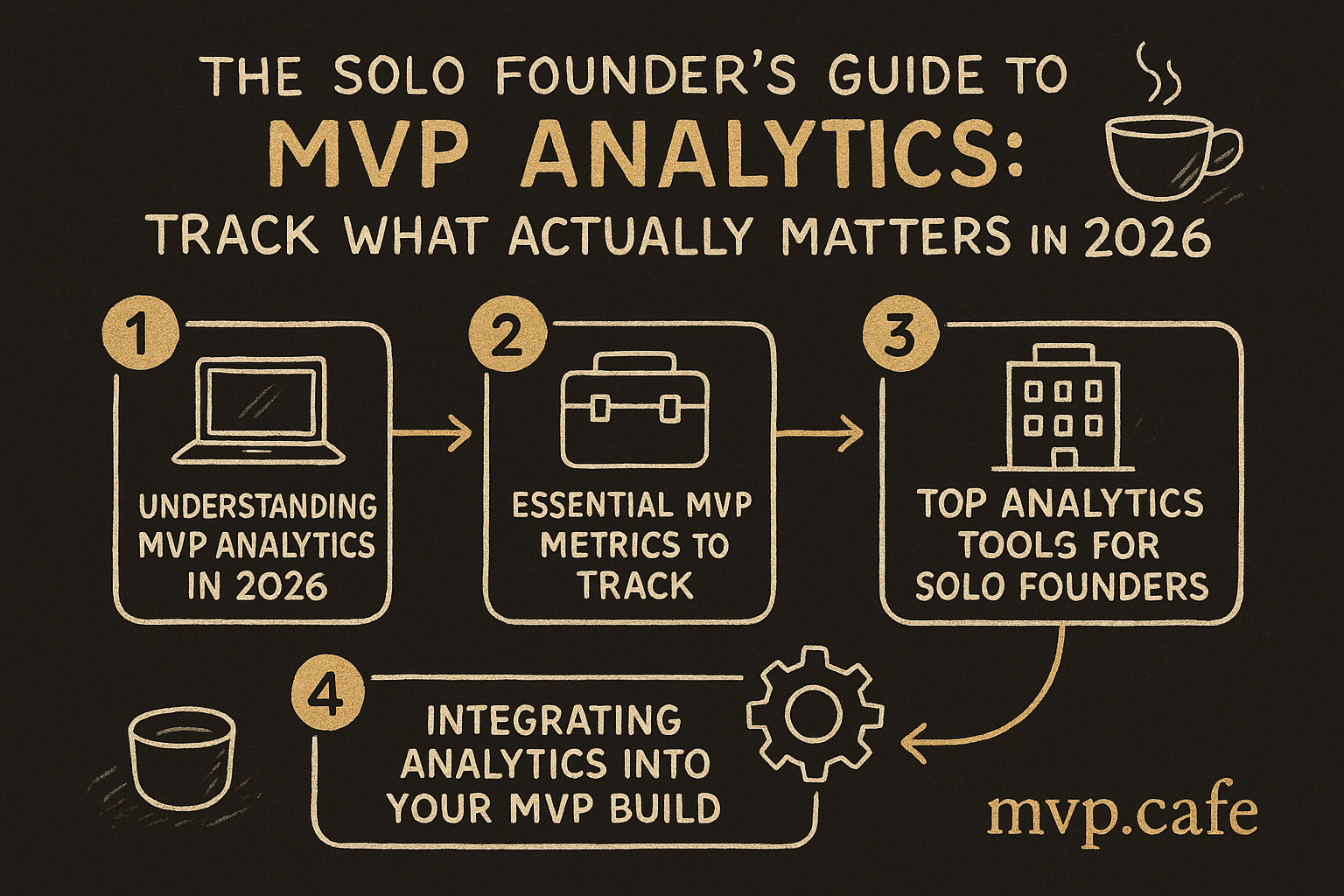
Understanding MVP Analytics in 2026
Alright, let’s jump right in. MVP analytics in 2026 is more than just a fancy term—it’s your lifeline as a solo founder. We’re talking about data that guides your product to market success. MVP analytics is all about gathering and analyzing data from your Minimum Viable Product to see how it’s performing and what potential it holds. You need to know which features your users love and which ones are just dead weight.
The tools and platforms have transformed massively. By 2026, you’re swimming in a sea of options, each claiming to be the ultimate solution for your analytics needs. But as a solo founder, you don’t need something with a million features—you need precision. Efficiency and precision are your best friends when you’re managing a tight ship.
Solo founders have a unique set of challenges. You’re handling development, marketing, and a million other things. Efficient MVP analytics helps you prioritize, ensuring your energy is spent on what truly matters. [INLINE IMAGE: data-viz — Graph showing the evolution of MVP analytics tools from 2020 to 2026]
Read more on startup idea validation.
Essential MVP Metrics to Track
So, you’re asking, “Which metrics should I even focus on?” You’re not alone. Let’s break them down:
- User Engagement: Are users actively interacting with your product? High engagement usually means your product is hitting the mark.
- Churn Rate: This tells you how many users are leaving. A high churn rate is a red flag that something’s off.
- Customer Acquisition Cost (CAC): How much are you spending to bring in a new customer? Lower is definitely better.
Why these metrics? Because they inform critical decisions. If engagement is low, revamp that UX. If churn is high, dive into user feedback. These metrics aren’t just numbers—they’re the heartbeat of your product.
Top Analytics Tools for Solo Founders
Now, let’s talk tools. In 2026, there’s a plethora of analytics tools. But let’s zero in on what works for solo founders:
- Google Analytics: Still a staple, offering robust features for tracking user behavior.
- Mixpanel: Great for product analytics, focusing on user interactions.
- Amplitude: Known for advanced segmentation and user journey analysis.
Each tool comes with its pros and cons. Google Analytics is comprehensive but can be a bit complex. Mixpanel is user-friendly but might fall short on in-depth analysis. Amplitude excels in journey mapping but can be pricey. Pick what matches your needs best.
Integrating Analytics into Your MVP Build
So you’ve chosen your tools. How do you integrate them into your MVP right from the start? Begin by embedding analytics tracking during the initial development. This way, you’re not scrambling to add it later.
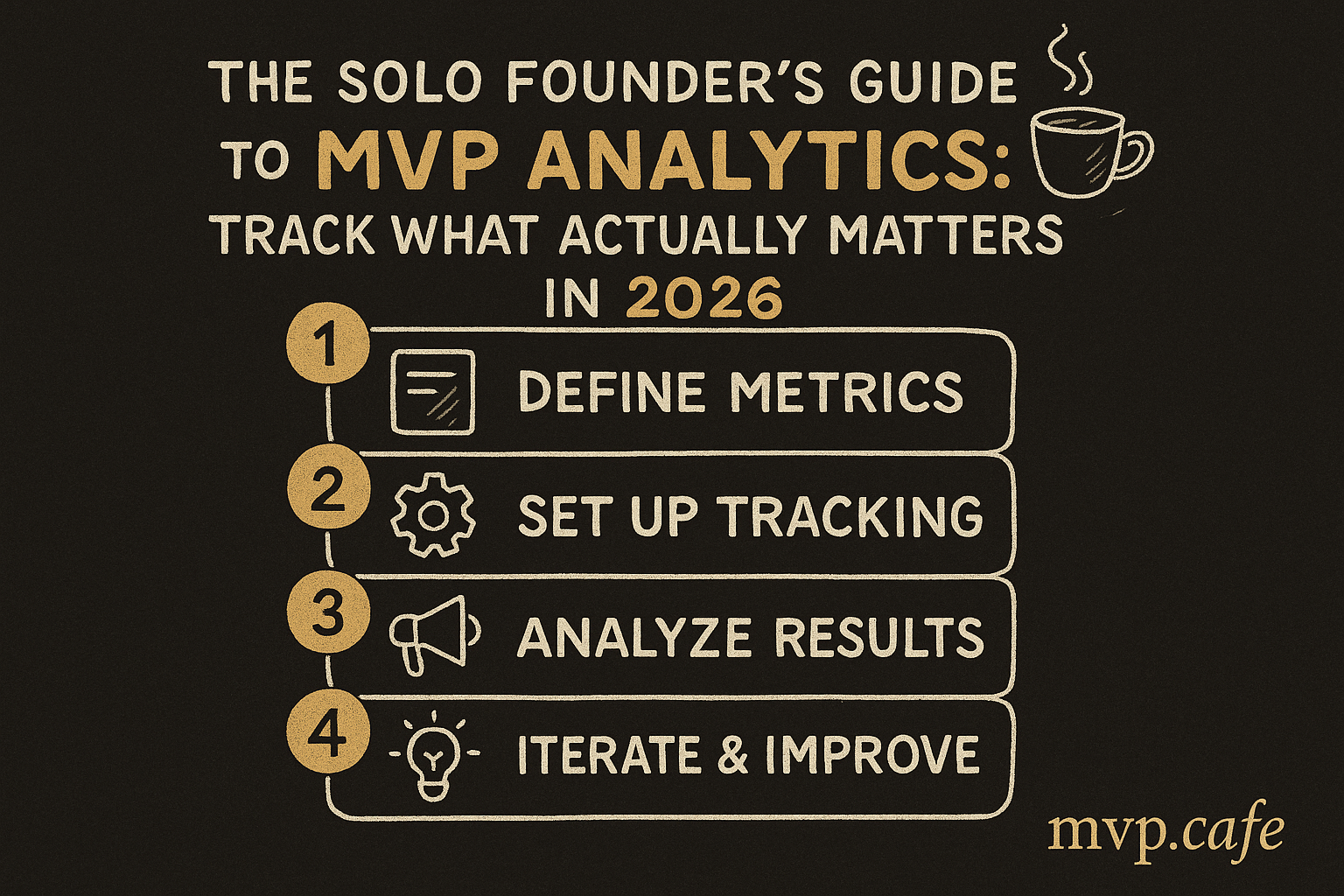
Avoid common pitfalls like overloading your product with too many tracking codes. It slows down your app and makes data analysis a nightmare. Keep it simple but effective.
Take a cue from UTMStamp’s playbook. We integrated analytics right from the start and tweaked the product based on real-time data, leading to a big boost in product-market fit. Read the UTMStamp build story.
Achieving Product-Market Fit with Analytics
Analytics isn’t just about tracking—it’s about tweaking your MVP to reach product-market fit. Here’s how: Use data to drive product iterations. If users are loving a feature, double down on it. If they’re ignoring another, figure out why.
Look for metrics that signal you’re on the right track: sustained engagement, low churn, and positive user feedback. These are your green signals.
Success stories like UTMStamp show this perfectly. They used analytics to iterate their product until they hit that magic fit.
Common Challenges and How to Overcome Them
Finally, the hurdles. As a solo founder, budget constraints are always there. But you don’t need a huge budget for effective analytics. Tools like Google Analytics are free to start with.
Technical challenges? They’re real. But many analytics tools offer integrations that make life easier. And balancing this with everything else? Prioritize. Focus on the metrics that matter most at your current stage.
Choosing the right analytics strategy is a make-or-break decision for solo founders. With the right tools and metrics, you can steer your MVP in the right direction, efficiently and effectively.