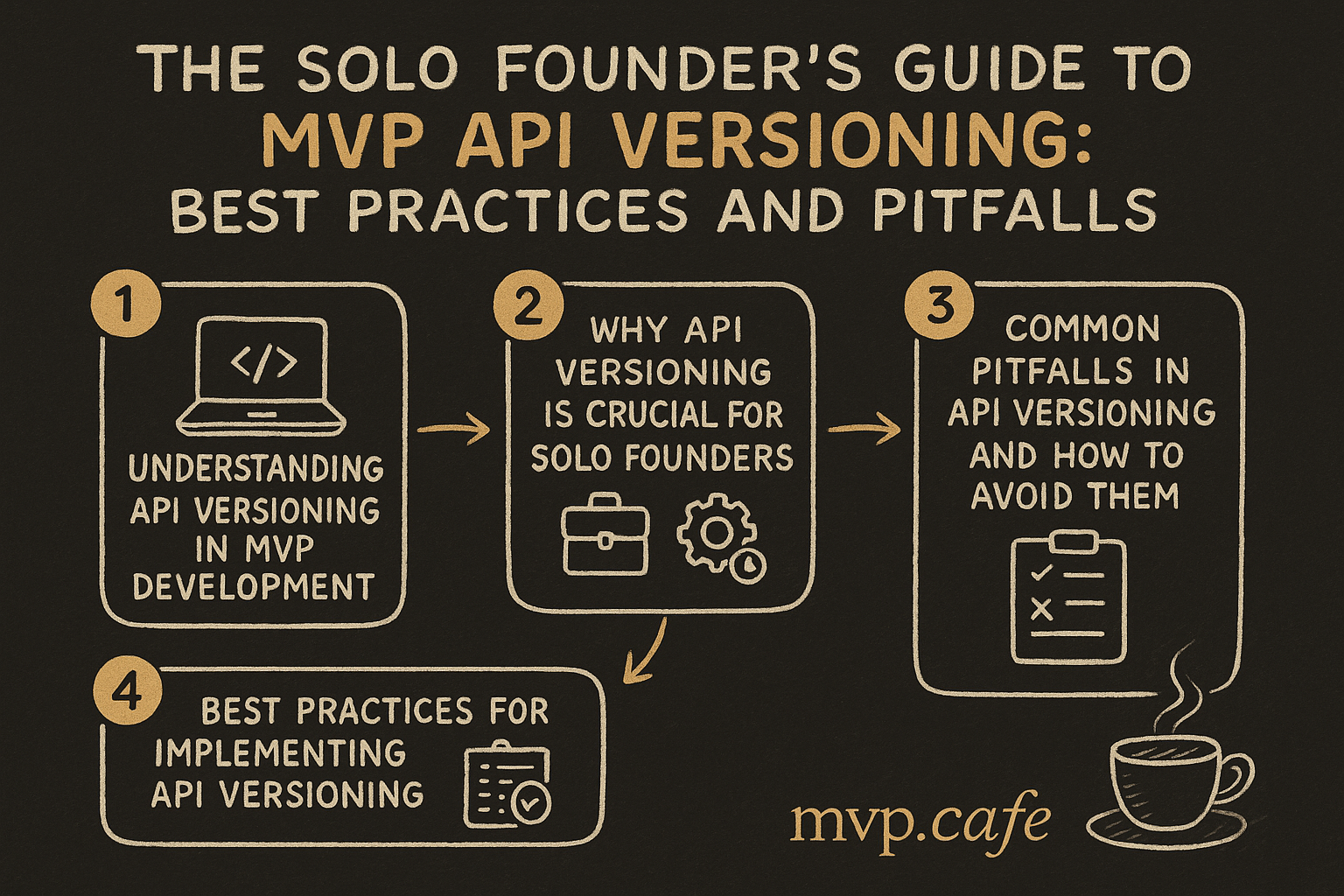
Understanding API Versioning in MVP Development
Building an MVP without understanding API versioning is like driving without a spare tire. You might not need it every day, but when you do, it’s a lifesaver. API versioning is all about managing changes in your API so your service stays smooth and your users remain happy. It’s especially critical when your product is in the early stages and rapidly evolving.
In the MVP space, versioning makes sure that as you iterate, existing users don’t end up with a broken app. It handles concepts like endpoints and backward compatibility — ensuring new updates don’t mess up what’s already working. Picture this: your app has a growing user base. Roll out an update without versioning, and you risk alienating all of them at once. Not a pleasant thought for any solo founder.
[INLINE IMAGE: framework — Diagram illustrating API versioning process]
Why API Versioning is Crucial for Solo Founders
Skipping API versioning is like playing Jenga with your product’s stability. One wrong move, and the whole thing can collapse. For solo founders, the stakes are even higher. There’s no team of engineers to fix things overnight. That’s why versioning isn’t just a nice-to-have; it’s essential.
Versioning keeps your MVP stable, directly affecting user retention. Users hate it when things break — they’ll leave faster than you can say “update.” Look at UTMStamp. We implemented a strong versioning strategy right from the start, which kept things smooth during updates and maintained a consistent user experience. You can dive deeper into UTMStamp’s versioning success if you’re curious.
And if this seems overwhelming, don’t worry. There are full MVP build services to help you implement these practices from day one.
Best Practices for Implementing API Versioning
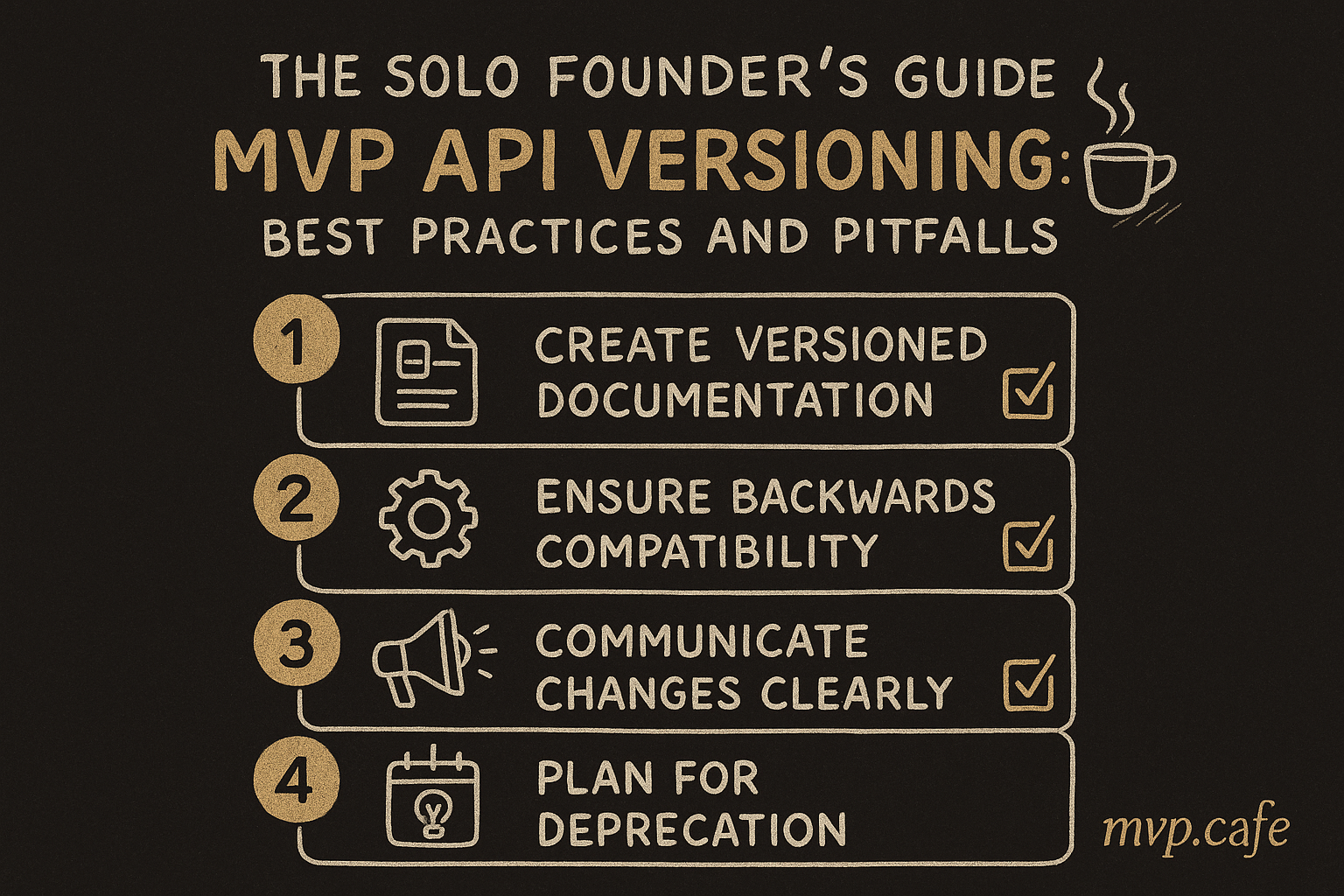
API versioning might sound daunting, but with the right practices, it’s manageable. Begin with semantic versioning. This is about categorizing your changes into major, minor, and patch updates. Think of it like organizing your closet — everything in its place makes life simpler.
Documentation is key. Keep it clear and consistent. Your future self (and your users) will appreciate it. And develop a deprecation policy. This means letting users know when old versions will be phased out. It’s like giving a gentle nudge before pulling the plug.
For more insights into secure practices, check out secure API practices.
[INLINE IMAGE: checklist — Checklist of API versioning best practices]
Common Pitfalls in API Versioning and How to Avoid Them
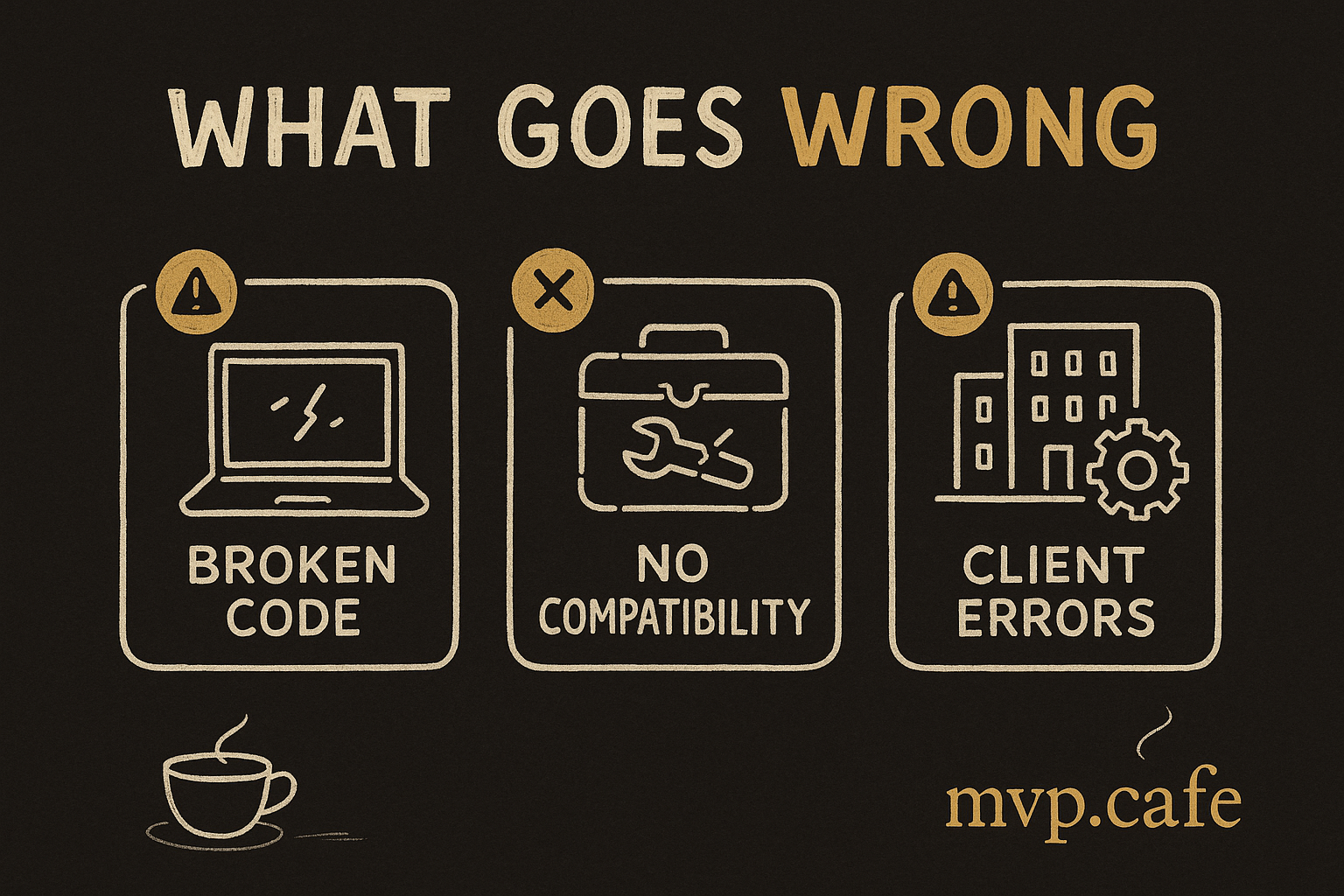
Even the best-laid plans can go wrong. In API versioning, pitfalls are often lurking just below the surface. A common mistake is overlooking backward compatibility. If your new version breaks existing functionalities, you’re in trouble.
And then there’s ignoring user feedback. Your users are your best testers. They’ll find bugs you never noticed. Skipping thorough testing before release? That’s a rookie mistake. Always test under real-world conditions — no exceptions.
Scaling Your MVP with Robust API Management
Once you nail versioning, scaling becomes smoother. Tools like Postman, Swagger, and AWS API Gateway make API management less of a chore and more of a strategy. They integrate version control with your scaling efforts, helping your MVP grow without hitting a ceiling.
Incorporate these tools into your routine. Future-proofing your MVP isn’t just about today; it’s about handling what comes next. For more on effective scaling, see our scaling strategies.
Step-by-Step Guide to Implementing API Versioning
Ready to jump in? Here’s your step-by-step guide to implementing API versioning in your MVP. Start by assessing your current API setup. Know what you have before deciding what you need. Then, plan your versioning strategy. It’s not just about coding; it’s about understanding your product’s roadmap.
Next, implement version control. Use tools and frameworks that support versioning natively. Finally, monitor and iterate. Versioning isn’t a one-off task. It’s an ongoing process that evolves with your product.
[INLINE IMAGE: checklist — Step-by-step guide to API versioning]
So, solo founder, ready to ensure your MVP is built to last? Dive into API versioning with a clear head. And if you need a hand, remember our full MVP build services are just a click away.