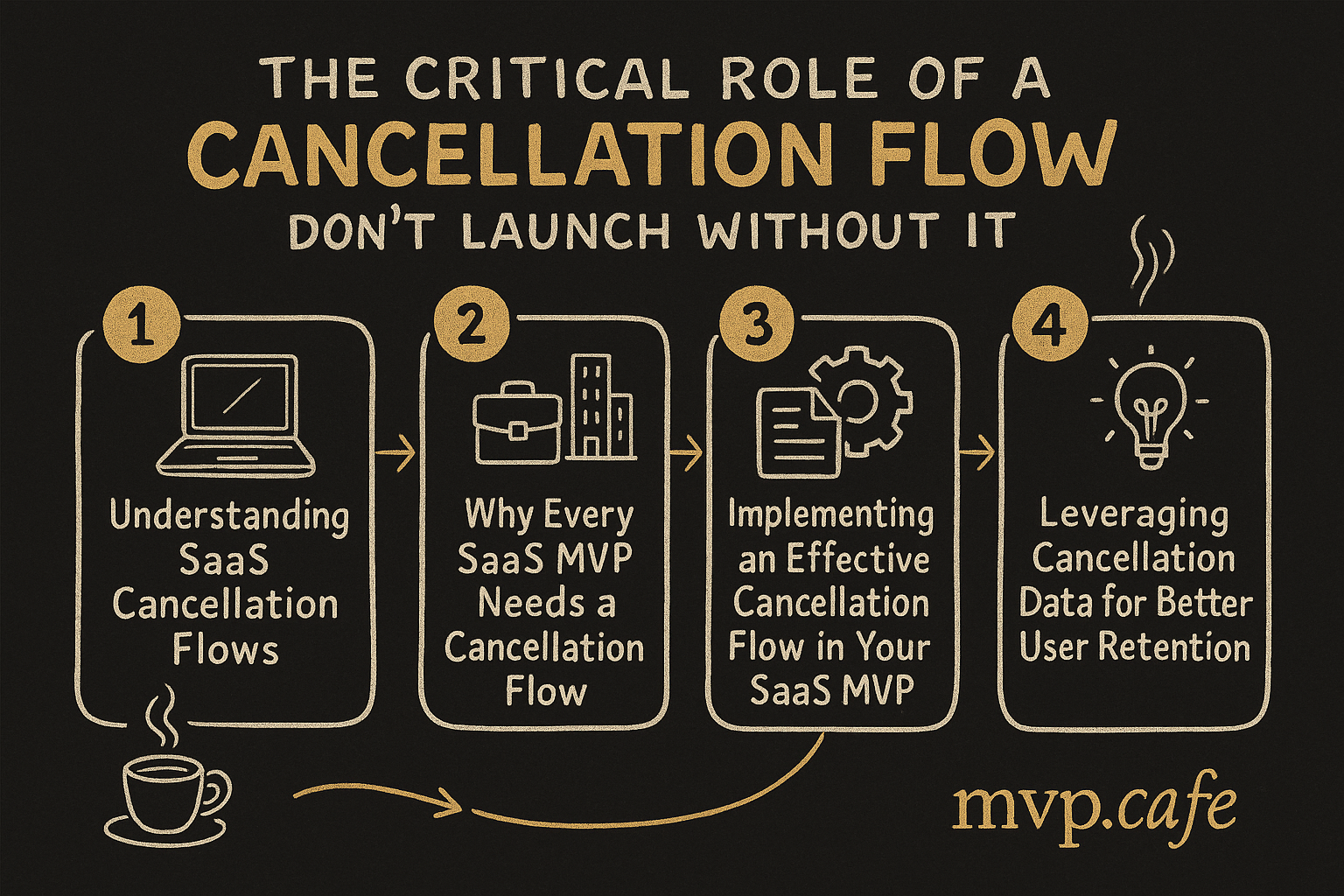
Understanding SaaS Cancellation Flows
Let’s start with a quick dive into what a cancellation flow means in the SaaS universe. It’s not just about having a “Cancel Subscription” button. It’s a process, a strategy for understanding why users decide to leave your service. Think of it as a way to peek into user churn. It gives you the insights needed to see why users are saying goodbye, helping you fix issues before they become big problems.
For any SaaS startup, especially when you’re in the MVP stage, this feedback isn’t just nice to have—it’s a necessity. It’s like having a map when you’re exploring unknown territory. Missing out on this could mean you’re ignoring vital insights that could make or break your product’s future.
Why Every SaaS MVP Needs a Cancellation Flow
There’s this common belief that MVPs should only have basic features. While keeping things simple is important, skipping the cancellation flow is a big mistake. It’s like driving with your eyes shut—you don’t know why users are leaving until it’s too late.
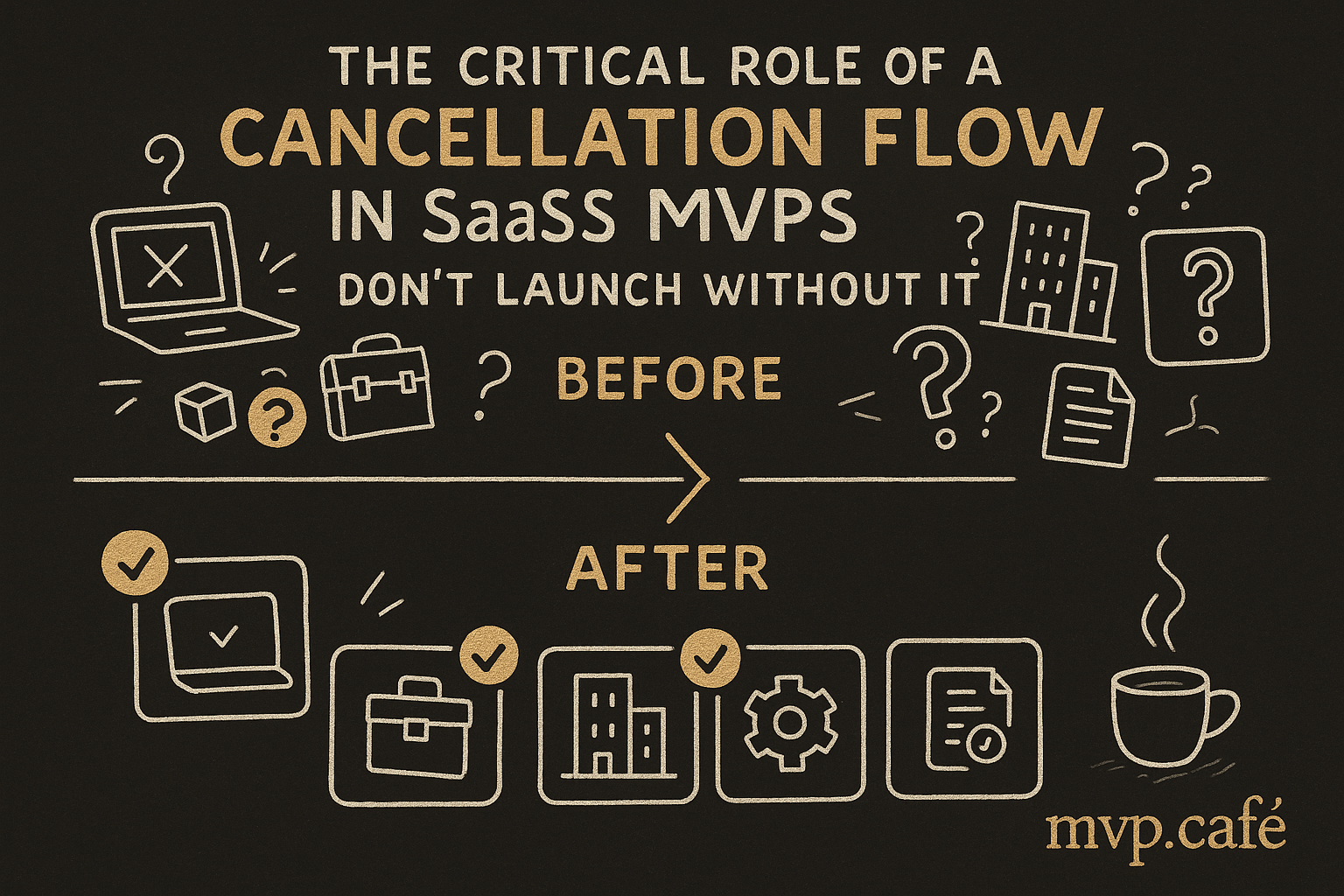
A smartly designed cancellation flow offers precious user insights. It helps you notice patterns in user behavior, offering data that can shape your product’s evolution. Integrating a cancellation flow early can provide valuable insights that lead to significant improvements. It isn’t just about stopping churn; it’s about evolving based on what users actually need.
Understanding user behavior from day one is invaluable. It guides your product-market fit and sets your development priorities straight. So, aim for more than just building a product—build one that learns and adapts. For more on how early-stage implementation impacts success, check out UTMStamp’s case study.
Implementing an Effective Cancellation Flow in Your SaaS MVP
Setting up a cancellation flow doesn’t have to be a daunting task. Here’s how you can hit the ground running, especially if you’re a solo founder:
-
Essential Components: Kick things off with a short survey asking why users are leaving. Is it the pricing, the features, or something else? Keep it brief—no one wants a lengthy exit interview.
-
Integration: Tie this feedback directly into your existing user feedback systems. Use tools like Intercom or HubSpot to streamline data collection and analysis.
-
Checklist for Solo Founders:
- Design an intuitive cancellation process
- Implement a concise exit survey
- Review data monthly
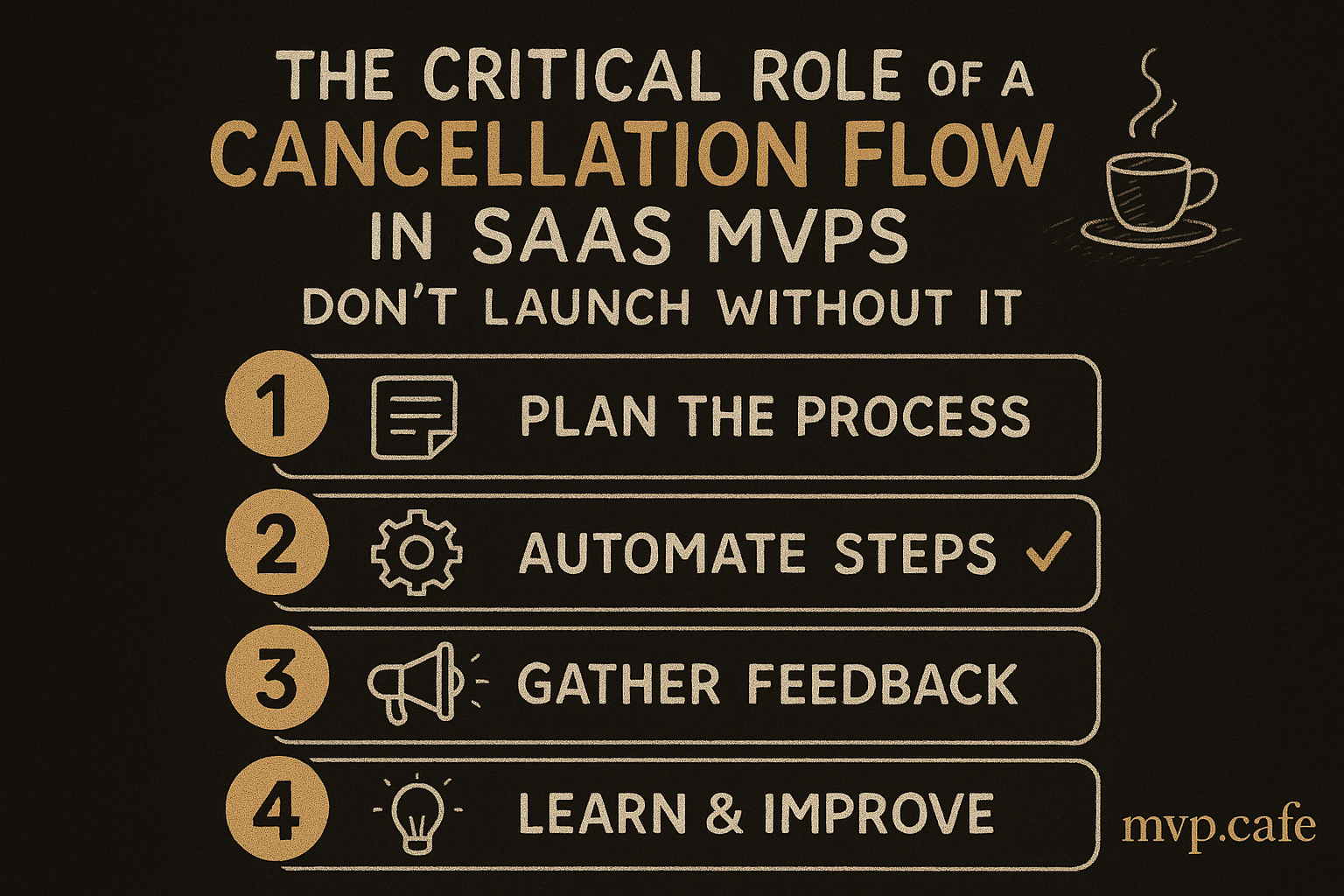
- Iterate and improve based on feedback
By sticking to these steps, your cancellation flow will transform from a simple goodbye button into a strategically valuable feedback loop. Consider a Strategy Sprint for essential feature prioritization to ensure you’re focusing on what’s truly important.
Leveraging Cancellation Data for Better User Retention
Once you’ve got the data, it’s time to put it to work. Dive into the feedback and pinpoint the usual reasons for cancellations. Are users leaving because a feature’s missing? Maybe it’s time to bump that feature up in your development queue.
Turn these insights into concrete strategies. If users flag pricing as a concern, perhaps it’s time to tweak your pricing model. Or if they’re asking for a specific feature, prioritize that in your roadmap.
Some companies have seen retention rates soar just by listening and adapting. Use this data to sharpen your user retention strategies and boost your product-market fit.
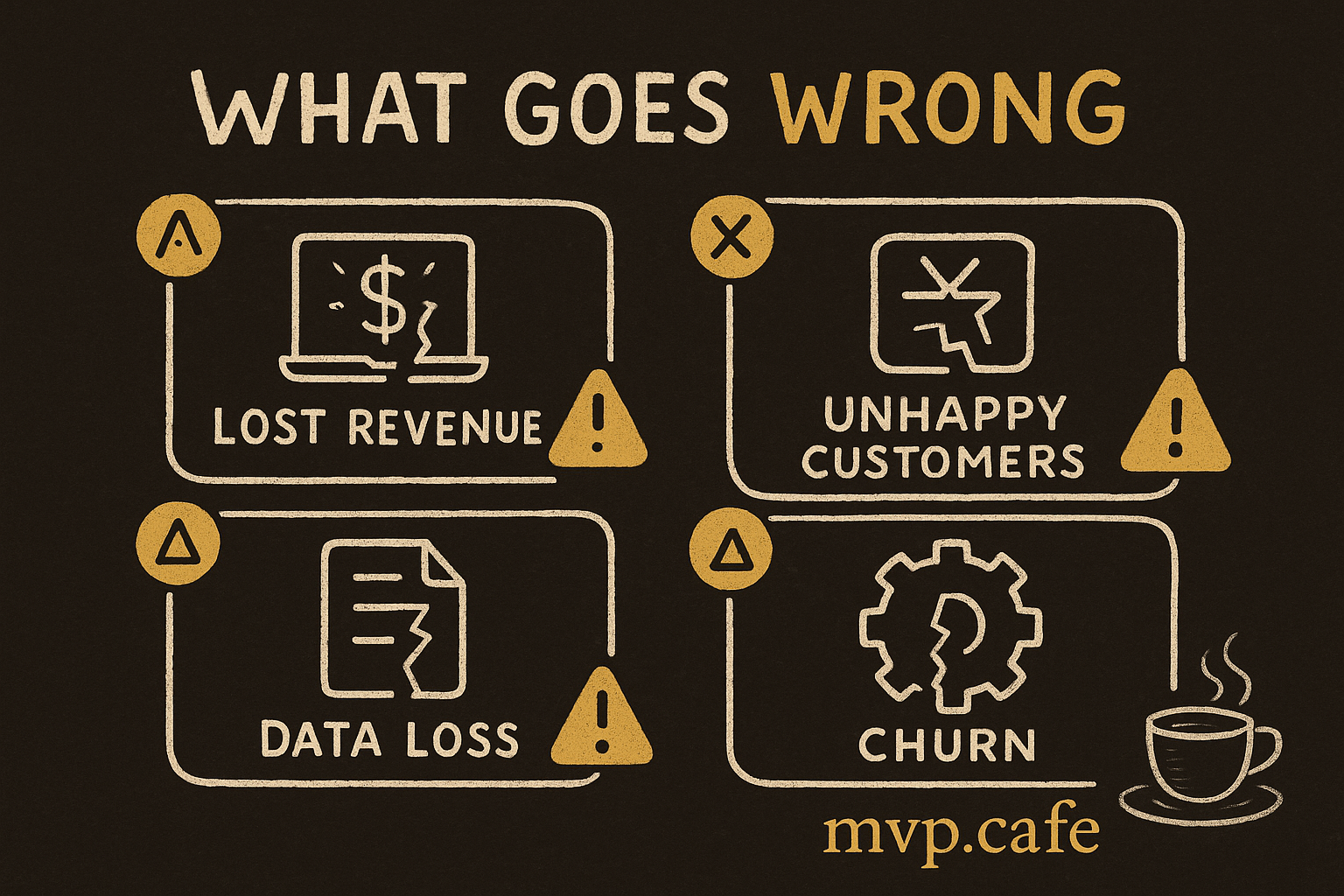
Common Pitfalls and How to Avoid Them
Even with the best intentions, solo founders can trip up when rolling out cancellation flows. A common misstep is making the process too complicated—users want out, not a novel-length survey.
Another trap is ignoring the data you collect. Why gather feedback if you’re not going to use it? The fallout from these pitfalls can be severe, leading to higher churn rates and a less competitive offering.
To sidestep these, keep it simple and actionable. Regularly review the data and tweak your strategies based on what you learn. For advice tailored to your needs, don’t hesitate to contact us.